


Some error occured while loading the Quick View. Please close the Quick View and try reloading the page.
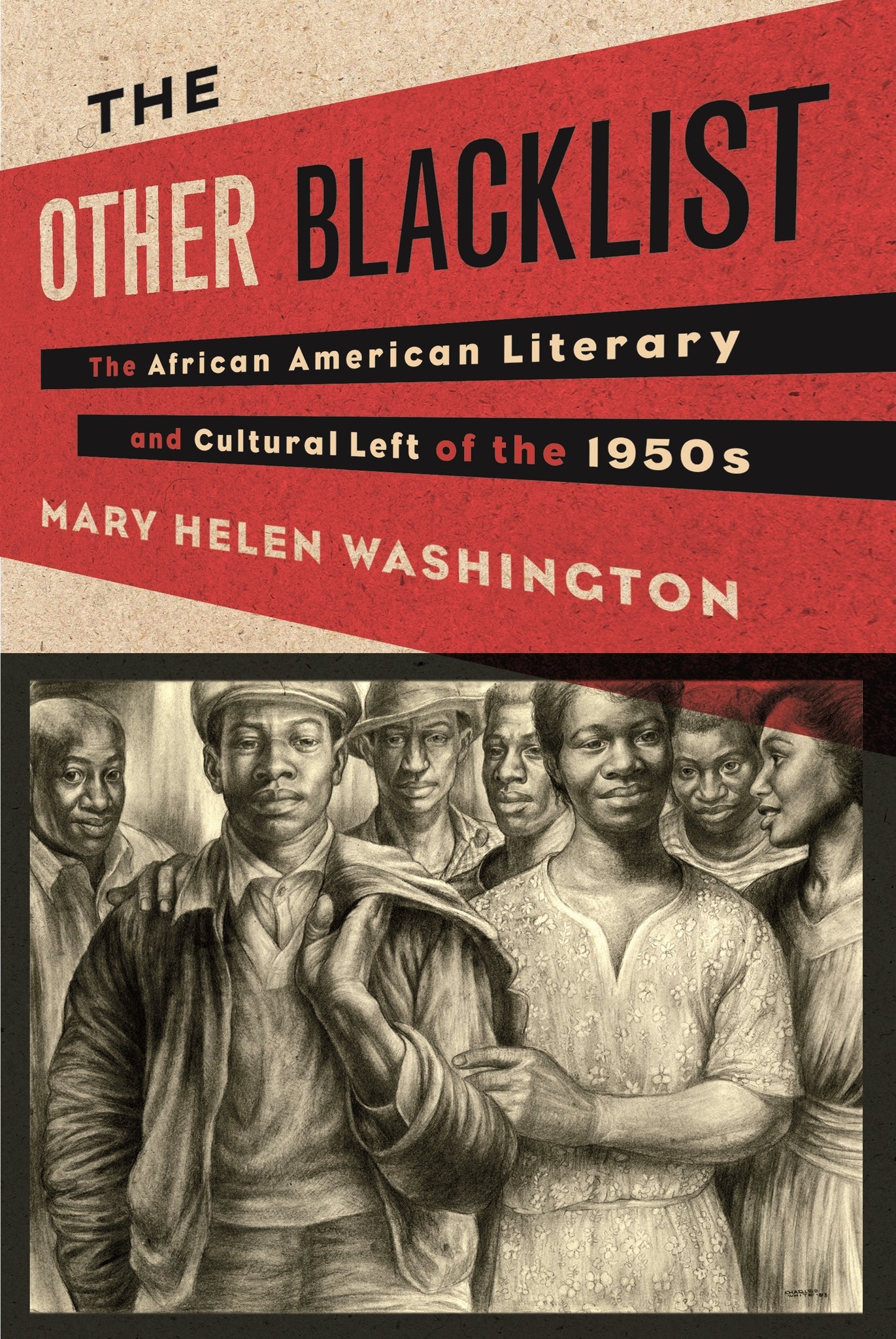
Mary Helen Washington recovers the vital role of 1950s leftist politics in the works and lives of modern African American writers and artists. While most histories of McCarthyism focus on the devastation of the blacklist and the intersection of leftist politics and American culture, few include the activities of radical writers and artists from the Black Popular Front. Washington's work incorporates these black intellectuals back into our understanding of mid-twentieth-century African American literature and art and expands our understanding of the creative ferment energizing all of America during this period.
Mary Helen Washington reads four representative writers—Lloyd Brown, Frank London Brown, Alice Childress, and Gwendolyn Brooks—and surveys the work of the visual artist Charles White. She traces resonances of leftist ideas and activism in their artistic achievements and follows their balanced critique of the mainstream liberal and conservative political and literary spheres. Her study recounts the targeting of African American as well as white writers during the McCarthy era, reconstructs the events of the 1959 Black Writers' Conference in New York, and argues for the ongoing influence of the Black Popular Front decades after it folded. Defining the contours of a distinctly black modernism and its far-ranging radicalization of American politics and culture, Washington fundamentally reorients scholarship on African American and Cold War literature and life.


— James Smethurst, author of The African American Roots of Modernism: From Reconstruction to the Harlem Renaissance and The Black Arts Movement: Literary Nationalism in the 1960s and 1970s
[A] compelling look at artists and writers who became part of the vanguard of the progressive politics and civil rights movement of the 1960s.
Groundbreaking...thought-provoking.
Well-thought, highly readable and timely.
Washington builds a strong and much-needed case against purely aesthetic interpretations of 1950s African American literature. Highly recommended.
Insightful, densely researched, and engaging Washington resoundingly demonstrates the importance of the Black Popular Front to the postwar black literary tradition.
Washington's brilliant, intimate and highly readable new book capstones an important era of post-Cold War scholarship of the legacy of American Communism and African American literature no book in recent memory more boldly confronts and dismantles the political apparatus of literary commemoration.
Washington's excellent book contributes powerfully to a strand of scholarship that is transforming our understanding of post-World War II American intellectual and cultural history... Deeply researched, persuasively argued, and much-needed.
As literary and cultural history, Washington's book offers a vast resource... Readers who are eager to place the postwar period in the context of 1930s and '40s historiography of the left as well as the period of black nationalism that followed in the 1960s will rejoice in these pages.
Well-researched, informative, illuminating... By challenging the standard Cold War narrative of Communist Party irrelevance and isolation, The Other Blacklist not only promotes radical African American cultural production in the 1950's, it also highlights the very real internal and external pressures faced by communists and their allies.
Superbly woven together... A must-read book for those who study and teach literature, women's studies, history, African American studies, American studies, and cultural studies.
An extraordinary piece of scholarly research and cultural commentary.
List of Illustrations
Acknowledgments
List of Abbreviations
Introduction
1. Lloyd Brown: Black Fire in the Cold War
2. Charles White: "Robeson with a Brush and Pencil"
3. Alice Childress: Black, Red, and Feminist
4. When Gwendolyn Brooks Wore Red
5. Frank London Brown: The End of the Black Cultural Front and the Turn Toward Civil Rights
6. 1959: Spycraft and the Black Literary Left
Epilogue: The Example of Julian Mayfield
Notes
Works Cited
Index