


Some error occured while loading the Quick View. Please close the Quick View and try reloading the page.
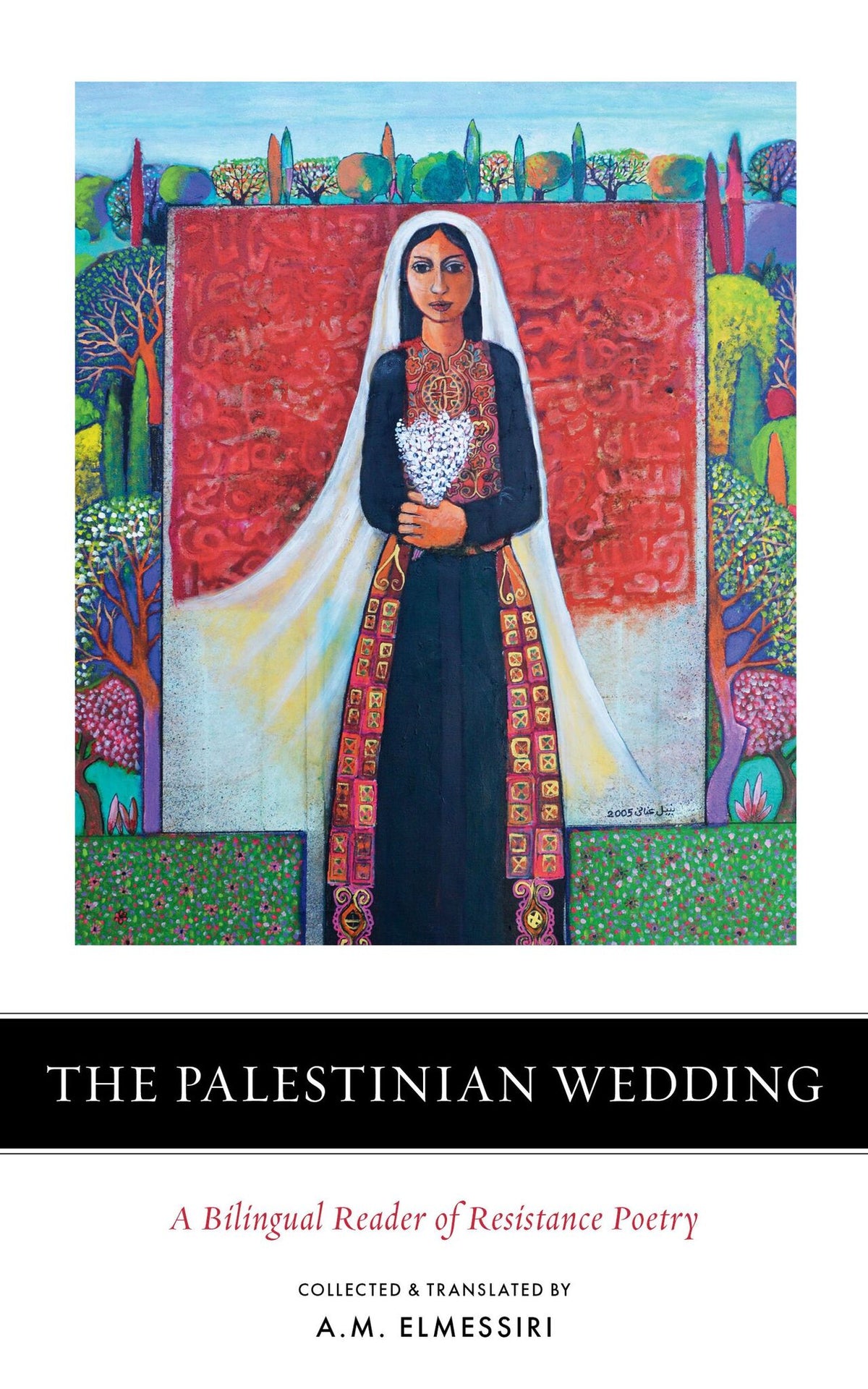
Poetry has long been Palestine’s most vital art form – a space where memory is safeguarded and resistance given voice. Spanning a century of upheaval and endurance, The Palestinian Wedding brings together twenty-one major poets in a powerful bilingual anthology.
From the charged lyricism of Tawfiq Zayyad to the expansive imagery of Walid al-Halis; from the romantic cadences of Salma al-Jayyusi to the profound rootedness of Mahmoud Darwish, these poems chart the emotional and political landscape of modern Palestine. Together, they reveal a tradition in which love of land, grief, defiance and hope are inseparable.
Edited and introduced by the eminent scholar A.M. Elmessiri, the collection is arranged around six central themes – revolution, war, elegy, belonging, resistance and steadfastness – offering readers both an essential literary archive and a vital lens on Palestinian cultural history.

Price: $24.95
Pages: 272
Publisher: Saqi Books
Imprint: Saqi Books
Publication Date:
October 6, 2026
Trim Size: 8.50 X 5.13 in
ISBN: 9781849251167
Format: Hardcover
BISACs:
POETRY / Middle Eastern, Poetry / Poems, LITERARY COLLECTIONS / Middle Eastern, Poetry anthologies (various poets)

‘It is, quite simply, very important to see all these poems together still ... Reading [The Palestinian Wedding] we learn a great deal about Palestine and about ourselves as human beings.’ --Banipal