


Some error occured while loading the Quick View. Please close the Quick View and try reloading the page.
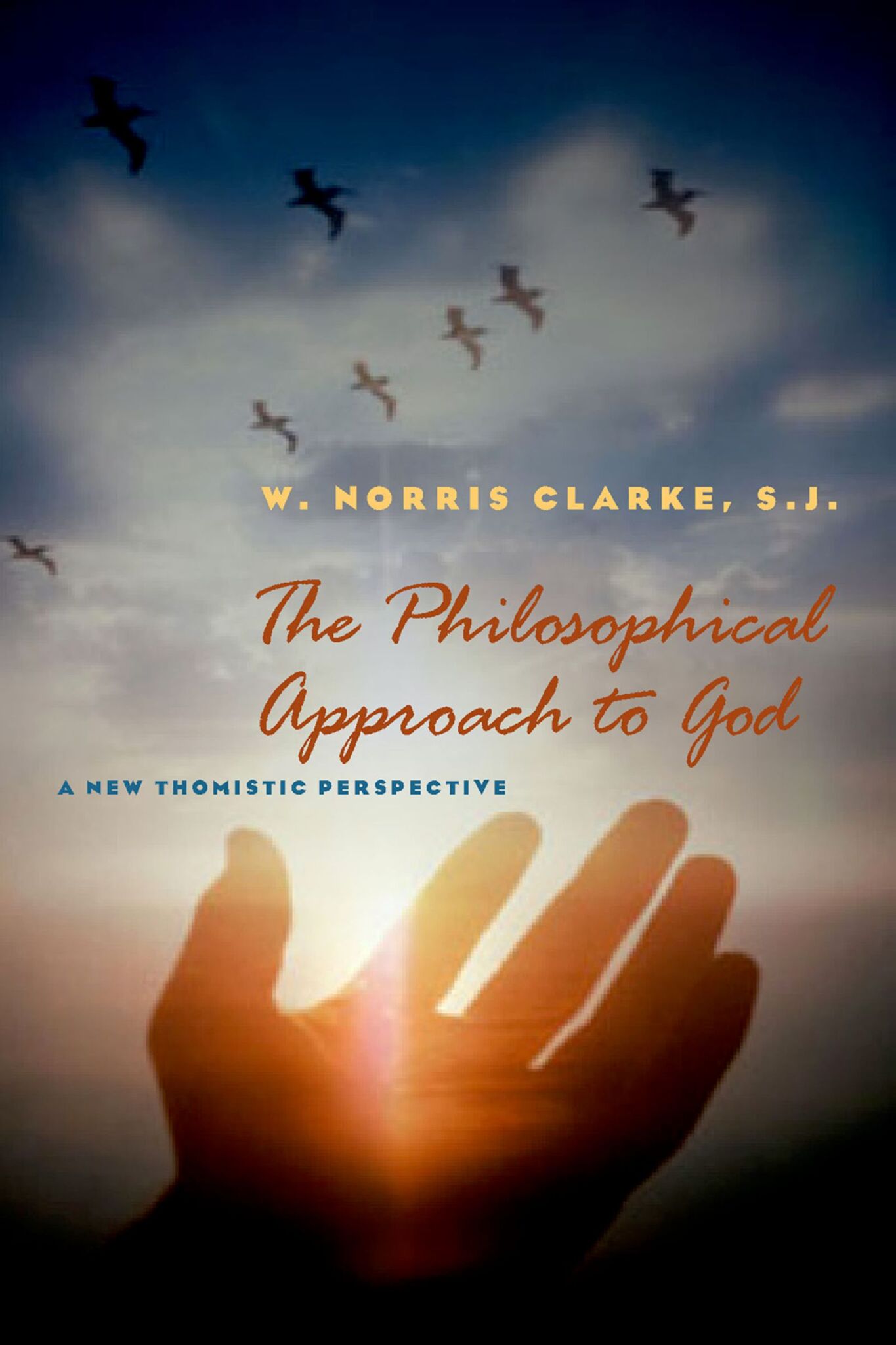
This book is a revised and expanded edition of three lectures delivered by the author at Wake Forest University in 1979. Long out of print, in its new edition it should be a valuable resource for scholars and teachers of the
philosophy of religion.
The first two lectures, after a critique of the incompleteness of St. Thomas Aquinas’s famous Five Ways of arguing for the existence of God, explore lesser-known resources of Aquinas’s philosophical ascent of the mind to God: the unrestricted dynamism of the human spirit as it reaches toward the fullness of being, and the strictly metaphysical ascent to God from finite to infinite, in the line of Aquinas’s later, more Neoplatonically inspired, metaphysics of participation.
The third, and most heavily revised, lecture is a critique of Whitehead’s process philosophy, distinguishing Aquinas more sharply and critically from Whitehead than in the first edition.


A creative and compelling act of reflective analysis showing the deep and surprising congruence between a reinterpreted Transcendental Thomism and the traditional Thomism with its approach to God by way of a neo-Platonic metaphysics of participation.---—Kenneth Schmitz, Professor Emeritus, University of Toronto
...systematic arguments which warrant serious response from both Thomists and Whiteheadians...
[Clarke] is as good a synthesizer as was Thomas himself.
A provocative dialogue with Transcendental Thomism and Process Philosophy on how the human mind ascends to God.---—Rev. Brian J. Shanley, O.P., Ph.D., President, Providence College
...a most attractive presentation of Transcendental Thomism.---—Lewis S. Ford, Horizons
Particularly noteworthy is Clarke's grounding of analogous speech about God on the 'bridge of causal participation' and the minimum degree of likeness that must obtain between an effect and its cause, even between creatures and God.---—John F. Wippel, Catholic University
Illustrates a talented Thomist trying to make sense of the Transcendental Thomist and Whiteheadian circles in which Clarke moved at Fordham University.