


Some error occured while loading the Quick View. Please close the Quick View and try reloading the page.
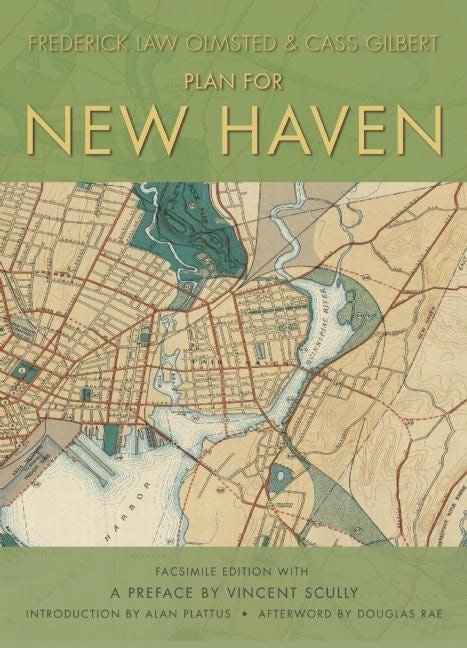
Long before cities were scrambling to go green and eco-conscious commuters were sensibly strapping on their bike helmets, New Haven, Connecticut, was envisioning a plan for its growth taken from the challenging ideas of the City Beautiful Movement and its call for civic monumentality. In a 1910 plan commissioned from legendary landscape architect Frederick Law Olmsted and prominent architect Cass Gilbert, New Haven's leaders charted new ground by incorporating revolutionary models for studying social and demographic data and using that information to help guide the physical plan for the city's growth. The visionary result is a gem of American urban planning history that became a benchmark in discussions about the shape the new American city would take in the twentieth century.
This facsimile edition of the 1910 Plan for New Haven, available to general readers for the first time, includes a critical contemporary review of the century-old plan. Architectural scholar Alan Plattus and urban economist Douglas Rae contribute modern perspectives on the plan's importance to the development of both New Haven and American urbanism in the current rediscovery of urban livability and sustainability. The lessons of master urban planners like Cass and Gilbert have never been more valuable and can guide an exploration of how American urbanism has evolved and where it is going in the twenty-first century.
This facsimile edition of the 1910 Plan for New Haven, available to general readers for the first time, includes a critical contemporary review of the century-old plan. Architectural scholar Alan Plattus and urban economist Douglas Rae contribute modern perspectives on the plan's importance to the development of both New Haven and American urbanism in the current rediscovery of urban livability and sustainability. The lessons of master urban planners like Cass and Gilbert have never been more valuable and can guide an exploration of how American urbanism has evolved and where it is going in the twenty-first century.

Price: $15.99
Pages: 160
Publisher: Trinity University Press
Imprint: Trinity University Press
Publication Date:
February 1, 2013
ISBN: 9781595341341
Format: eBook

Frederick Law Olmsted Jr.(1870–1957) was an American landscape architect most known for his wildlife conservation efforts and urban park designs. He was a founding member and later served as president of the American Society of Landscape Architects. Following early work with his acclaimed father on projects such as the Biltmore Estate (in North Carolina) and the World’s Columbian Exposition (in Chicago), his signature works include the National Mall, the Jefferson Memorial, the White House grounds, Cornell University (campus planning), Rock Creek Park (Washington, D.C.), Forest Hills Gardens (New York), Piedmont Park (Atlanta), and parks for many other U.S. cities. Notable ecological conservation work under his stewardship includes national parks projects at Acadia, Redwood, Yosemite, the Everglades, and the Potomac River.