


Some error occured while loading the Quick View. Please close the Quick View and try reloading the page.
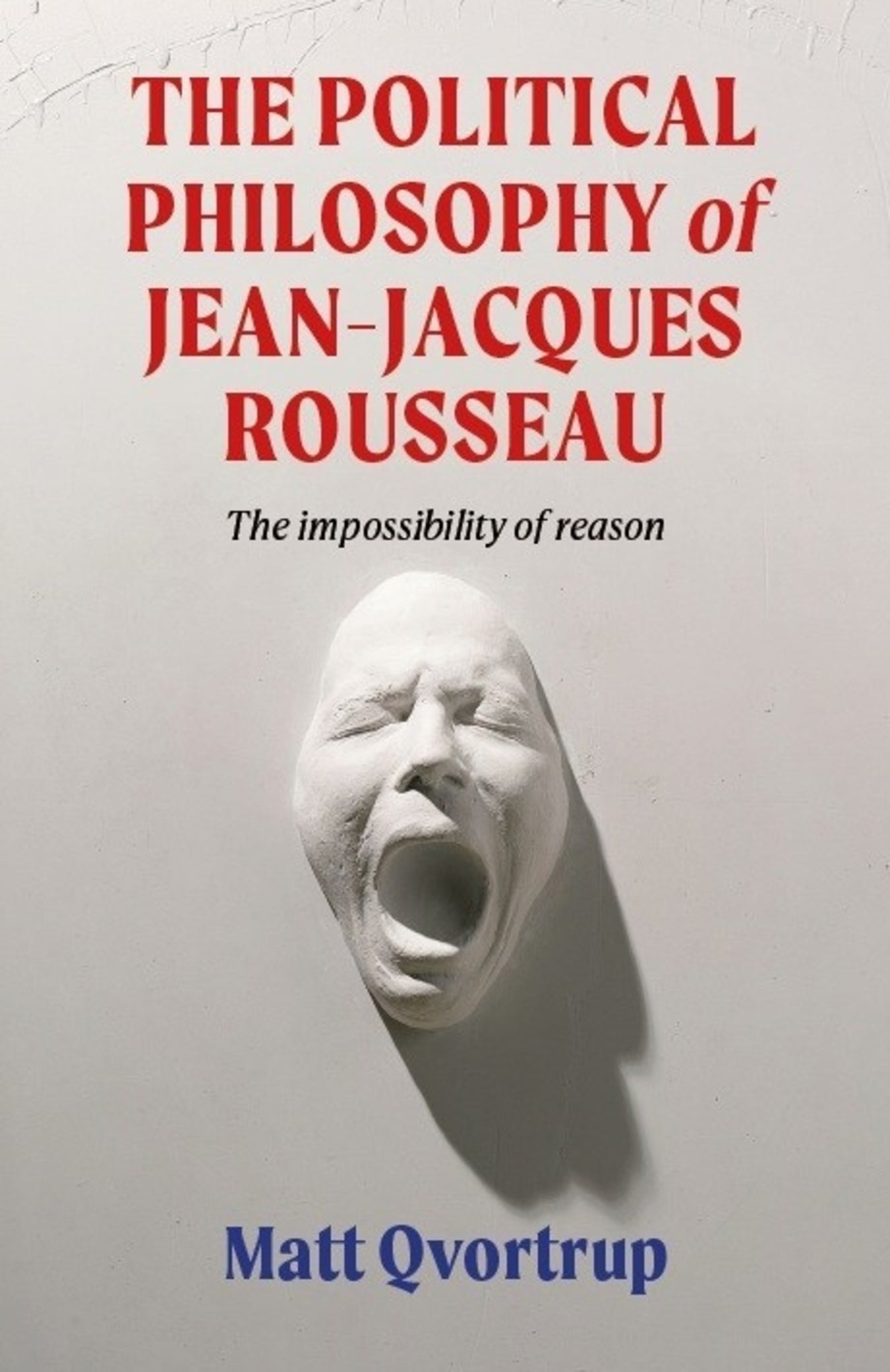
Far from being confined to the 18th century, Jean-Jacques Rousseau’s thought speaks powerfully to contemporary debates about identity, belonging and the pace of social change. In this classic study, Professor Qvortrup suggests that the Genevan writer’s critique of moral decline and social fragmentation resonates with those who question, and sometimes seek to slow, the advance towards an increasingly secular society. In addition to a thorough analysis of his political and philosophical writings, the book also covers Rousseau’s often overlooked contributions as a composer who inspired Mozart and a writer of fiction who inspired Goethe and Byron.
With a new preface and postscript The Political Philosophy of Jean-Jacques Rousseau provides the intellectual underpinnings for those who feel themselves to be strangers in their own land.


"No society can survive without mutuality. Dr. Qvortrup's book shows that rights and responsibilities go hand in hand. It is an excellent primer for anyone wishing to understand how renewal of democracy hinges on a strong civil society"
The Rt. Hon. David Blunkett, MP
"Rousseau has often been singled out as a precursor of totalitarian thought. Dr Qvortrup argues persuasively that Rousseau was nothing of the sort. Through an array of chapters the book gives an insightful account of Rousseau's contribution to modern philosophy, and how he inspired individuals as diverse as Mozart, Tolstoi, Goethe, and Kant."
John Gray, London School of Economics
"Qvortrup has written a highly readable and original book on Rousseau. He approaches the subject of Rousseau's social and political philosophy with an attractively broad vision of Rousseau's thought in the context of the development of modernity, including our contemporary concerns. He presents us with an important revisionary view of Rousseau, not as the radical egalitarian revolutionary democrat as standardly conceived, but as a compassionate conservative constitutionalist who is also the first and perhaps only political philosopher to have provided a well-worked out political philosophy of nationalism"
John Charvet, London School of Economics
Preface to the 2nd Edition
Preface
Acknowledgements
Introduction and method
1. The politics of the soul: the life and times of Jean-Jacques Rousseau
2. The disenchantment of the world
3. Checks, balances and popular participation
4. A civic profession of faith: Rousseau and nationalism
5. The last of the ancients the first of the moderns?
Epilogue: In the beginning was song
Chronology of Rousseau’s life
Postscript to the 2nd Edition
Bibliography
Index