


Some error occured while loading the Quick View. Please close the Quick View and try reloading the page.
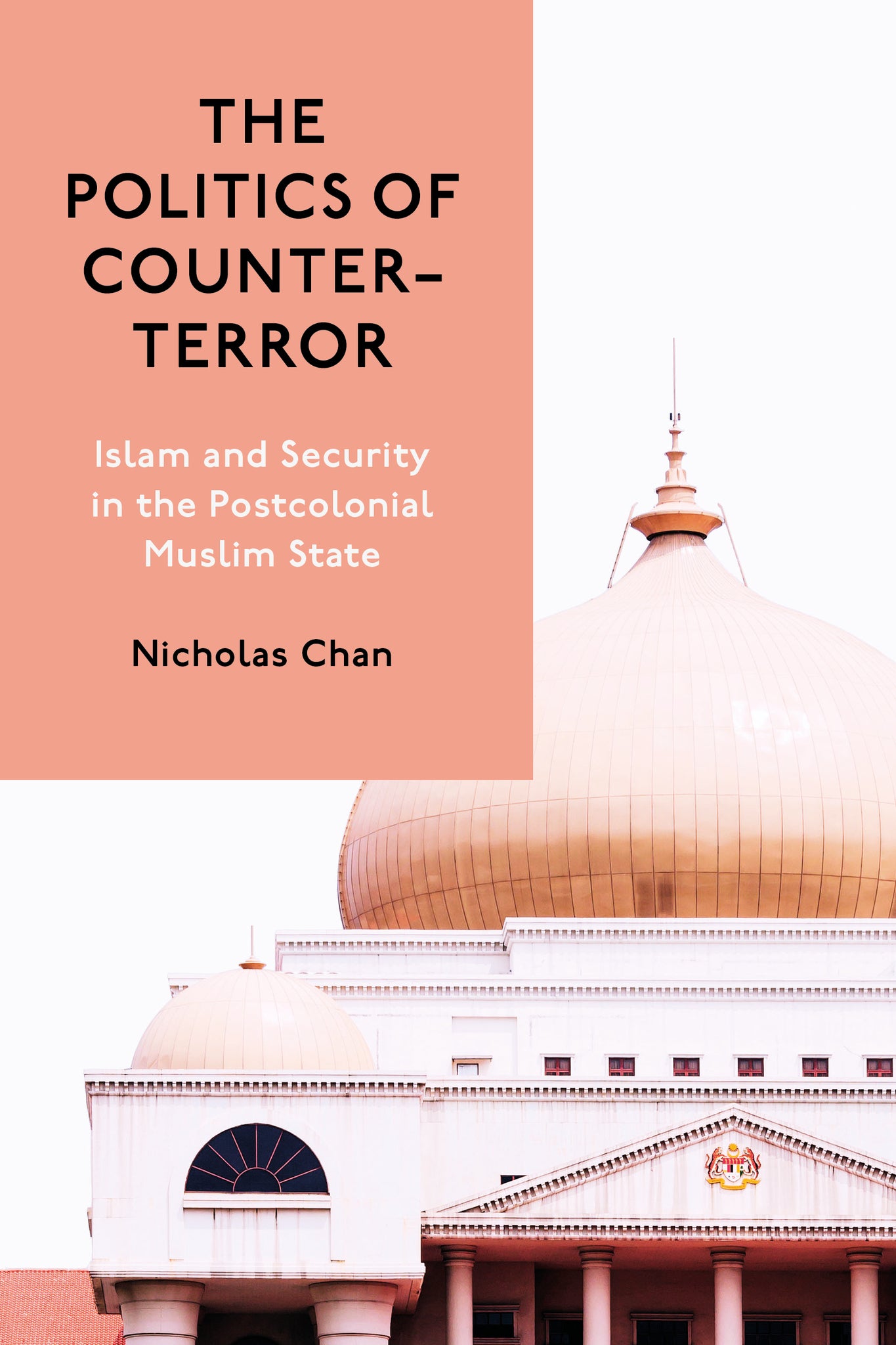
There is a fundamental paradox in counter-terrorism: while Muslim state elites insist that Islam has nothing to do with terrorism, the way Muslim states deal with terrorism has everything to do with Islam. In countries like Morocco and Tunisia, terrorism is treated by governments as if it is a religious problem. Elsewhere, in Malaysia, Islamic actors are relied upon to conduct "deradicalization" programs, Islamic institutions are the key authors of counter-radicalization materials, and Islamic expertise is often considered interchangeable with counter-terror expertise. These findings draw attention to a security logic whereby Islam and Islamic interventions have become central to solving the problem of terrorism. In this theoretically innovative and empirically rich book, Nicholas Chan argues that Malaysia's "Islamized" counter-terrorism is an outcome filtered through a matrix of factors, including postcolonial elite status-seeking, modernist state-building, and the immediacies of governmental problem-solving. Chan fills a void in the Western-centric Global War on Terror literature that often fails to examine what happens when Muslim actors must wage a "war" not of their making but strongly tied to their identity, security, and status. This book's original findings will interest scholars and students of security, international relations, area studies, and Muslim politics.


"Nicholas Chan's The Politics of Counter-Terror achieves the seemingly impossible feat of saying something original about both the politics of counter-terrorism and the politics of Muslim-majority states. This is a book that should travel well beyond its case study of Malaysia. A must-read." —Ayşe Zarakol, University of Cambridge
"An original, extraordinary book. Nicholas Chan has expanded the debate over security and the role of the state by addressing the ontological root of the problem of postcolonial nation-building itself, and by doing so has offered a radically new and imaginative way of understanding the questions of security and terror in our times. This is a hugely important work." —Farish A. Noor, Indonesian International Islamic University
Introduction: "Islam Has Nothing to Do with Terrorism, Yet Counter-Terrorism Has Everything to Do with Islam"
1. On Stigma and Strangers: Ontological Security, the Muslim State, and Counter-Terror
2. The Roots of Ontological Insecurity: Islam and Postcolonial Nation Building in Malaysia
3. Mahathir and the Making of Malaysia's "Islamic" Leviathan: Modernizing Islam, Moderating Islam (1981–2001)
4. The Bastion of Moderate Islam? Malaysia's Response to the Global War on Terror
5. "Islamized" Security: Defining and Defending (Theological) Authority in Counter-Terrorism
6. The Anatomy and the List: The Making and Unmaking of Terrorists in Malaysia's Counter-Terrorism
Conclusion: Islam In, and Beyond, the Politics of Counter-Terror
Appendix: Notes on Terrorism Detainee Dataset
Notes
Index