


Some error occured while loading the Quick View. Please close the Quick View and try reloading the page.
Innovative and challenging study that provides fresh insights on the anthropology of death and postcolonial politics.
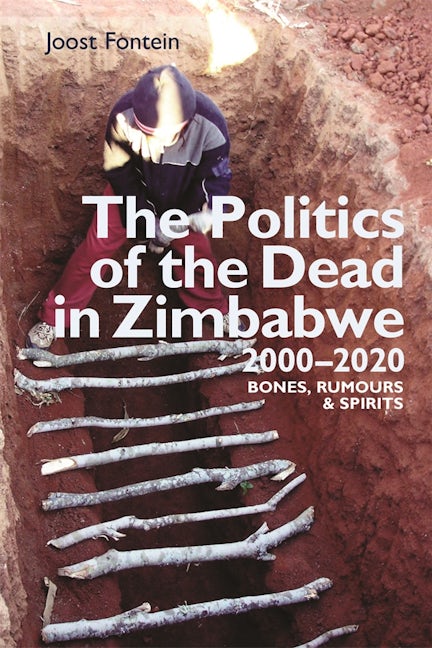
In 1898, just before she was hanged for rebelling against colonial rule, Charwe Nyakasikana, spirit medium of the legendary ancestor Ambuya Nehanda, famously prophesised that "my bones will rise again". A century later bones, bodies and human remains have come to occupy an increasingly complex place in Zimbabwe's postcolonial milieu. From ancestral "bones" rising again in the struggle for independence, and later land, to resurfacing bones of unsettled wardead; and from the troubling decaying remains of post-independence gukurahundi massacres to the leaky, tortured bodies of recent election violence, human materials are intertwined in postcolonial politics in ways that go far beyond, yet necessarily implicate, contests over memory, commemoration and the representation of the past. In this book Joost Fontein examines the complexities of human remains in Zimbabwe's 'politics of the dead'. Challenging and innovative, he takes us beyond current scholarship on memory, commemoration and the changing significance of 'traditional' death practices, to examine the political implications of human remains as material substances, as duplicitous rumours, and as returning spirits. Linking the indeterminacy of human substances to the productive but precarious uncertainties of rumours and spirits, the book points to how the incompleteness of death is politically productive and ultimately derives from the problematic, entangled excessivities of human material and immaterial existence, and is deeply intertwined with the stylistics of postcolonial power and politics.
Joost Fontein is Professor of Anthropology, University of Johannesburg. He was previously Director of the British Institute in Eastern Africa and Lecturer in Social Anthropology at the University of Edinburgh. His books include Remaking Mutirikwi: Landscape, Water and Belonging (James Currey, 2015), shortlisted for the African Studies Association 2016 Herskovits Prize.
Southern Africa (South Africa, Namibia, Lesotho, Swaziland and Botswana): University of Johannesburg Press
In 1898, just before she was hanged for rebelling against colonial rule, Charwe Nyakasikana, spirit medium of the legendary ancestor Ambuya Nehanda, famously prophesised that "my bones will rise again". A century later bones, bodies and human remains have come to occupy an increasingly complex place in Zimbabwe's postcolonial milieu. From ancestral "bones" rising again in the struggle for independence, and later land, to resurfacing bones of unsettled wardead; and from the troubling decaying remains of post-independence gukurahundi massacres to the leaky, tortured bodies of recent election violence, human materials are intertwined in postcolonial politics in ways that go far beyond, yet necessarily implicate, contests over memory, commemoration and the representation of the past. In this book Joost Fontein examines the complexities of human remains in Zimbabwe's 'politics of the dead'. Challenging and innovative, he takes us beyond current scholarship on memory, commemoration and the changing significance of 'traditional' death practices, to examine the political implications of human remains as material substances, as duplicitous rumours, and as returning spirits. Linking the indeterminacy of human substances to the productive but precarious uncertainties of rumours and spirits, the book points to how the incompleteness of death is politically productive and ultimately derives from the problematic, entangled excessivities of human material and immaterial existence, and is deeply intertwined with the stylistics of postcolonial power and politics.
Joost Fontein is Professor of Anthropology, University of Johannesburg. He was previously Director of the British Institute in Eastern Africa and Lecturer in Social Anthropology at the University of Edinburgh. His books include Remaking Mutirikwi: Landscape, Water and Belonging (James Currey, 2015), shortlisted for the African Studies Association 2016 Herskovits Prize.
Southern Africa (South Africa, Namibia, Lesotho, Swaziland and Botswana): University of Johannesburg Press

Price: $32.99
Pages: 366
Publisher: Boydell & Brewer Inc.
Imprint: James Currey
Publication Date:
17 October 2023
Trim Size: 9.21 X 6.14 in
ISBN: 9781847013644
Format: Paperback
BISACs:
SOCIAL SCIENCE / Anthropology / Cultural & Social, Social and cultural anthropology, SOCIAL SCIENCE / Death & Dying, POLITICAL SCIENCE / Colonialism & Post-Colonialism, Sociology: death and dying

An innovative and challenging study that provides fresh insights on the anthropology of death and post-colonial politics.
Introduction
Changing death and human corporeality across Africa and beyond
The politics of the dead in Zimbabwe
The power of uncertainty
Sources and structure of the book
1 Liberation Heritage: Bones and the politics of commemoration
The burial of Gift Tandare
Heritage and commemoration
Heritage and commemoration in Zimbabwe
Liberation heritage
Unsettling Bones
2 Bones & Tortured Bodies: Corporealities of violence and post-violence
Resurfacing bones
Emotive materiality, affective presence and transforming materials
Tortured bodies
Towards 'healing' and 'reconciliation' during the GNU 2009-2013
Conclusions
3 Chibondo: Exhumations, uncertainty and the excessivity of human materials
The Chibondo exhumations
Too 'fresh', 'intact', fleshy, leaky and stinky?
The torque of materiality and the excessive potentiality of human remains
The politics of uncertainty
Conclusions
4 Political Accidents: Rumours, death and the politics of uncertainty
The death of Solomon Mujuru
Factionalism, rivalries and murky business dealings
The inquest
A particular kind of death
Conclusions
5 Precarious Possession: Rotina Mavhunga, politics and the uncertainties of mediumship
Rotina Mavhunga - the diesel n'anga
Precarious occupation
6 Mai Melissa: Towards the alterity of spirit and the incompleteness of death
Towards the alterity of spirit
Conclusions
7 After Mugabe
Burying Bob
Conclusions
Bodies and spirits, change and continuity
AIDS, cholera, Congo, prisons, Chiadzwa, diaspora, FTLR, and charismatic Pentecostalisms
New directions for liberation heritage
Ambuya Nehanda returns?
Exhuming Bob?
Changing death and human corporeality across Africa and beyond
The politics of the dead in Zimbabwe
The power of uncertainty
Sources and structure of the book
1 Liberation Heritage: Bones and the politics of commemoration
The burial of Gift Tandare
Heritage and commemoration
Heritage and commemoration in Zimbabwe
Liberation heritage
Unsettling Bones
2 Bones & Tortured Bodies: Corporealities of violence and post-violence
Resurfacing bones
Emotive materiality, affective presence and transforming materials
Tortured bodies
Towards 'healing' and 'reconciliation' during the GNU 2009-2013
Conclusions
3 Chibondo: Exhumations, uncertainty and the excessivity of human materials
The Chibondo exhumations
Too 'fresh', 'intact', fleshy, leaky and stinky?
The torque of materiality and the excessive potentiality of human remains
The politics of uncertainty
Conclusions
4 Political Accidents: Rumours, death and the politics of uncertainty
The death of Solomon Mujuru
Factionalism, rivalries and murky business dealings
The inquest
A particular kind of death
Conclusions
5 Precarious Possession: Rotina Mavhunga, politics and the uncertainties of mediumship
Rotina Mavhunga - the diesel n'anga
Precarious occupation
6 Mai Melissa: Towards the alterity of spirit and the incompleteness of death
Towards the alterity of spirit
Conclusions
7 After Mugabe
Burying Bob
Conclusions
Bodies and spirits, change and continuity
AIDS, cholera, Congo, prisons, Chiadzwa, diaspora, FTLR, and charismatic Pentecostalisms
New directions for liberation heritage
Ambuya Nehanda returns?
Exhuming Bob?