


Some error occured while loading the Quick View. Please close the Quick View and try reloading the page.
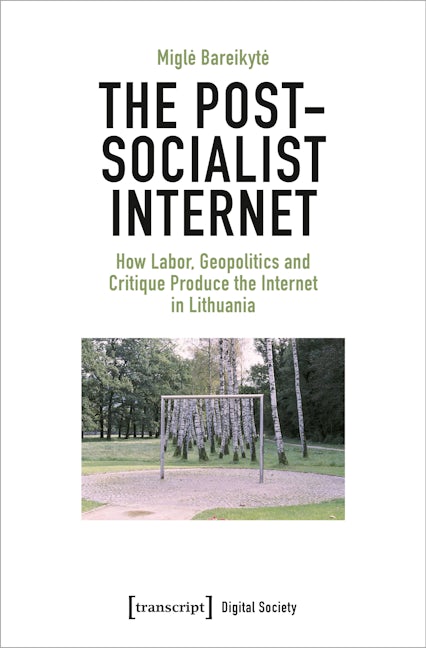
How is the Internet produced as an infrastructure in post-socialist Lithuania? Migle Bareikyte contributes to the growing field of STS and media studies with a distinct focus on Eastern Europe. She situates the Internet development in Lithuania's telecom industry with the exploration of its labor practices, geopolitical imaginaries, and critical negotiations from a bottom-up perspective. Bareikyte further explores how fieldwork-based research can foster new theorizations of media infrastructures. Finally, she argues for a situated investigation of new places and actors beyond the United States and Western Europe–such as post-socialist regions–in order to explore the diversity of media infrastructures.

Price: $55.00
Pages: 252
Publisher: transcript publishing
Imprint: transcript publishing
Publication Date:
27 February 2022
Trim Size: 9.45 X 6.10 in
ISBN: 9783837659566
Format: Paperback
BISACs:
SOCIAL SCIENCE / Media Studies, SOCIAL SCIENCE / Sociology / General, TECHNOLOGY & ENGINEERING / Social Aspects

Migle Bareikyte, born in 1987, works as a postdoctoral researcher for the Team for Digital Media & Methods at Universität Siegen. She received her PhD from Leuphana Universität Lüneburg, where she was a member of the DFG Research Training Group »Cultures of Critique« and a Fellow of the Center for Digital Cultures (CDC). Her research focuses on media development in Europe with the special focus on situated research methods and media politics.
Frontmatter 1
Contents 5
Preface and Acknowledgments 7
List of Figures and Tables 11
Abbreviations and Acronyms 13
1. Introduction 17
2. Everyday Infrastructuring 71
3. Geopolitical Imaginaries 133
4. Critical Negotiations 197
5. Implications for Situating the Internet as Infrastructure: 223
Bibliography 231