


Some error occured while loading the Quick View. Please close the Quick View and try reloading the page.
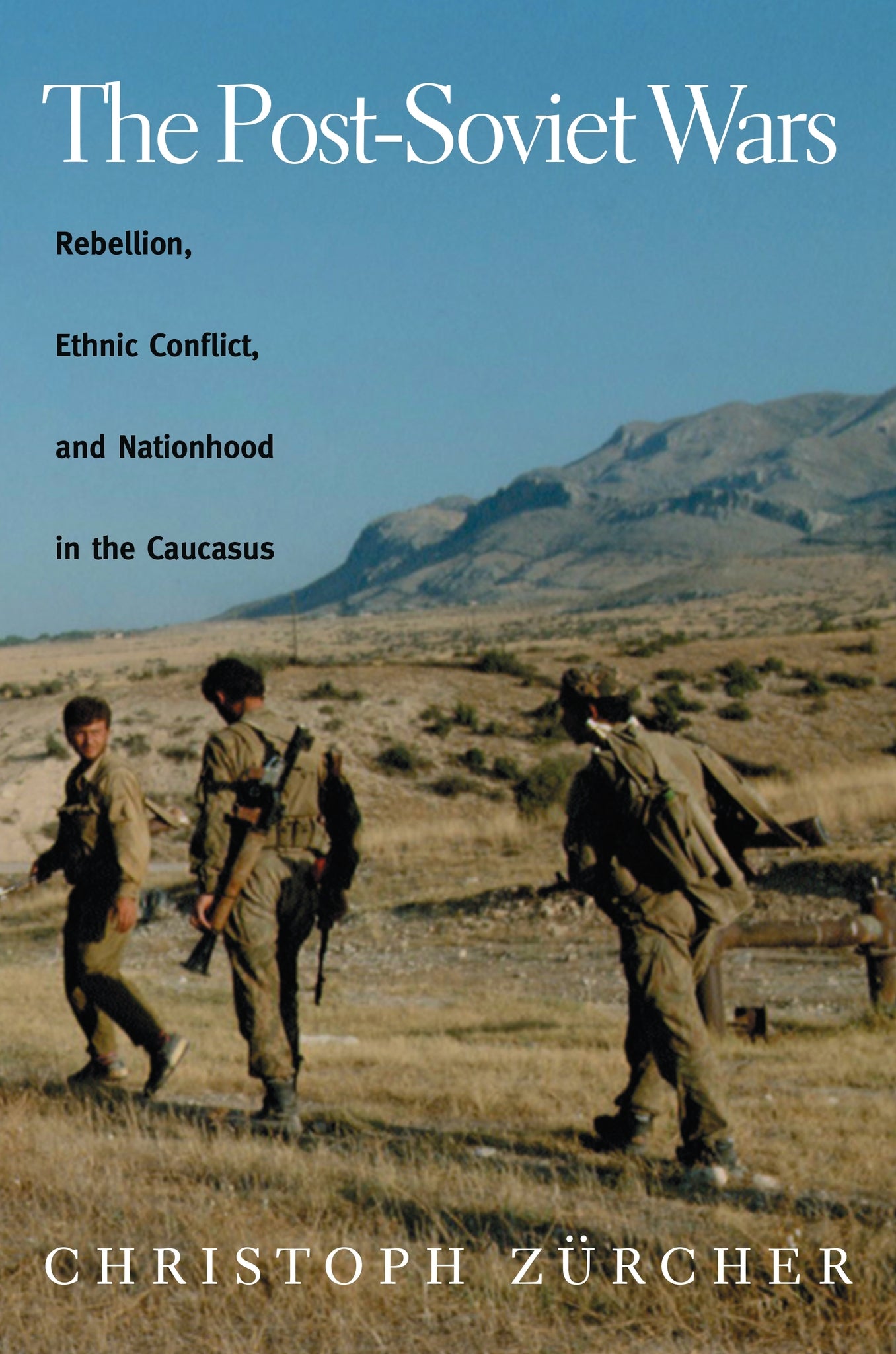
A brief history of the Caucusus region during and after the Post-Soviet Wars
The Post-Soviet Wars is a comparative account of the organized violence in the Caucusus region, looking at four key areas: Chechnya, Armenia, Azerbaijan, Georgia, and Dagestan. Zürcher’s goal is to understand the origin and nature of the violence in these regions, the response and suppression from the post-Soviet regime and the resulting outcomes, all with an eye toward understanding why some conflicts turned violent, whereas others not. Notably, in Dagestan actual violent conflict has not erupted, an exception of political stability for the region. The book provides a brief history of the region, particularly the collapse of the Soviet Union and the resulting changes that took place in the wake of this toppling. Zürcher carefully looks at the conditions within each region—economic, ethnic, religious, and political—to make sense of why some turned to violent conflict and some did not and what the future of the region might portend.
This important volume provides both an overview of the region that is both up-to-date and comprehensive as well as an accessible understanding of the current scholarship on mobilization and violence.


— Georgi Derlugyan,author of Bourdieu's Secret Admirer in the Caucasus: A World-System Biography
With his exciting narratives and compelling analysis of the twentieth century's & Caucasian Wars, Zürcher brings events on the periphery of Europe into the mainstream of social science and comparative politics. Disputing existing explanations of internal wars, he shows that rather than mountainous terrain or poverty, a more powerful causal explanation of civil bloodletting can be located in state capacities and the abilities of combatants to finance their struggles. This book is sure to stir debate.
— Ronald Grigor Suny,University of Michigan
These well-written chapters provide plenty of detail and analysis, displaying the authors deep understanding of the realities of these extremely chaotic and uncertain times in the Caucasus. The Post-Soviet Wars is an interesting read and remains relevant for understanding the contemporary dynamic in the Caucasus.
This books develops into a first-class, original study of the Russian Caucasus during its first years of detachment from the Soviet Union
This is an uncommonly well-argued and well-written explanation of the violent conflicts that erupted across the Caucasus during and after the collapse of the Soviet Union. With exceptional clarity of thought, Zürcher melds established statistical studies of internal wars with a carefully constructed comparison of the origins and courses of the Chechen, Georgian, and Nagorno-Karabakh wars.
Logically structured and nicely designed, rich in sharp arguments and astute observations