


Some error occured while loading the Quick View. Please close the Quick View and try reloading the page.
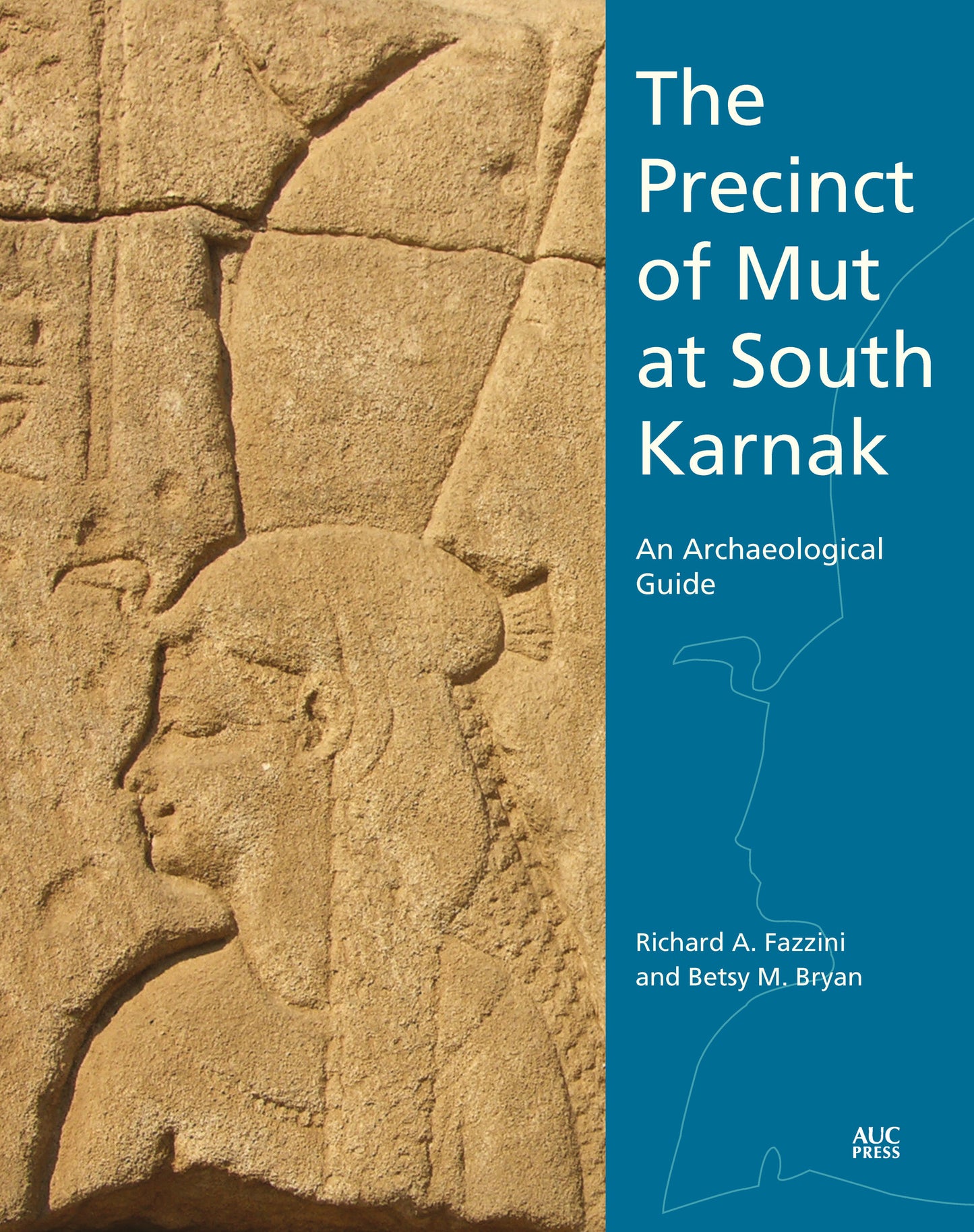
A richly illustrated guide to the Egyptian temple, its history, and the story of its goddess, Mut, as told by the preeminent archaeologists directing the excavations
Mut was an important deity perhaps best known as the consort of Amun-Re and the mother of Khonsu, but her earlier and far more independent role was as the daughter of the sun god, much akin to Hathor. Like Nekhbet and Wadjet and the other lioness goddesses (referred to as Sekhmet) she was the “Eye of Re,” who could be both benign and dangerous. In human form, Mut protected the king and his office; as Sekhmet she could destroy Egypt if not pacified.
The Mut precinct was a major religious center from the Eighteenth Dynasty to the Roman Period, but evidence suggests the existence of an even earlier temple. It expanded during the reign of the Kushite king, Taharqa and attained its present size during the fourth century BCE, sheltering three major temples, several small chapels, and eventually, a village within the protection of its massive enclosure walls. One of its most striking features is the hundreds of Sekhmet statues. In 1976, the Brooklyn Museum began the first systematic exploration of the precinct as a whole. Since 2001, Brooklyn has shared the site with an expedition from the Johns Hopkins University, both teams working cooperatively toward the same goal.
This richly illustrated guide seeks to bring the goddess and her temple precinct the attention they deserve.
Mut was an important deity perhaps best known as the consort of Amun-Re and the mother of Khonsu, but her earlier and far more independent role was as the daughter of the sun god, much akin to Hathor. Like Nekhbet and Wadjet and the other lioness goddesses (referred to as Sekhmet) she was the “Eye of Re,” who could be both benign and dangerous. In human form, Mut protected the king and his office; as Sekhmet she could destroy Egypt if not pacified.
The Mut precinct was a major religious center from the Eighteenth Dynasty to the Roman Period, but evidence suggests the existence of an even earlier temple. It expanded during the reign of the Kushite king, Taharqa and attained its present size during the fourth century BCE, sheltering three major temples, several small chapels, and eventually, a village within the protection of its massive enclosure walls. One of its most striking features is the hundreds of Sekhmet statues. In 1976, the Brooklyn Museum began the first systematic exploration of the precinct as a whole. Since 2001, Brooklyn has shared the site with an expedition from the Johns Hopkins University, both teams working cooperatively toward the same goal.
This richly illustrated guide seeks to bring the goddess and her temple precinct the attention they deserve.

Price: $24.95
Pages: 94
Publisher: The American University in Cairo Press
Imprint: The American University in Cairo Press
Publication Date:
02 March 2021
Trim Size: 9.50 X 7.50 in
ISBN: 9789774169731
Format: Paperback

Richard A. Fazzini currently resides in Brooklyn, New York.
Betsy M. Bryan currently resides in Baltimore, Maryland.
Betsy M. Bryan currently resides in Baltimore, Maryland.