


Some error occured while loading the Quick View. Please close the Quick View and try reloading the page.
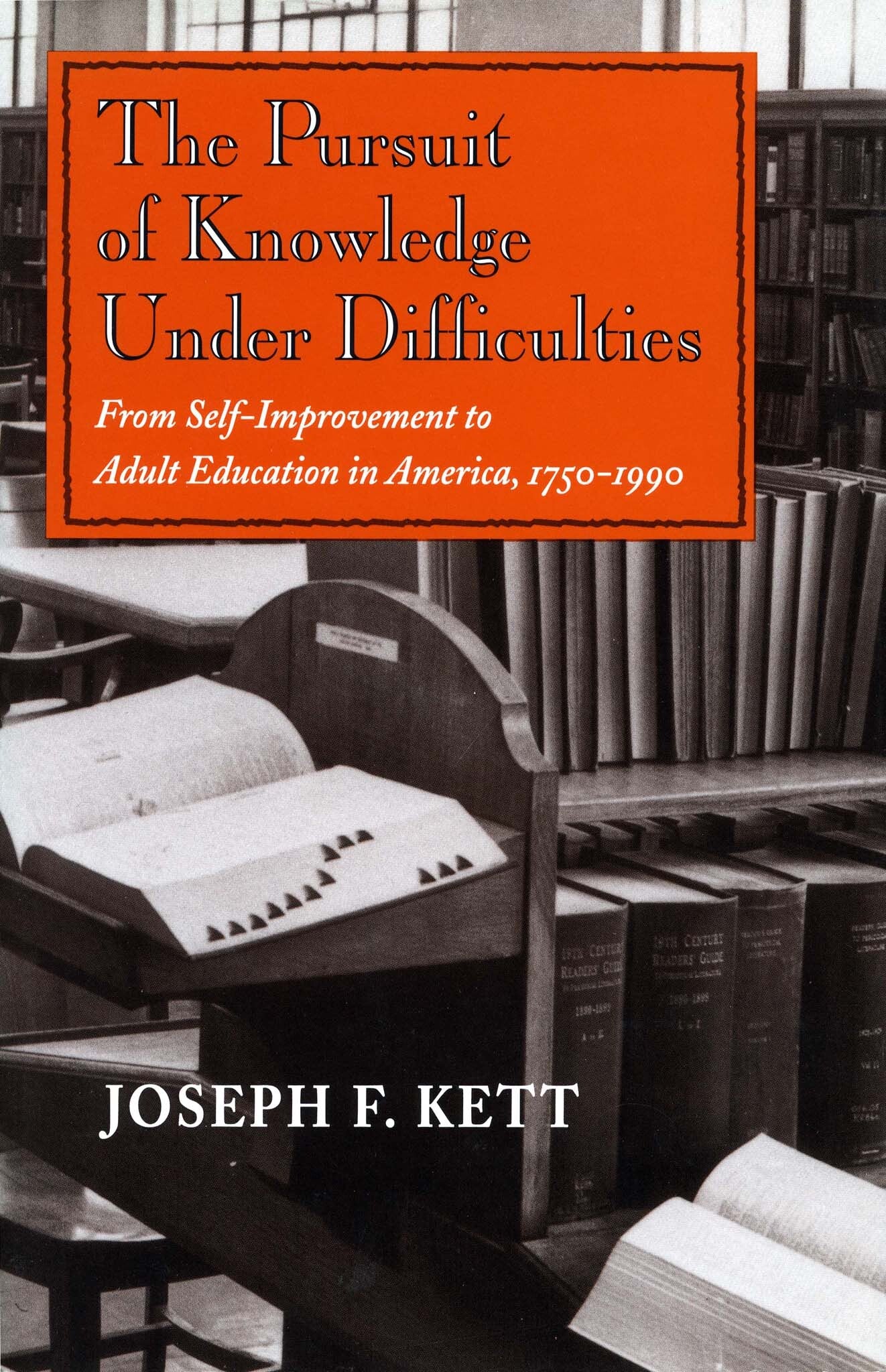
This book traces the history of adult education in America from its roots in the popular tradition of self-improvement, to present day education outside a college or university setting. The author persuasively links developments in the realm of popular self-improvement to cultural and social forces, and explores the reasons why ordinary citizens turned to the cultivation of knowledge. He aims to unravel the knotted connections between education and society, by focusing on the voluntary pursuit of knowledge on the part of those who were both older and more likely to be gainfully employed than the school-age popoulation. By emphasising the importance of audiences, he sheds new light on the reasons for the shift from ideal of culture (as defined by Matthew Arnold) to such typical twentieth-century motifs as vocational education and public service.


"As with Kett's other works, it is an excellent thematic study that blends intellectual and social history. It is based on prodigious research and is a pleasure to read, for it combines a broad sweep and bold statement with delightful detail. It should appeal to both scholars and general readers."—Helen Lefkowitz Horowitz, Smith College
"Joseph F. Kett has produced another distinguished volume. . . . A striking feature of Kett's book is its careful inclusion of succinct accounts of . . . the traditional stuff of educational history. The book adroitly interweaves this conventional history with the learning experiences of Americans who, because of economic circumstances, age, gender-based exclusion, or geographical isolation, were 'out of school.'"—History of Education Quarterly