


Some error occured while loading the Quick View. Please close the Quick View and try reloading the page.
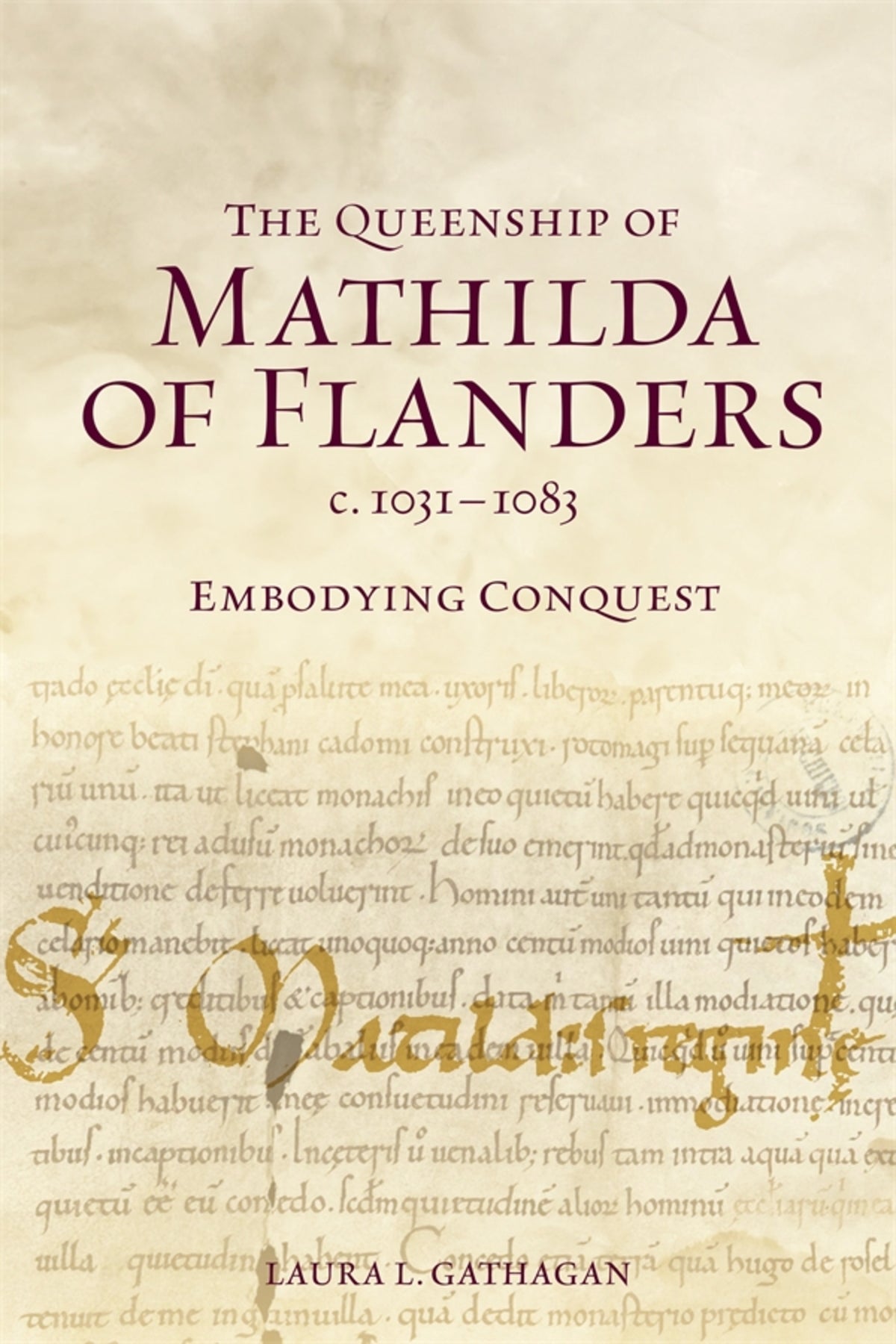
The first full-scale scholarly treatment of Mathilda of Flanders (d. 1083), duchess of Normandy and post-Conquest queen of England.
In Norman England, Mathilda's unique practice of queenship was robustly public. It was characterized by an unapologetic embrace of both new and traditional institutions: military lordship, royal justice, monastic foundation and ecclesiastical reform, documentary initiatives and cultural networks. Although she may appear only glancingly in the chronicle "story sources" of her day, she is everywhere else: governing in documents and charters, articulating her identity in architecture, expressing her authority through innovative custom-made liturgies, handing down juridical sentences and participating in the most fundamental theological issues of her day. However, unlike her husband William "the Conqueror", her impact and influence have not ensured her a place of centrality in modern memory. This book redresses that imbalance. Moving away from the traditional chronological approach to a woman's life, its thematic chapters use the metaphor of Mathilda's body to center her actions, creations and speech, showing how Mathilda embodied power in a world often construed as primarily masculine. It thus brings back into focus the policies she championed, the strategies she pursued and the shape of her authority.
In Norman England, Mathilda's unique practice of queenship was robustly public. It was characterized by an unapologetic embrace of both new and traditional institutions: military lordship, royal justice, monastic foundation and ecclesiastical reform, documentary initiatives and cultural networks. Although she may appear only glancingly in the chronicle "story sources" of her day, she is everywhere else: governing in documents and charters, articulating her identity in architecture, expressing her authority through innovative custom-made liturgies, handing down juridical sentences and participating in the most fundamental theological issues of her day. However, unlike her husband William "the Conqueror", her impact and influence have not ensured her a place of centrality in modern memory. This book redresses that imbalance. Moving away from the traditional chronological approach to a woman's life, its thematic chapters use the metaphor of Mathilda's body to center her actions, creations and speech, showing how Mathilda embodied power in a world often construed as primarily masculine. It thus brings back into focus the policies she championed, the strategies she pursued and the shape of her authority.

Price: $29.99
Pages: 224
Publisher: Boydell & Brewer Inc.
Imprint: Boydell Press
Publication Date:
01 September 2026
Trim Size: 9.21 X 6.14 in
ISBN: 9781837654895
Format: Paperback
BISACs:
HISTORY / Europe / Medieval, European history: medieval period, middle ages, HISTORY / Europe / Great Britain / Norman Conquest to Late Medieval (1066-1485), Gender studies: women and girls, European history: the Normans

Gathagan's book is not a traditional historical biography... Instead, she uses Mathilda's body as the governing theme... but it succeeds in foregrounding Mathilda as a real person as well as a queen. There is an important difference between Gathagan's overt focus on the different roles Mathilda's body played in her expressions of power and scholarship that is preoccupied with the bodies of queens as nothing more than royal incubators. An interested lay reader will finish the book with an informed sense of Mathilda as a uniquely influential woman worthy of historical study.
This book is essential reading for anyone who thinks that queens were ancillary or lacked real power (all historians who work on medieval political history should take note), as well as for anyone interested in medieval women, monarchy, or Anglo-Norman England.
This book is essential reading for anyone who thinks that queens were ancillary or lacked real power (all historians who work on medieval political history should take note), as well as for anyone interested in medieval women, monarchy, or Anglo-Norman England.
List of Illustrations
Acknowledgements
Chronology
List of Abbreviations
Introduction
1. Blood
2. Hands
3. Fingers
4. Head
5. Womb
6. Flesh
7. Mouth
8. Corpse
Select Bibliography
Index of Persons and Places
Acknowledgements
Chronology
List of Abbreviations
Introduction
1. Blood
2. Hands
3. Fingers
4. Head
5. Womb
6. Flesh
7. Mouth
8. Corpse
Select Bibliography
Index of Persons and Places