


Some error occured while loading the Quick View. Please close the Quick View and try reloading the page.
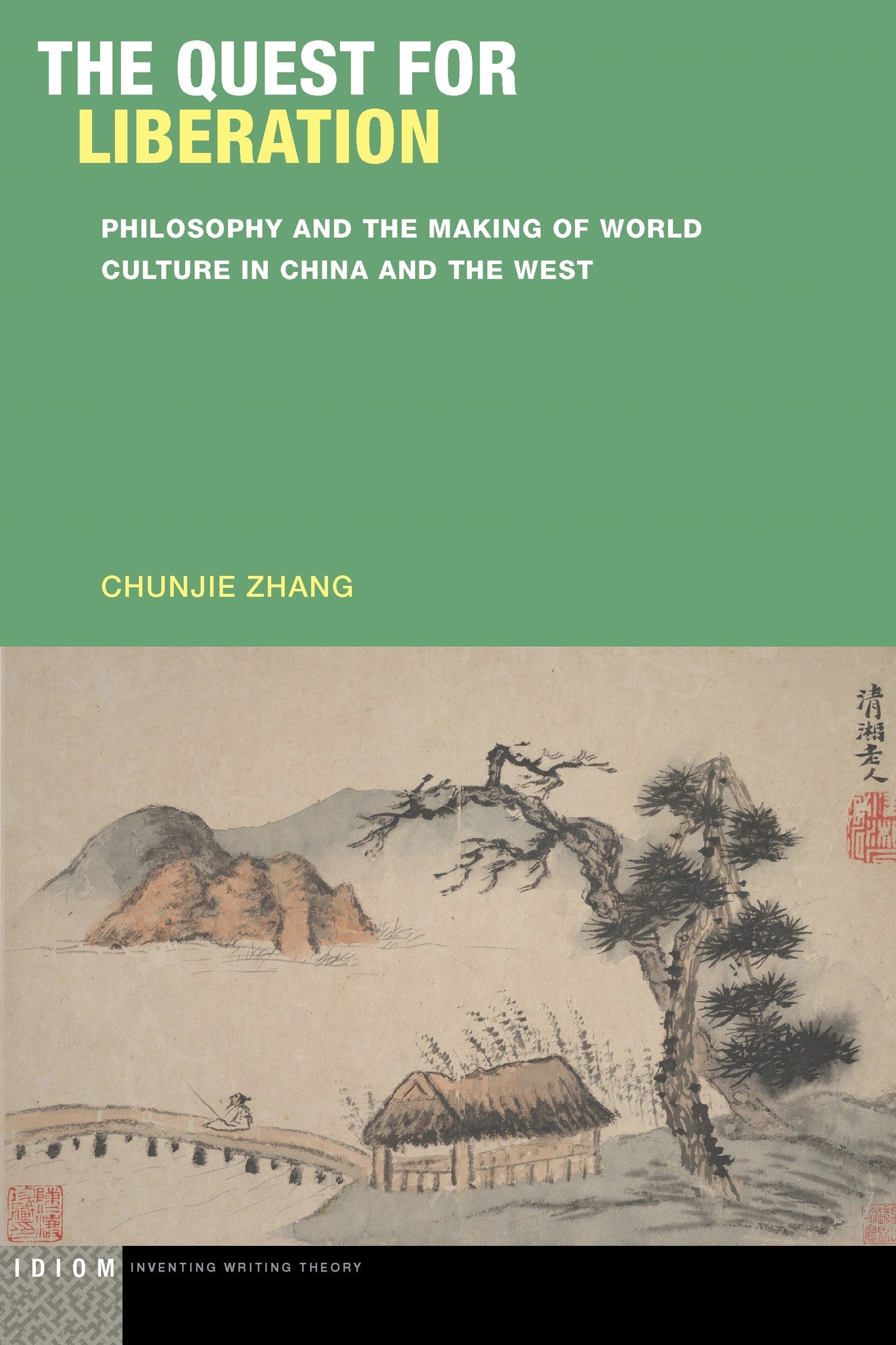
Contemporary debate on cosmopolitanism routinely refers to Immanuel Kant as its intellectual origin. A group of Chinese and German-speaking thinkers in the early twentieth century, however, used classical Chinese philosophy as an alternative intellectual genealogy to reimagine ethics, politics, society, and modernity for the entire world. Their engagement with Confucianism, Taoism, and Buddhism broadens the scope of global intellectual history to include a non-European origin of concepts and ideas.
Due to the differences in their local crises, the Chinese and the European stories are often narrated in separate national and cultural contexts. Bridging the critical divide between China and the West, The Quest for Liberation examines the thinkers’ shared interest in Chinese philosophy and their common effort to envision a world culture other than Western modernity.
Breaking with the common logic of either studying the reception and adaptation of Western ideas in the East or critiquing the misrepresentation of the East in the West, Zhang’s book emphasizes entanglements between Chinese and European thinkers and highlights their quest for liberation in a globalizing world. Their visions of an ontological commons for everyone help us imagine a better world community in our time of global crises, beyond the clash of civilizations.
This book is available from the publisher on an open access basis.


An excellent intervention into the burgeoning scholarship on German and Asian studies, Chunjie Zhang’s The Quest for Liberation shows us how Chinese and German intellectuals harnessed each other’s philosophical traditions to rethink economics, ethics, politics, and spirituality in a quest for global justice over imperial hegemony.---Glenn Penny, UCLA
. . .[A] superb intellectual history in both method and execution. Highly recommended.
Introduction: Global Intellectual History, Ecology of Little Beings, and World Culture | 1
1. Encounter in Beijing:
Hermann Graf Keyserling, Gu Hongming, and Confucian Cosmopolitanism | 25
2. Re-enchanting Confucianism: Max Weber, Care of the Self, and Charisma | 46
3. Zhang Junmai as Philosopher: Rudolf Eucken, Life, and Spirituality | 82
4. Liang Shuming, World Culture, and Rural Modernity | 114
5. Early Feng Youlan’s Negative Method: Metaphysics, World Philosophy, and Sage | 144
6. Bertolt Brecht’s Me-ti or the Aesthetics of Translation:
Universal Love, Mutual Benefits, and Transience | 177
Coda: Conservatism or Alternative Modernity | 193
Acknowledgments | 197
Notes | 201
Works Cited | 239
Index | 253