


Some error occured while loading the Quick View. Please close the Quick View and try reloading the page.
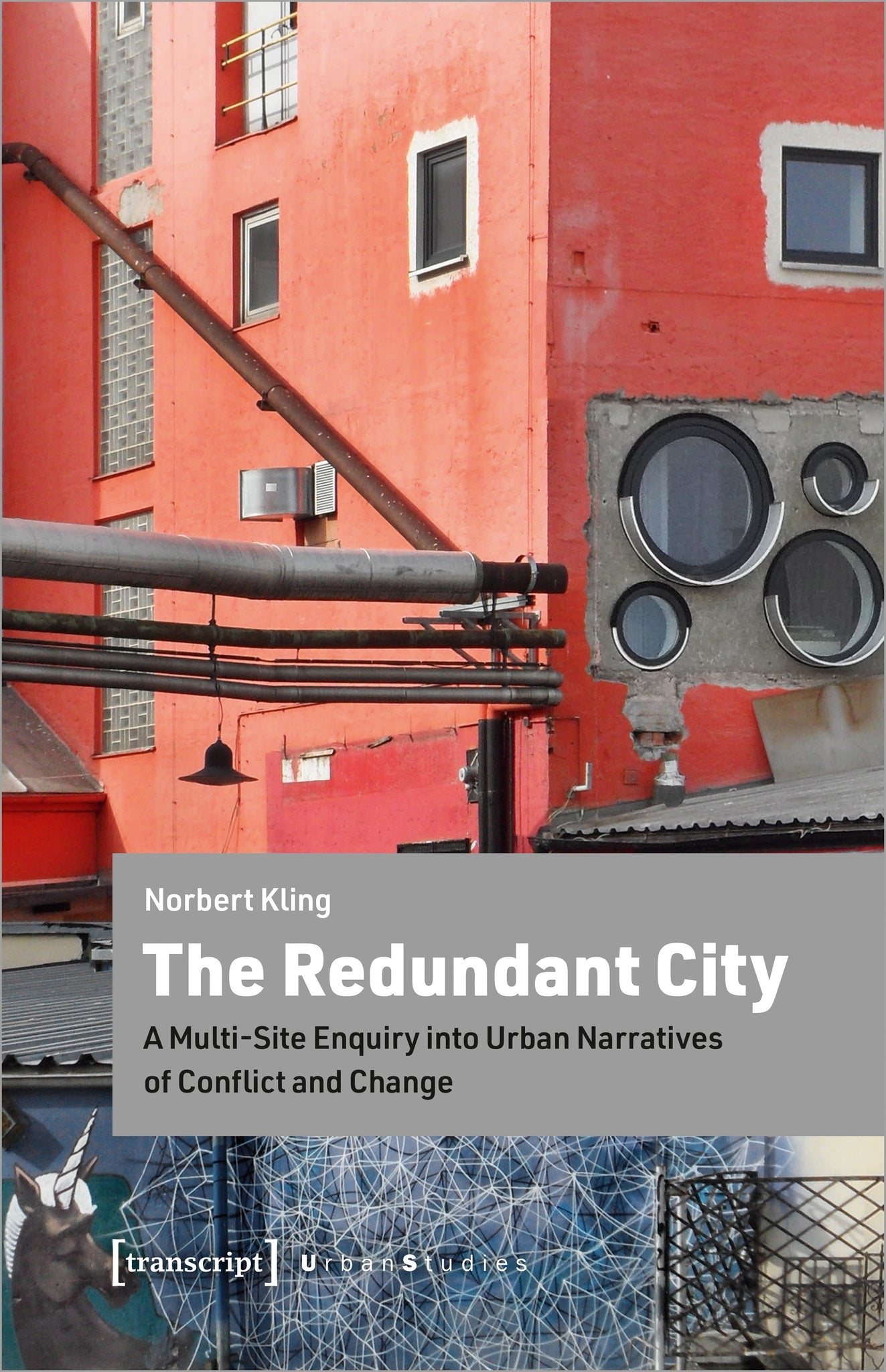
Dynamic processes and conflicts are at the core of the urban condition. Against the background of continuous change in cities, concepts and assumptions about spatial transformations have to be constantly re-examined and revised. Norbert Kling explores the rich body of narrative knowledge in architecture and urbanism and confronts this knowledge with an empirically grounded situational analysis of a large housing estate. The outcome of this twofold research approach is the sensitising concept of the Redundant City. It describes a specific form of collectively negotiated urban change.

Price: $50.00
Pages: 350
Publisher: transcript publishing
Imprint: transcript publishing
Series: Urban Studies
Publication Date:
27 November 2020
Trim Size: 9.45 X 6.10 in
ISBN: 9783837651140
Format: Paperback
BISACs:
SOCIAL SCIENCE / Sociology / Urban, ARCHITECTURE / Urban & Land Use Planning, SOCIAL SCIENCE / Human Geography

Norbert Kling is an architect, researcher, and urbanist. He currently teaches architectural and urban design at the Technical University of Munich, where he received a Dr.-Ing. in Architecture. His research interests include conditions of asymmetric urban change and alternative spatial practices, as well as questions of concept formation, method and process in the spatial disciplines. He is partner at the award winning practice zectorarchitects London/Munich.
Frontmatter 1
Content 7
Introduction 11
I. Research as Situated and Critical Project 25
II. Domain-Specific Narratives of Conflict 81
III. Domain-Specific Narratives of Change 135
IV. Intersecting Conflict and Change 187
V. Constructing a New Concept of Change 203
VI. Connecting and Releasing 291
VII. Appendix 327