


Some error occured while loading the Quick View. Please close the Quick View and try reloading the page.
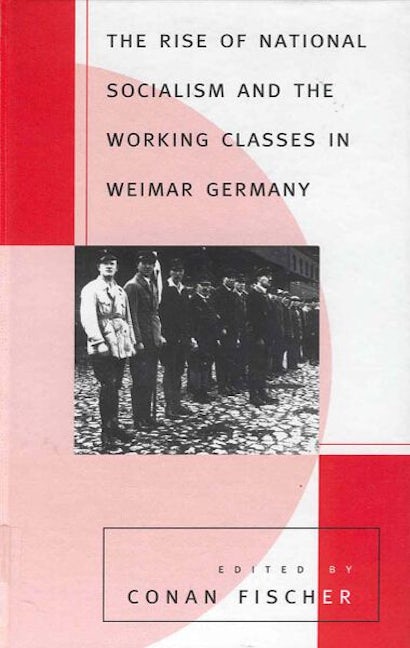
Before seizing power the Nazi movement assembled an exceptionally broad social coalition of activists and supporters. Many were working class, but there remains considerable disagreement over the precise size and structure of this constituency and still more over its ideology and politics. An indispensable work for scholars of interwar Germany and Nazism in general.


"Despite its impressive range the collection is remarkably coherent ... [it] constitutes a valuable contribution to our understanding of the social base of Nazism." · Labor History
Conan Fischer is Reader in History at the Department of History, University of Strathclyde.
Chapter 1. How likely were Workers to Vote for the NSDAP?
J. W. Falter
Chapter 2. A "Workers' Party" or a "Party without Workers"?
D. Mühlberger
Chapter 3. The Young Membership of the NSDAP between 1925 and 1933
J. W. Falter
Chapter 4. The Pattern of the SA's Social Appeal
C. Fischer and D. Mühlberger
Chapter 5. National Socialist Factory Cell Organisation and the German Labour Front
G. Mai
Chapter 6. Blue-collar Nazism
W. Brustein
Chapter 7. National Socialism and the Working-Class Women before 1933
H. Boak
Chapter 8. The Rise of the Nazi Party in the Working-Class Milieu of Saxony
C. C. Szejnmann
Chapter 9. The Black Forest: the Disintegration of the Workers' Catholic Milieu and the Rise of the Nazi Party
O. Heilbronner
Conclusion
C. Fischer
Notes on Contributors
Bibliography
Index