


Some error occured while loading the Quick View. Please close the Quick View and try reloading the page.
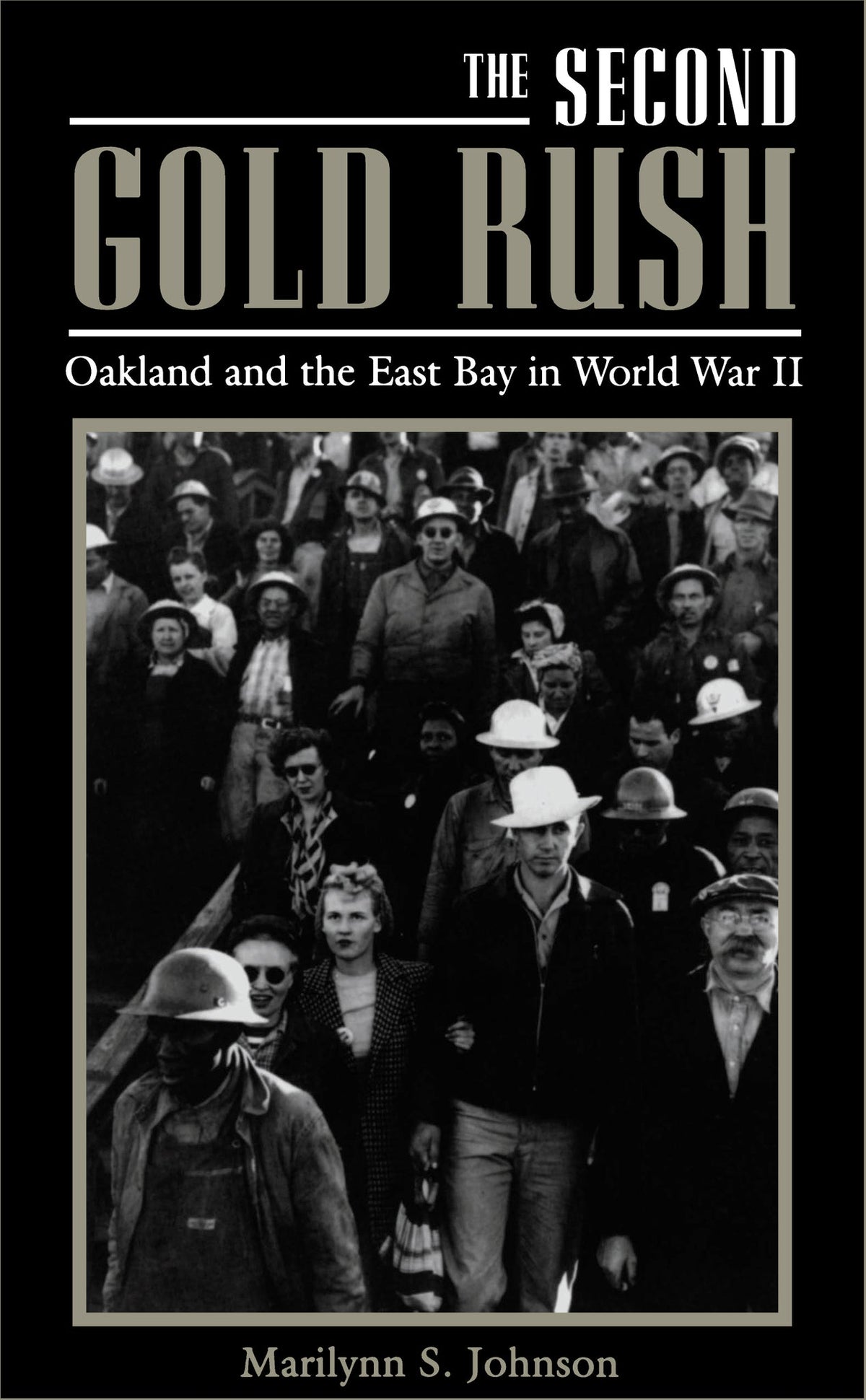
More than any event in the twentieth century, World War II marked the coming of age of America's West Coast cities. Almost overnight, new war industries prompted the mass urban migration and development that would trigger lasting social, cultural, and political changes. For the San Francisco Bay Area, argues Marilynn Johnson, the changes brought by World War II were as dramatic as those brought by the gold rush a century earlier.
Focusing on Oakland, Richmond, and other East Bay shipyard boomtowns, Johnson chronicles the defense buildup, labor migration from the South and Midwest, housing issues, and social and racial conflicts that pitted newcomers against longtime Bay Area residents. She follows this story into the postwar era, when struggles over employment, housing, and civil rights shaped the urban political landscape for the 1950s and beyond. She also traces the cultural legacy of war migration and shows how Southern religion and music became an integral part of Bay Area culture.
Johnson's sources are wide-ranging and include shipyard records, labor histories, police reports, and interviews. Her findings place the war's human drama at center stage and effectively recreate the texture of daily life in workplace, home, and community. Enriched by the photographs of Dorothea Lange and others, The Second Gold Rush makes an important contribution to twentieth-century urban studies as well as to California history.
Many titles in the Voices Revived program are also newly available as ebooks, offered at a discounted price to support wider access to scholarly work.
Focusing on Oakland, Richmond, and other East Bay shipyard boomtowns, Johnson chronicles the defense buildup, labor migration from the South and Midwest, housing issues, and social and racial conflicts that pitted newcomers against longtime Bay Area residents. She follows this story into the postwar era, when struggles over employment, housing, and civil rights shaped the urban political landscape for the 1950s and beyond. She also traces the cultural legacy of war migration and shows how Southern religion and music became an integral part of Bay Area culture.
Johnson's sources are wide-ranging and include shipyard records, labor histories, police reports, and interviews. Her findings place the war's human drama at center stage and effectively recreate the texture of daily life in workplace, home, and community. Enriched by the photographs of Dorothea Lange and others, The Second Gold Rush makes an important contribution to twentieth-century urban studies as well as to California history.
Many titles in the Voices Revived program are also newly available as ebooks, offered at a discounted price to support wider access to scholarly work.

Price: $18.95
Pages: 328
Publisher: University of California Press
Imprint: University of California Press
Publication Date:
February 8, 1994
ISBN: 9780520918436
Format: eBook

ACKNOWLEDGMENTS
INTRODUCTION
1
Prelude to War
2
The Second Gold Rush
3
Wartime Shipyards and the Transformation of Labor
4
The Making of Migrant Ghettos
5
Migrant Families and Communities
6
Boomtowns and the Control of Urban Space
7
Mobilizing Politics
8
Boomtown Blues
CONCLUSION
NOTES
BIBLIOGRAPHY
INDEX
Plates
INTRODUCTION
1
Prelude to War
2
The Second Gold Rush
3
Wartime Shipyards and the Transformation of Labor
4
The Making of Migrant Ghettos
5
Migrant Families and Communities
6
Boomtowns and the Control of Urban Space
7
Mobilizing Politics
8
Boomtown Blues
CONCLUSION
NOTES
BIBLIOGRAPHY
INDEX
Plates