


Some error occured while loading the Quick View. Please close the Quick View and try reloading the page.
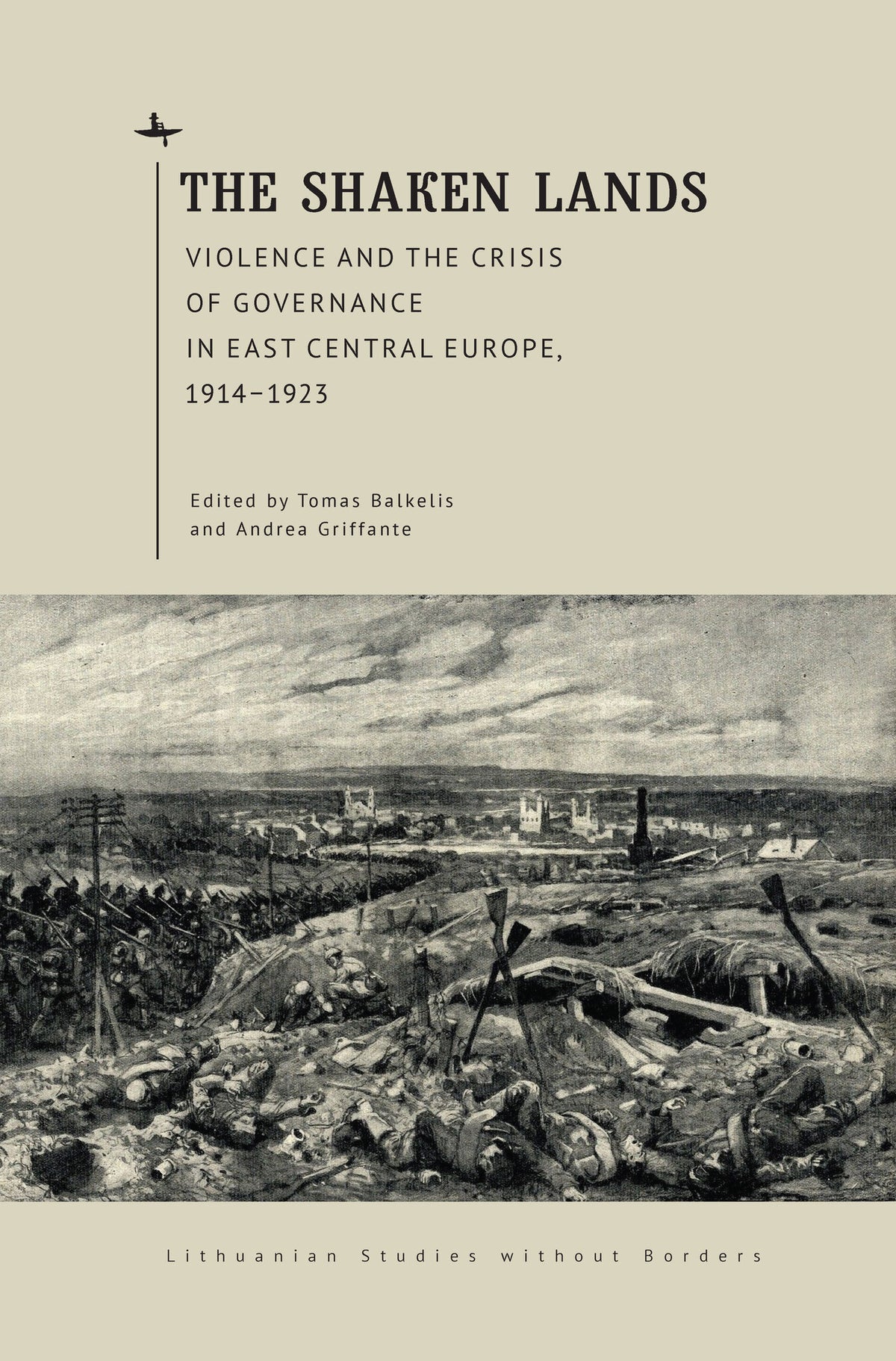
The volume focuses on violence during the breakdown of East Central European states brought by one of the most violent periods in modern European history: from the start of the Great War in 1914 until 1923 when Europe, finally, achieved peace after a series of civil conflicts and interstate wars. The contributors offer several case studies that cover the vast region stretching from the Baltic states to Hungary. They explore different types of violence against its civilian populations with a particular focus on communal violence committed by civilians onto their neighbors. They suggest that disintegration of state power brought by the Great War was a key condition that produced violence. Yet the process of post-WWI state building was equally or more violent as nascent East Central European states institutionalized the use of violence to achieve their political agendas.


“With its clear conception, focus on a specific space and period, and appropriate selection of high‑quality studies, it avoids the common pitfall of similar books where individual contributions are only loosely related by an overarching theme. [T]he volume is a successful contribution to a vibrant field of research”.
— Ota Konrád, Journal of East Central European Studies
“The Shaken Lands offers a valuable contribution to a growing body of literature that paints a much darker picture of these times, bringing into focus violence, mass population displacement and extreme economic hardship. In this regard, The Shaken Lands lays the groundwork for more nuanced, and possibly more hopeful, histories of the region.”
— Vaida Niksaite, Cahiers d'histoire russe, est-européenne, caucasienne et centrasiatique
“The edited volume succeeds in portraying a multiethnic region in turmoil, with violence in its various forms remaining its central factor. The authors contribute to a better understanding of the interconnectedness of violence during the ‘Greater War’ in East Central Europe and ‘the multifaceted nature of its forgotten cruelty.’”
— Karsten Brügemann, Ab Imperio
“East Central Europe was transformed by war, revolution, and the birth of nation-states after the First World War. The Shaken Lands excels by examining 1914 to 1923 as an interconnected ‘Greater War’. Combining conceptual insights with solid case studies, it suggests both national comparisons and transnational overviews of the manifold violence that shaped the entire region, including the Baltic states. It is an indispensable study in this rapidly emerging field.”
— John Horne, emeritus Professor of History, Trinity College Dublin
“Based on the latest scholarship and written by some of the leading historians in the field, this volume makes an outstanding contribution to a better understanding of one of the most violent periods in modern European history and the deeper historical origins of present-day conflicts such as Russia’s current war against Ukraine.”
— Prof. Robert Gerwarth, University College Dublin
Tomas Balkelis is a senior research fellow at the Lithuanian Institute of History in Vilnius. He is the author of The Making of Modern Lithuania (Routledge, 2009) and War, Revolution and Nation-Making in Lithuania (Oxford University Press, 2018). His research fields include nation-building, forced migrations, population displacement, and paramilitary violence in Lithuania, Russia, and Poland.
Andrea Griffante is a senior research fellow at the Lithuanian Institute of History in Vilnius. He received his MA at the University of Trieste and his PhD in history at Klaipėda University. His latest monograph is Children, Poverty, and Nationalism in Lithuania, 1900–1940 (Palgrave, 2019). His research fields include history of humanitarianism, nation-building, history of childhood, and social history of medicine.
Acknowledgements
Introduction
Tomas Balkelis and Andrea Griffante
Contributors
1. The Evolution of Wartime Criminality in Lithuania, 1914–1920
Vytautas Petronis
2. War Violence and Its Representation: A Comparison of Civilian Experiences of the Great War on Both Sides of the Former Russian-German Border
Vasilijus Safronovas, Vygantas Vareikis, and Hektoras Vitkus
3. The Military Pogroms in Lithuania, 1919–1920
Darius Staliūnas
4. Scandinavian Volunteers as Perpetrators of Violence and Crime in the Estonian War of Independence
Mart Kuldkepp
5. The Rich and the (In)famous: Social Conflicts and Paramilitary Violence in Hungary during the Counterrevolution, 1921–1923
Béla Bodó
6. The Polish Central Government, Regional Authorities, and Local Paramilitaries during the Battle for the Western Borderlands, 1918–1921
Jochen Böhler
7. Eisenbahnfeldzug: Railway War in East Central Europe
Maciej Górny
8. Beyond Comparison? The Challenges of Applying Comparative Historical Research to Violence
Julia Eichenberg