


Some error occured while loading the Quick View. Please close the Quick View and try reloading the page.
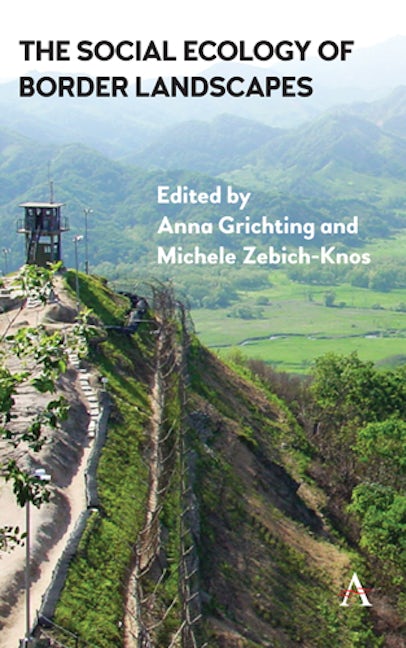
The collection of essays in The Social Ecology of Border Landscapes defi nes borders and borderlands to include territorial interfaces, marginal spaces (physical, sociological and psychological) and human consciousness. From theoretical and conceptual presentations on social ecology and its agencies and representations, to case studies and concrete projects and initiatives, the contributing authors uncover a thread of contemporary thought and action on this important emerging fi eld. The essays aim to defi ne the territories of social ecology, to investigate how social agencies can activate ecological processes and systems, and to understand how the interactions of people and ecosystems can create new sustainable landscapes across tangible and intangible territorial rifts.


Anna Grichting, a Swiss architect and urbanist, is currently teaching graduate and undergraduate courses in Architecture and urban planning at Qatar University.
Michele Zebich-Knos is Professor Emeritus of Political Science and International Affairs, and founding Director of the Master of Science in International Policy Management Program at Kennesaw State University/University System of Georgia (Atlanta, USA). She is currently a Research Fellow at the University of Vermont’s Institute for Environmental Diplomacy and Security and is author of numerous publications on environmental policy.
Introduction: Social Ecologies and Borderlands; Part I: Frames: Mapping Social Ecologies in Border Territories; 1. On the Agency of Borderlands; 2. Social Ecology and Transboundary Conservation: (Re-) Connecting Nature and People in Borderlands; 3. Social Ecologies as “Gated Ecologies”; Part II: Bridges: Resilience, Restoration and Reclamation; 4. Borders as Zones of Experiential Learning: The Case of the Balkans Peace Park Initiative; 5. Social Ecologies in Borderlands: Crane Habitat Restoration and Sustainable Agriculture Project in the Democratic People’s Republic of Korea; 6. Socio-Ecological Transformations in Riparian Zones: The Production of Spaces of Exclusion and the Uneven Development of Resilience in the Sonoran Borderlands ; 7. From No-Man’s Land to Every-Man’s Land: Socio-Ecological Approaches to Reclaiming Shared Spaces in Border Landscapes, with Examples from Germany and Cyprus; Part III: Corridors: Catalysts and Collaboration in Confined Spaces; 8. Ensuring Hope in Militarized Landscapes: The Case of Lebanon; 9. Domesticating and Enlarging One’s Territory: Day-to-Day Politics in a Confined Space—The Shu’Fat Refugee Camp in East Jerusalem; 10. Urban Alternatives and Collaborative Economics in Belfast’s Contested Space; Part IV: Portals: Dialogue, Exception and Reterritorialization; 11. Australia Day: A Social Ecology Dialogue across Aboriginal and White Cultures; 12. Re-Legislating the Soil: Enclosures and Exception at the Amazon Frontiers; 13. Mediterranean Edges: Reterritorializing Natural and Social Ecologies; Making Sense of Social Ecology, Borders and the Environment: A Conclusion; Index.