


Some error occured while loading the Quick View. Please close the Quick View and try reloading the page.
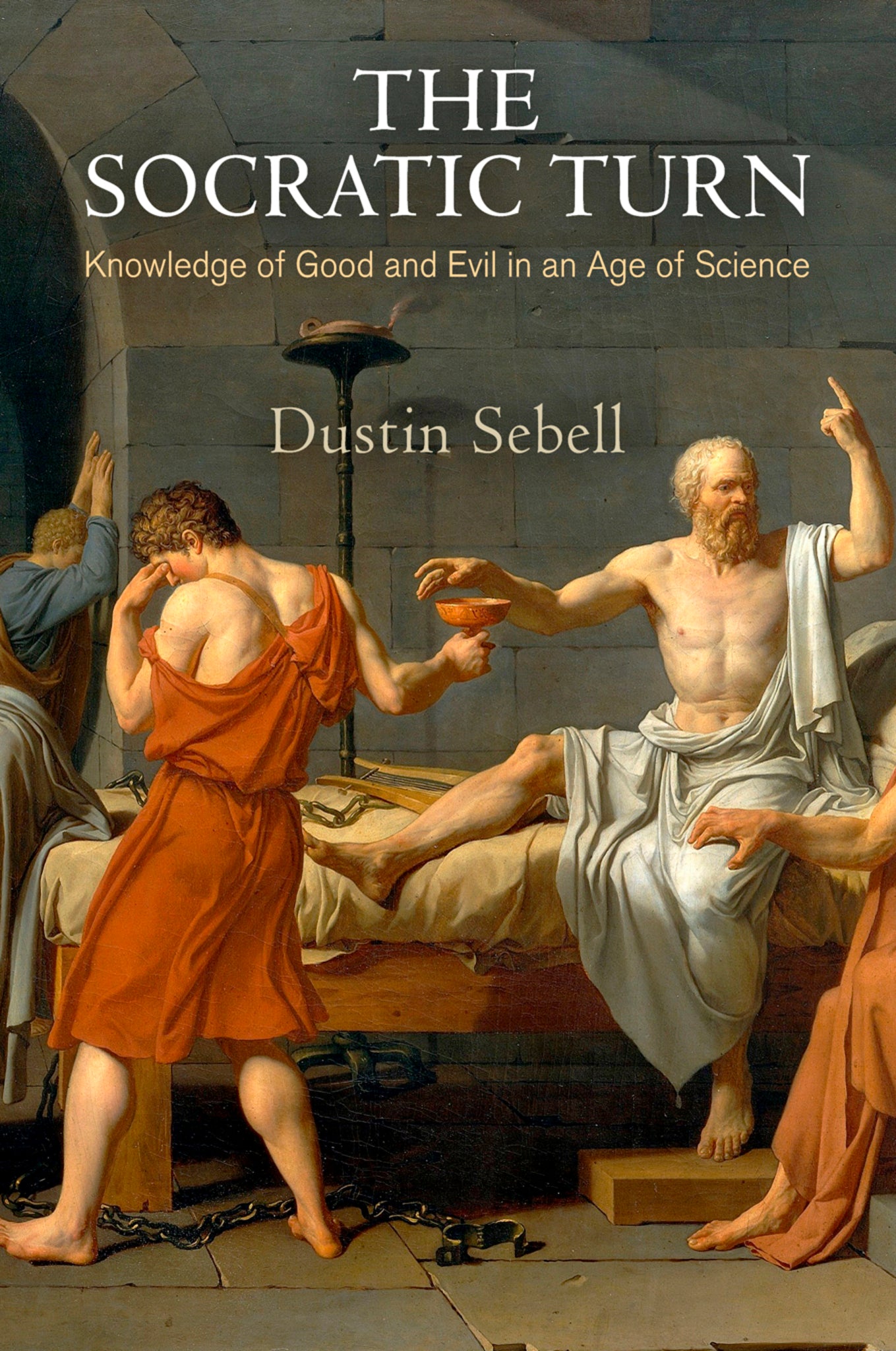
The Socratic Turn addresses the question of whether we can acquire genuine knowledge of good and evil, right and wrong. Reputedly, Socrates was the first philosopher to make the attempt. But Socrates was a materialistic natural scientist in his youth, and it was only much later in life—after he had rejected materialistic natural science—that he finally turned, around the age of forty, to the examination of ordinary moral and political opinions, or to moral-political philosophy so understood.
Through a consideration of Plato's account of Socrates' intellectual development, and with a view to relevant works of the pre-Socratics, Xenophon, Aristotle, Hesiod, Homer, and Aristophanes, Dustin Sebell reproduces the course of thought that carried Socrates from materialistic natural science to moral-political philosophy. By doing so, he seeks to recover an all but forgotten approach to the question of justice, one still worthy of being called scientific.


Introduction
PART I
Chapter 1. The Problem of the Young Socrates
Chapter 2. What Is Science?
Chapter 3. The Prospects for Matter in Motion
Chapter 4. Noetic Heterogeneity
PART II
Chapter 5. Teleology
PART III
Chapter 6. Science and Society
Chapter 7. Dialectic
Conclusion
Notes
References
Index
Acknowledgments