


Some error occured while loading the Quick View. Please close the Quick View and try reloading the page.
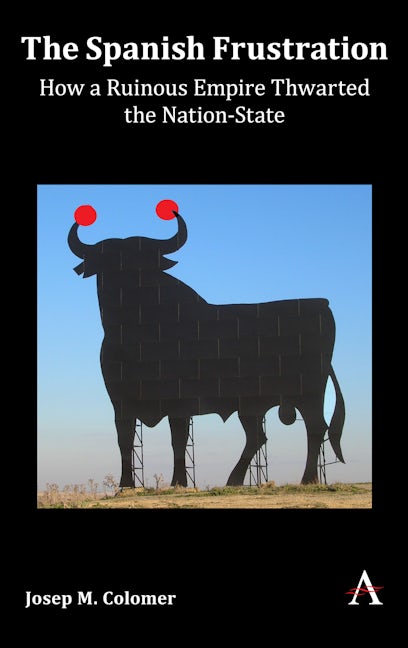
Old troubles with remote origins persist in modern Spain, including huge public debts, extensive corruption, widespread unlawfulness, oligarchical politics, territorial splits, and permanent protests and riots. When did Spain screw up? The Spanish Frustration provides an interpretation of several important aspects of present-day Spain and its past stories. It argues that, in the long term, Spain missed the opportunity to become a consolidated modern nation-state because it was entangled in imperial adventures for several centuries when it should have been building a solid domestic basis for further endeavors. In short: a ruinous empire made a weak state, which built an incomplete nation, which sustains a minority democracy.


Josep M. Colomer is professor of political science at Georgetown University, USA. He is a founding member of the Spanish Political Association, a member by election of the Academy of Europe and a life member of the American Political Science Association, which have awarded several of his works. Colomer is the author or editor of many books, a number of which have been published in five languages, including The European Empire (2016), How Global Institutions Rule the World (2014) and The Science of Politics (2010).
Preface; 1. Introduction; 2. A Ruinous Empire; 3. A Weak State; 4. An Incomplete Nation; 5. A Minority Democracy; 6. Conclusion: Transitioning Outward; 7. Sources; Notes; Index.