


Some error occured while loading the Quick View. Please close the Quick View and try reloading the page.
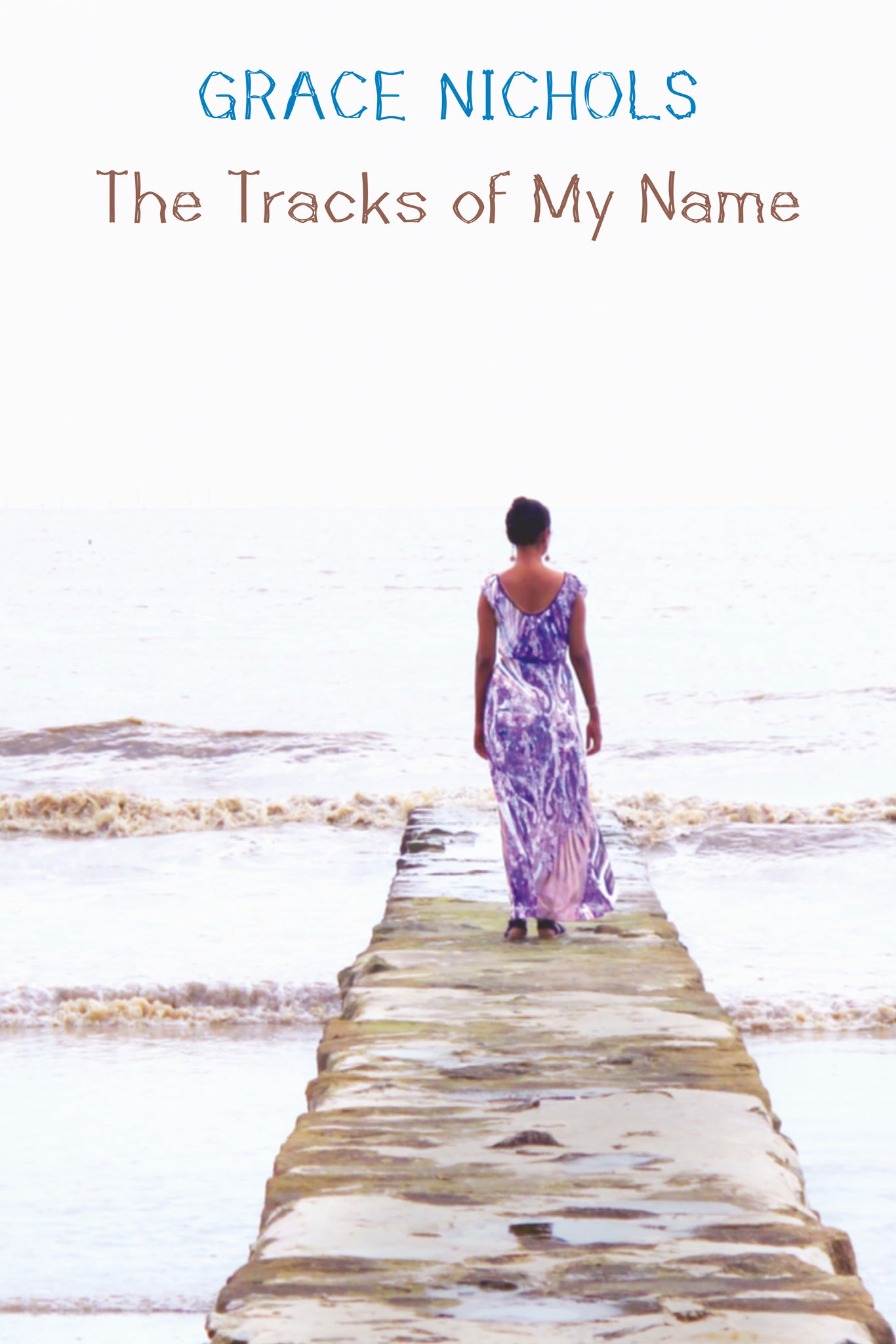
The Tracks of My Name sees Grace Nichols embarking on a journey across the English countryside to the small town of Olney in Buckinghamshire, where the one-time English slave-trader (later abolitionist) John Newton lived. It was here that Newton wrote his famous hymn, Amazing Grace. which inspired Nichols' Guyanese Methodist parents to name her Grace Olney after both hymn and place.
A narrative sequence that reads as a personal quest, The Tracks of My Name lyrically and imaginatively explores the relationship between memory and history, conscience and greed, a sense of place and love of landscape, through her own distinctive way of viewing the world. Even when confronting some of the more unsavoury aspects of Empire, she makes a space for redemption, continuing the interweave between her Guyanese/Caribbean and British heritages.
The Tracks of My Name is Grace Nichols's fourth new collection with Bloodaxe since her retrospective, I Have Crossed an Ocean (2010), following Picasso, I Want My Face Back (2009), The Insomnia Poems (2017) and Passport to Here and There (2020). She was awarded the Queen's Gold Medal for Poetry for 2021. Her poetry is studied in UK schools as part of the GCSE National Curriculum.
The Tracks of My Name is the Poetry Book Society Choice for Winter 2026.


'Over the past four decades, Grace has been an original, pioneering voice in the British poetry scene. A noted reader and ‘performer’ of her work, she has embraced the tones of her adopted country and yet maintained the cadences of her native tongue. Her poems are alive with characters from the folklore and fables of her Caribbean homeland, and echo with the rhymes and rhythms of her family and ancestors. Song-like or prayer-like on occasion, they exhibit an honesty of feeling and a generosity of spirit. They are also passionate and sensuous at times, being daring in their choice of subject and openhearted in their outlook. Above all, Grace Nichols has been a beacon for black women poets in this country, staying true to her linguistic coordinates and poetic sensibilities, and offering a means of expression that has offered inspiration and encouragement to many. She is a moving elegist, and a poet of conciliation and constructive dialogue between cultures, but also a voice of questioning dissent when the occasion demands.' – Simon Armitage, Poet Laureate, on behalf of The Queen's Gold Medal for Poetry Committee
‘Not only rich music, an easy lyricism, but also grit, and earthy honesty, a willingness to be vulnerable and clean.’ – Gwendolyn Brooks
'Nichols’s ninth collection is split, like her identity, between the Guyana where she grew up, and the England which she has made her home. She uses Creole and the imagery of ghosts to conjure up her coming of age in South America... she often draws on the natural world for her metaphors, and her style is characterised by alliteration and assonance. One section of unrhymed 14-line poems, illustrated with black-and-white photographs by Compton Davis, she calls “Back-homing (Georgetown Snapshot Sonnets).” She then brings her adopted country to life with poems on everything from tea and the Thames to the London Underground and the Grenfell Tower fire. A final set of elegies (including one to Derek Walcott) feels like a fittingly sombre close.' - Rebecca Foster, Shiny New Books (Poetry Highlights of 2020)