


Some error occured while loading the Quick View. Please close the Quick View and try reloading the page.
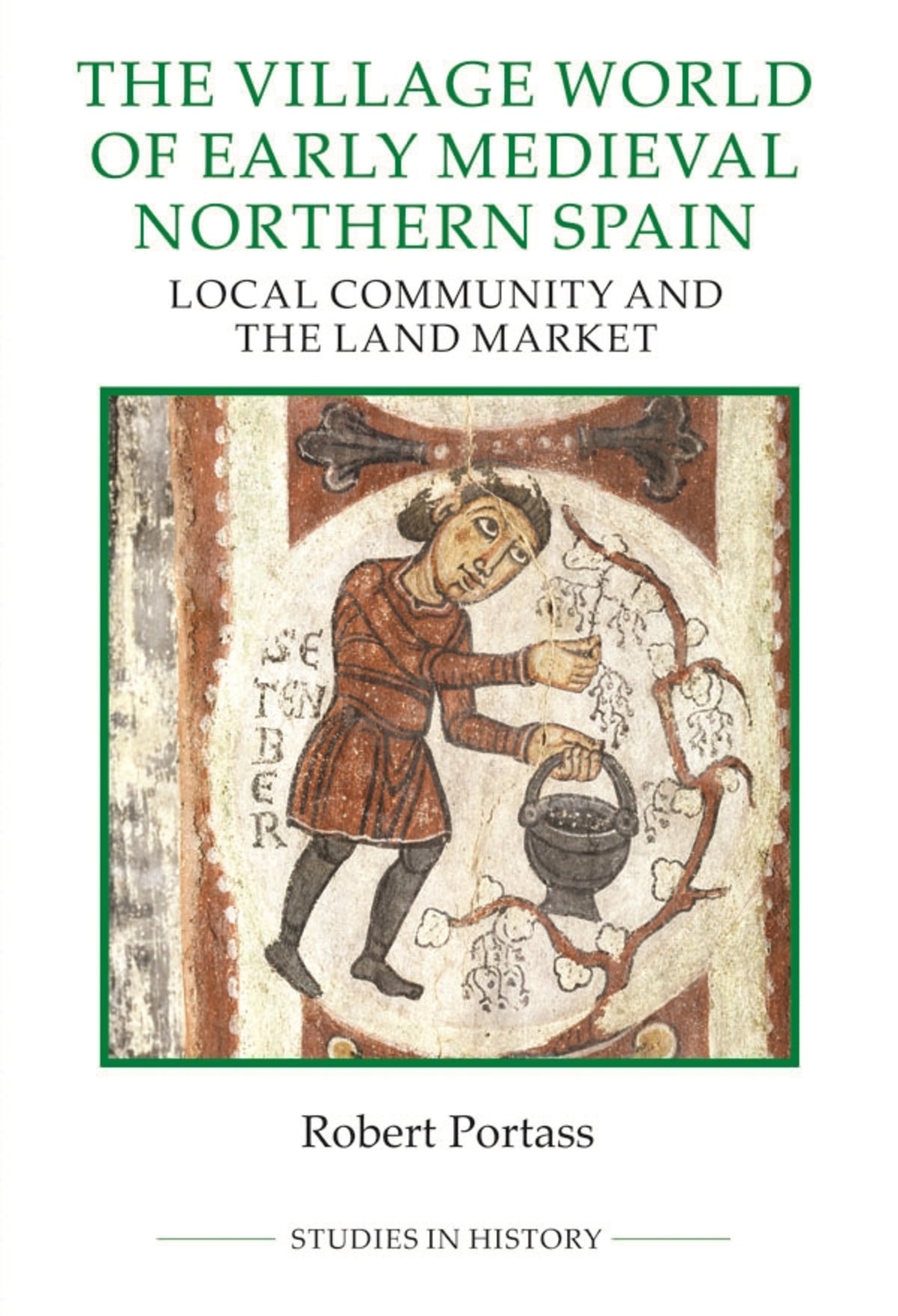
The pattern of rural life in early medieval Spain is here vividly brought to life through careful examination of contemporary documents.
In the early eighth century, the Muslim general Tariq ibn Ziyad led his forces across the Straits of Gibraltar and conquered most of the Iberian Peninsula. However, alongside the flourishing kingdom of al-Andalus, the small Christian realm of Asturias-León endured in the northern mountains. This book charts the social, economic and political development of Asturias-León from the Islamic conquest to 1031. Using a forensic comparative method, which examinesthe abundant charter material from two regions of northern Spain - the Liébana valley in Cantabria, and the Celanova region of southern Galicia - it sheds new light on village society, the workings of government, and the constantswirl of buying, selling and donating that marked the rhythms of daily life. It also maps the contact points between rulers and ruled, offering new insights on the motivations and actions of both peasant proprietors and aristocrats.
Robert Portass is Senior Lecturer in Medieval History at the University of Lincoln.
In the early eighth century, the Muslim general Tariq ibn Ziyad led his forces across the Straits of Gibraltar and conquered most of the Iberian Peninsula. However, alongside the flourishing kingdom of al-Andalus, the small Christian realm of Asturias-León endured in the northern mountains. This book charts the social, economic and political development of Asturias-León from the Islamic conquest to 1031. Using a forensic comparative method, which examinesthe abundant charter material from two regions of northern Spain - the Liébana valley in Cantabria, and the Celanova region of southern Galicia - it sheds new light on village society, the workings of government, and the constantswirl of buying, selling and donating that marked the rhythms of daily life. It also maps the contact points between rulers and ruled, offering new insights on the motivations and actions of both peasant proprietors and aristocrats.
Robert Portass is Senior Lecturer in Medieval History at the University of Lincoln.

Price: $120.00
Pages: 240
Publisher: Boydell & Brewer Inc.
Imprint: Royal Historical Society
Series: Royal Historical Society Studies in History New Series
Publication Date:
18 May 2017
Trim Size: 9.21 X 6.14 in
ISBN: 9780861933440
Format: Hardcover
BISACs:
HISTORY / Europe / Medieval, European history: medieval period, middle ages, HISTORY / Europe / Spain, European history

Stands as an example of the excellent work that early medievalists have been doing
with charters for over a generation now....Ultimately, this is a book that can benefit medievalists regardless of specialty.
A thought-provoking study of the social history of early medieval Northern Iberia [that] presents new opportunities to rethink Carolingian Europe and its transformations through the `long' tenth century.
This provocative analysis provides an important impetus to wider studies of village worlds from non-teleological assumptions.
[T]he correct analysis of the sources and careful attention given to the studied territories set this book up as an outstanding contribution that encourages new ways of understanding these societies.
with charters for over a generation now....Ultimately, this is a book that can benefit medievalists regardless of specialty.
A thought-provoking study of the social history of early medieval Northern Iberia [that] presents new opportunities to rethink Carolingian Europe and its transformations through the `long' tenth century.
This provocative analysis provides an important impetus to wider studies of village worlds from non-teleological assumptions.
[T]he correct analysis of the sources and careful attention given to the studied territories set this book up as an outstanding contribution that encourages new ways of understanding these societies.
Introduction: The making of medieval Iberia, 711-1031
Cantabria after Rome
Local society in the ninth century
The emergence of a village elite
Kings, counts and courts
Galicia after Rome
Before Celanova
Rosendo, Celanova and the village world, 936-1031
Magnates, monasteries and the public framework
Conclusion
Bibliography
Cantabria after Rome
Local society in the ninth century
The emergence of a village elite
Kings, counts and courts
Galicia after Rome
Before Celanova
Rosendo, Celanova and the village world, 936-1031
Magnates, monasteries and the public framework
Conclusion
Bibliography