


Some error occured while loading the Quick View. Please close the Quick View and try reloading the page.
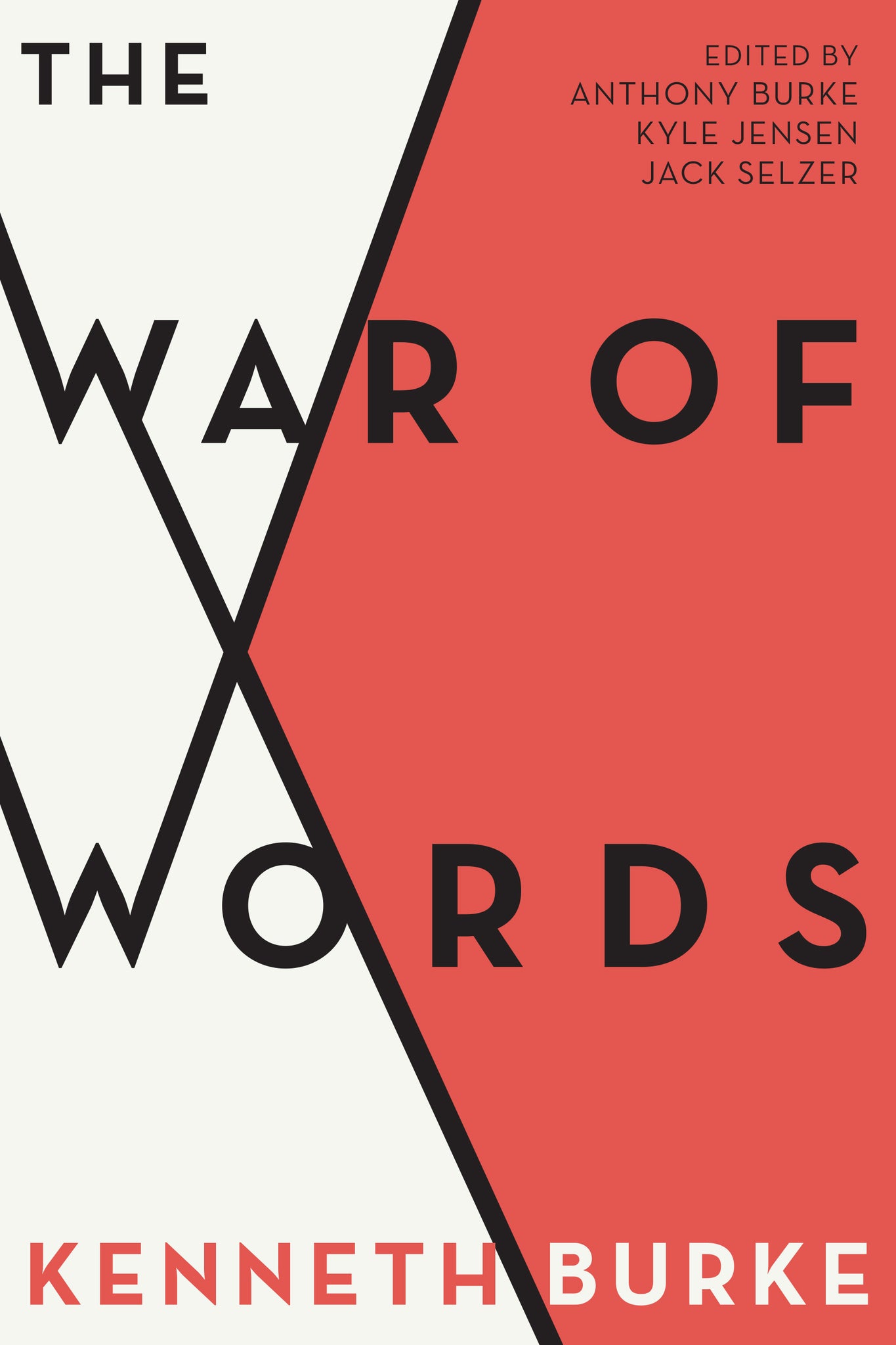
When Kenneth Burke conceived his celebrated “Motivorum” project in the 1940s and 1950s, he envisioned it in three parts. Whereas the third part, A Symbolic of Motives, was never finished, A Grammar of Motives (1945) and A Rhetoric of Motives (1950) have become canonical theoretical documents.
A Rhetoric of Motives was originally intended to be a two-part book. Here, at last, is the second volume, the until-now unpublished War of Words, where Burke brilliantly exposes the rhetorical devices that sponsor war in the name of peace. Discouraging militarism during the Cold War even as it catalogues belligerent persuasive strategies and tactics that remain in use today, The War of Words reveals how popular news media outlets can, wittingly or not, foment international tensions and armaments during tumultuous political periods. This authoritative edition includes an introduction from the editors explaining the compositional history and cultural contexts of both The War of Words and A Rhetoric of Motives. The War of Words illuminates the study of modern rhetoric even as it deepens our understanding of post–World War II politics.


Editors’ Introduction
THE WAR OF WORDS
Introduction
1. The Devices
Of the Devices in General
The Bland Strategy
Shrewd Simplicity
Undo by Overdoing
Yielding Aggressively
Detection
Spokesman
Reversal
Say the Opposite
Spiritualization (the Nostrum)
Making the Connection
Say Anything
Theory of the Devices
2. Scientific Rhetoric
I. ”Facts” Are Interpretations
II. Headline-Thinking
III. Selectivity
IV. Reduction (“Gist”)
V. Tithing by Tonality
VI. News as Drama
VII. Polls, Forums, Accountancy
3. [Notes toward] The Rhetoric of Bureaucracy
4. [Notes toward] The Rhetorical Situation
Appendix 1. Facsimile of the Outline of ”The Rhetorical Situation”
Appendix 2. Foreword (to end on)
Appendix 3. Facsimile of “Foreword (to end on)”
List of Textual Emendations and Explanatory Notes
Index