


Some error occured while loading the Quick View. Please close the Quick View and try reloading the page.
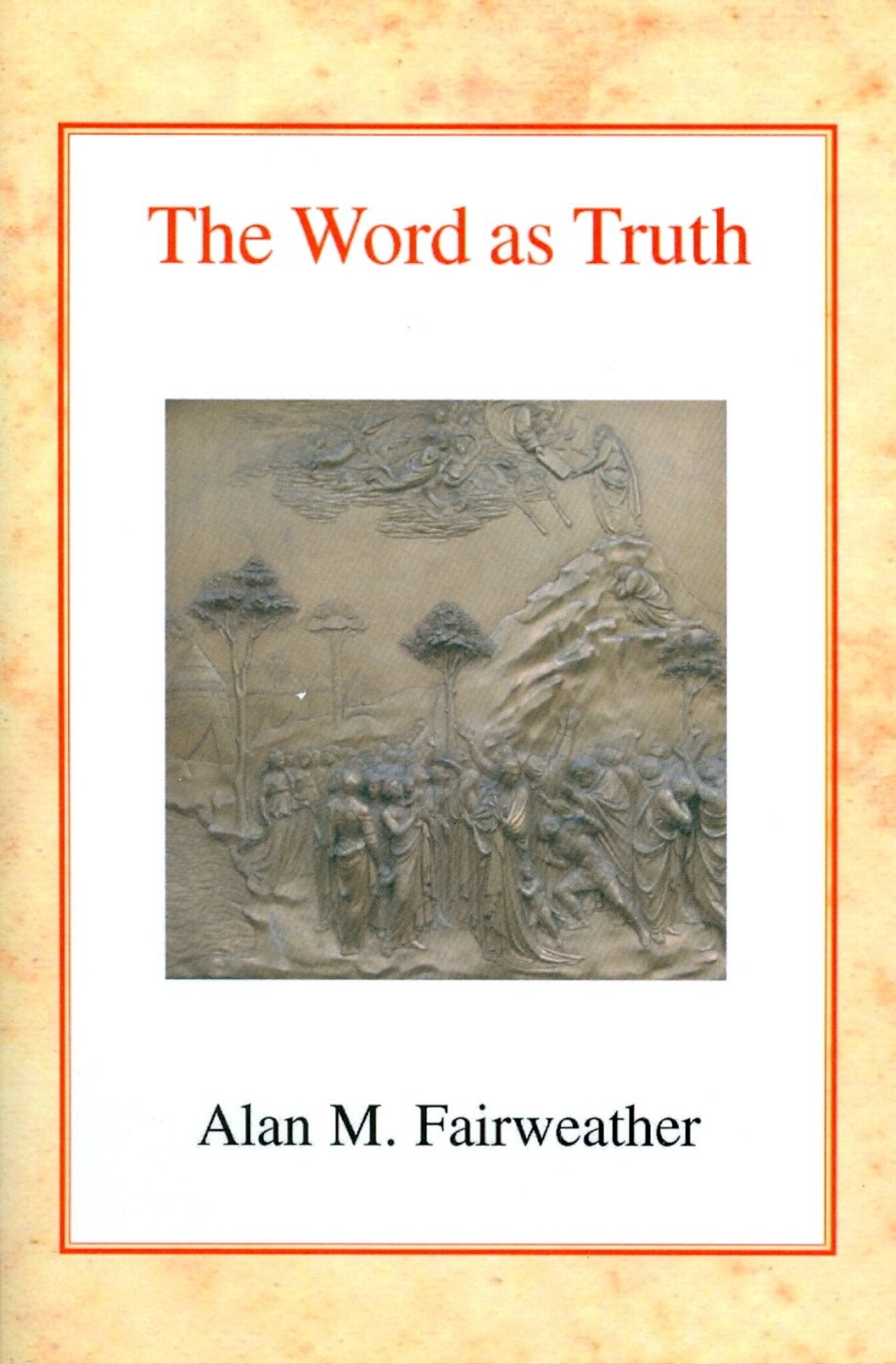
A comparative study of the way in which two great theologians - one medieval and one modern - view the Christian doctrine of Revelation. Karl Barth's debt to, and differences from, the theology of Saint Thomas Aquinas are fundamental to his theological development, and Fairweather's discussion of their views of revelation is an important contribution to the history of theology.
Fairweather examines the definition of revelation, questioning whether its essence truly lies in the belief that it is the direct speech of God to man. He attempts to discover whether divinity in the form of revelation can coexist with the corruption intrinsic in the human mind, or whether one negates the other. To answer these philosophical and theological problems, Fairweather has employed the beliefs and teachings of the famous medieval scholar, Thomas Aquinas, and the mid-twentieth century theologian, Karl Barth. Aquinas expounded the theory that whilst reason is bequeathed by God and is essential to humanity, it is not sufficient to guide men towards the ultimate truth; for this they need revelation. Although reason and revelation are distinct, they are not mutually exclusive, and man without logic would be unable to grasp fully the enormity of revelation.
By contrast, Fairweather employs the arguments of Karl Barth, whose debt to, and differences from, the theology of Saint Thomas Aquinas are fundamental to his theological development. Although his beliefs have recently come under criticism for being too negative in their estimate of mankind and its powers of reason, Barth's was an inspiration for the renaissance that took place in theology from about 1920 to 1950. Regarding revelation, Barth believed that it was imparted by God in a similar manner to salvation, and that the subjective responses of man were inconsequential when compared with the enormity of God's design.
Fairweather examines the definition of revelation, questioning whether its essence truly lies in the belief that it is the direct speech of God to man. He attempts to discover whether divinity in the form of revelation can coexist with the corruption intrinsic in the human mind, or whether one negates the other. To answer these philosophical and theological problems, Fairweather has employed the beliefs and teachings of the famous medieval scholar, Thomas Aquinas, and the mid-twentieth century theologian, Karl Barth. Aquinas expounded the theory that whilst reason is bequeathed by God and is essential to humanity, it is not sufficient to guide men towards the ultimate truth; for this they need revelation. Although reason and revelation are distinct, they are not mutually exclusive, and man without logic would be unable to grasp fully the enormity of revelation.
By contrast, Fairweather employs the arguments of Karl Barth, whose debt to, and differences from, the theology of Saint Thomas Aquinas are fundamental to his theological development. Although his beliefs have recently come under criticism for being too negative in their estimate of mankind and its powers of reason, Barth's was an inspiration for the renaissance that took place in theology from about 1920 to 1950. Regarding revelation, Barth believed that it was imparted by God in a similar manner to salvation, and that the subjective responses of man were inconsequential when compared with the enormity of God's design.

Price: $29.99
Pages: 168
Publisher: Boydell & Brewer Inc.
Imprint: James Clarke
Publication Date:
29 May 2003
Trim Size: 8.50 X 5.51 in
ISBN: 9780227170717
Format: Paperback

Synopsis
I. Introductory
II. Aquinas on the Origin of Revelation
III. God in Relation to Ourselves
IV. The Barthian View
V. The Presuppositions
VI. The Mediacy of Old Testament Revelation
VII. How is Jesus Revelation?
VIII. The Implications of Mediacy
IX. The Will of God and the Christian Metaphysic
I. Introductory
II. Aquinas on the Origin of Revelation
III. God in Relation to Ourselves
IV. The Barthian View
V. The Presuppositions
VI. The Mediacy of Old Testament Revelation
VII. How is Jesus Revelation?
VIII. The Implications of Mediacy
IX. The Will of God and the Christian Metaphysic