


Some error occured while loading the Quick View. Please close the Quick View and try reloading the page.
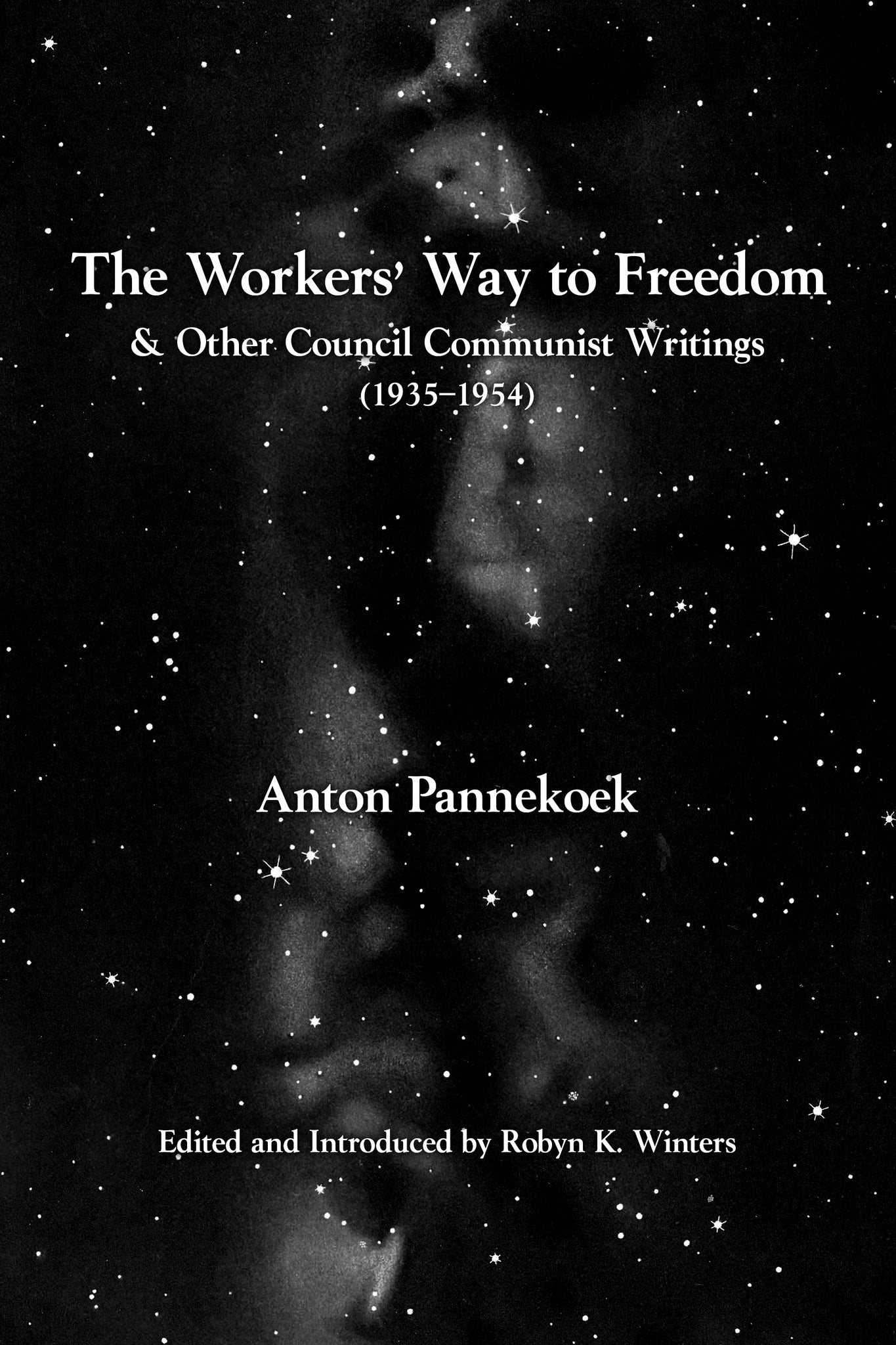
Anton Pannekoek (1873-1960), the Dutch astronomer and Marxist revolutionary, was a key theoretician of council communism—a Marxist alternative to both Leninism and Social Democracy that instead emphasized working-class self-emancipation through workers’ councils.
The first half of this book walks the reader through the fundamentals of council communism and the conditions that led to the development of these ideas. The second half of the book demonstrates the rich depth of Pannekoek’s thinking, with penetrating essays and insightful letters on revolutionary organization, state capitalism, Marxism, the limitations of trade unions and political parties, the potential of wildcat strikes, public vs. common ownership, the necessity of combining organization and freedom, the deceptiveness of parliamentarism, workers’ councils, the vital importance of working-class self-emancipation, and more. With the recent resurgence in the naïve hope that Democratic Socialism and trade unionism can act as radical methods to meaningfully confront or even overthrow capitalism, Pannekoek’s council communist ideas encourage workers to think for themselves rather than submit to the dead-end traditions of the old movement and embrace the collective self-activity that can build a new movement capable of overcoming the struggles we face ahead.


"The most brilliant theoretician of libertarian communism."
—Mike Davis, author of City of Quartz
"Good, solid, working-class literature."
—Noam Chomsky
Part I: The Workers’ Way to Freedom (c. 1935)
Chapter I: Capitalism
Chapter II: The Power of the Classes
Chapter III: Trade Unionism
Chapter IV: The Political Fight & Social Democracy
Chapter V: The Russian Revolution
Chapter VI: The Communist Party
Chapter VII: Fascism
Chapter VIII: The Intellectual Class
Chapter IX: The Workers’ Revolution
Chapter X: The Workers’ Councils
Part II: Other Council Communist Writings (1936–1954)
Chapter XI: The Party & the Working Class (1936)
Chapter XII: State Capitalism & Dictatorship (1937)
Chapter XIII: Society & Mind in Marxian Philosophy (1937)
Chapter XIV: General Remarks on the Question of Organization (1938)
Chapter XV: Marx & Utopia · Party & Class (c. 1940s)
Chapter XVI: The Failure of the Working Class (1946)
Chapter XVII: Public Ownership & Common Ownership (1947)
Chapter XVIII: Marx & Bakunin (1949)
Chapter XIX: Some Remarks on Parliamentarism (1949)
Chapter XX: On Workers’ Councils (1952)
Chapter XXI: The Need for the Workers to Lead Themselves (1953–1954)
Appendix A: Anton Pannekoek by Paul Mattick (1962)
Appendix B: Article Versions of Manuscript Chapters (1935–1936)
The Intellectuals (1935)
Trade Unionism (1936)
Workers’ Councils (1936)
The Power of the Classes (1936)
On the Communist Party (1936)
The Role of Fascism (1936)
Index