


Some error occured while loading the Quick View. Please close the Quick View and try reloading the page.
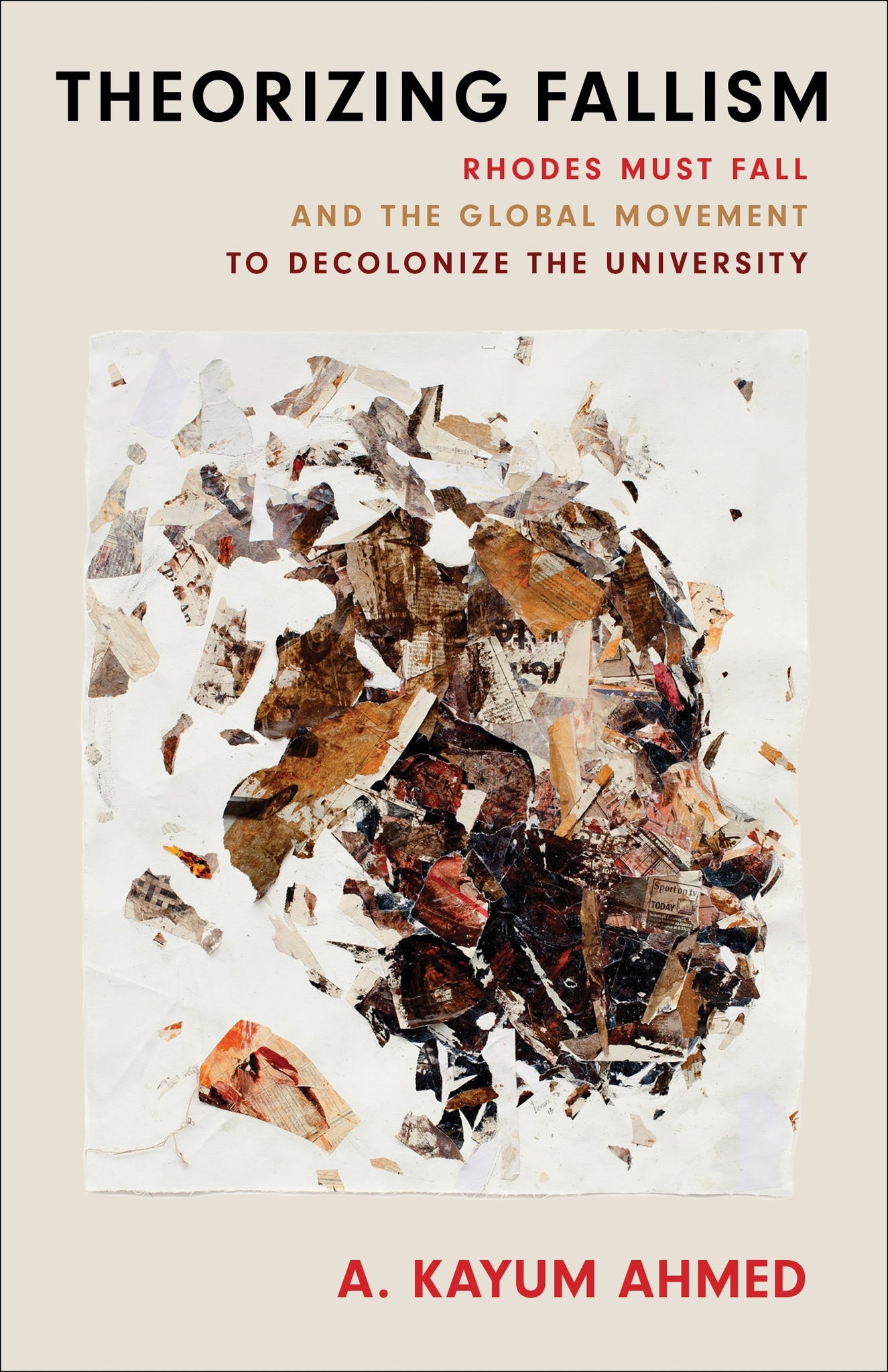
In 2015, students at the University of Cape Town ignited a movement that would reverberate across the globe by demanding the removal of a statue of the British imperialist Cecil Rhodes. What began as a protest against a single monument became Rhodes Must Fall: a confrontation with colonial legacies at South African universities that inspired a movement at Oxford and beyond.
A. Kayum Ahmed tells the powerful story of Rhodes Must Fall, tracing the emergence of a new decolonial framework, Fallism, and its trajectory from Africa to empire. Drawing on archival research and interviews with activists, he interprets Fallism as both a critique of the university—rooted in patriarchy, white supremacy, and capitalism—and a broader decolonial theory. Ahmed reveals how students combined acts of defiance with deeper forms of intellectual insurgency to challenge Eurocentric curricula, linguistic hierarchies, and the silencing of Black epistemologies. In so doing, they transformed Black pain—the source of the uprising—into a collective struggle for Black liberation.
By following Fallism’s journey, this book demonstrates how student movements create new vocabularies of resistance that transcend geographies of power. It underscores why universities remain battlegrounds in global struggles, from conflicts over statues and curricula to pro-Palestinian protests. Both a history of a movement and a theoretical intervention, Theorizing Fallism illuminates the enduring influence of students to challenge entrenched structures of knowledge and power.


— Ruha Benjamin, author of Imagination: A Manifesto
Theorizing Fallism is a vital archive of how contemporary student movements rename, occupy, and reimagine space as theory. From Azania House at the University of Cape Town to Columbia’s The People’s University, Ahmed shows students reconfiguring the university’s physical and ideological architecture, exposing institutional complicity while advancing alternative visions of education, solidarity, and justice beyond the university’s limits.
— Simamkele Dlakavu, author of Asijiki: Black Women in the Economic Freedom Fighters, Owning Space, Building a Movement
Fallism captures how student movements transform pain into real solidarity that seeks collective liberation. This book brilliantly connects Rhodes Must Fall to today's Palestine Student Intifada. As I face deportation for solidarity, this analysis reveals why universities fear students: Students expose their complicity, occupy their spaces, refuse their terms. Urgent, unapologetic, essential for anyone committed to dismantling colonial universities.
— Mahmoud Khalil, Palestinian rights advocate
Rich in primary source material, including the voices of student and worker activists, Theorizing Fallism serves as an invaluable archival resource on the evolution of the Rhodes Must Fall movements at University of Cape Town and Oxford. Ahmed meticulously documents events, timelines, ideas, and debates in a manner that equips scholars to grasp the context, significance, and legacy of the movement.
— Anye-Nkwenti Nyamnjoh, researcher, University of Capetown
Ahmed treats student movements as sites of knowledge production, linking Rhodes Must Fall to pro-Palestinian encampments that reclaim colonial space through public pedagogy. Framed as deliberate political projects rather than spontaneous eruptions, these movements reveal students’ generative power to exceed colonial imaginaries in the pursuit of a more just future.
— Sueda Polat, organizer, Columbia University Apartheid Divest
Theorizing Fallism eloquently interrogates the duality of the university as a site of liberation but also of dehumanization. Ahmed expertly weaves frameworks from decolonial studies and social movement theories with the voices of student activists. Essential reading and an important book that speaks to the current struggles in higher education.
— S. Garnett Russell, author of Becoming Rwandan: Education, Reconciliation, and the Making of a Post-Genocide Citizen
Preface
List of Abbreviations
Introduction. Decolonizing the University
1. The Birth (and Death) of a Movement
2. Disobedience: Five Moments That Defined the RMF Movement
3. Black Pain
4. Black Liberation
5. On Empire: #RhodesMustFall at the University of Oxford
Conclusion. From Cape Town to Gaza: Fallism and the Ongoing Struggle for Decoloniality
Acknowledgments
Notes
Bibliography
Index