


Some error occured while loading the Quick View. Please close the Quick View and try reloading the page.
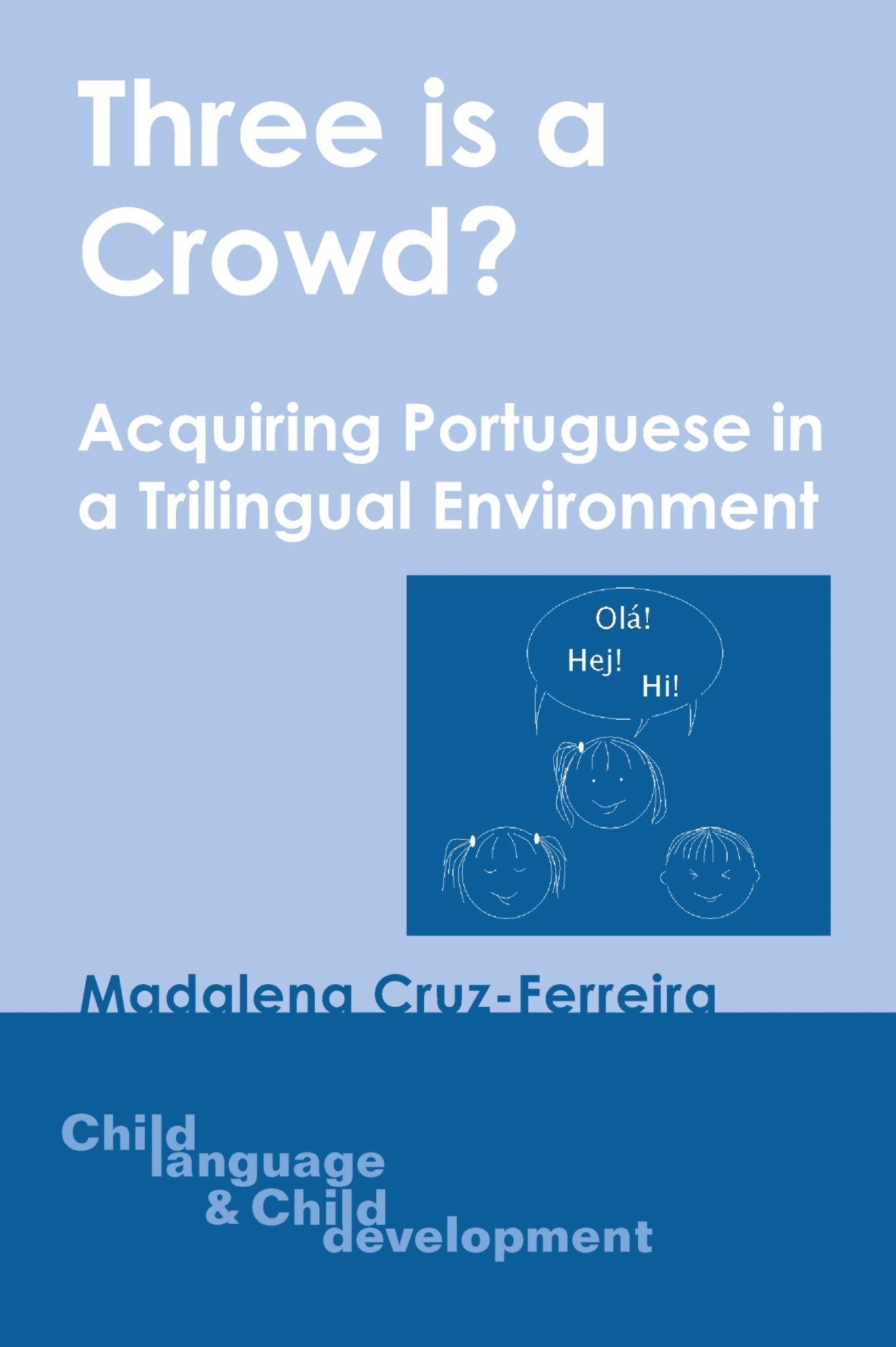
The book describes three siblings' apportioning of linguistic and cultural space among three languages: Portuguese, Swedish and English. Parallel strategies accounting for monolingual and multilingual language management shape a truly illuminating picture of child linguistic competence. Written by a multilingual parent, educator and linguist, this book is for parents, educators and linguists in our predominantly, increasingly multilingual world.


Cruz-Ferreira’s book provides insight into the strategies that young children develop to guide their own acquisitional processes. This book provides further support for the view of language as a ‘resource’ or tool and multilingualism as an opportune site for the study of the acquisition and use of that communicative resource.
This book gives an insightful and entertaining overview of three siblings developing language ability in a multilingual environment where Portuguese, Swedish and English are spoken. This book constitutes a valuable contribution to the study of multilingualism and child language and development. The data are well presented, the book is written clearly and there is an excellent use of up-to-date references. Parents, teachers, students and researchers can all take something useful from this book.
Against a detailed canvas of linguistic and sociolinguistic theory, Cruz-Ferreira paints a compelling and entertaining vision of how her three children became fully competent in English, Swedish, and Portuguese. .. The book is rich in insights about multilingualism, prosodic development, word learning, personal identity, and the awareness of linguistic differences and national character. Brian MacWhinney, Professor of Psychology and Modern Languages, Carnegie Mellon University An eminently sensible and pragmatic discussion of all the major issues in language acquisition, bilingualism, and the parallel development of language and culture, presented with a mass of pertinent examples. There could be no better evidence than this that children brought up multilingually have a huge advantage in life. And all in a beautifully written book. Alan Cruttenden, Emeritus Professor of Phonetics, University of Manchester
Madalena Cruz-Ferreira hails from Portugal and received postgraduate degrees in linguistics from the University of Manchester, UK. Her main research interests are child multilingualism, multilingual phonology and intonation, and the language of science. Recent publications include a book on the language of linguistics (2003, Prentice Hall), articles and book chapters on child prosody and multilingualism, foreign intonational accent and Portuguese phonology and intonation. She has lived in Singapore for over 10 years with her Swedish husband and their three trilingual children.
Acknowledgements
1. Preview
Part I. Becoming Multilingual
2. Issues in Bilingualism and Bilingual Acquisition
3. The Children
4. Data Collection and Analytical Choices
5. Speaking Languages and Talking about them
Part II. Making Sense of Portuguese
6. Shaping Sound
7. Probing for Constituency
8. Probing for Meaning
Part III. Acquiring a Third Language
9. A New Language: Intruder or Guest?
10. Language Input and Language Management in a Multilingual Environment
11. Balancing Culture and Identity
12. Overview
References
Index