


Some error occured while loading the Quick View. Please close the Quick View and try reloading the page.
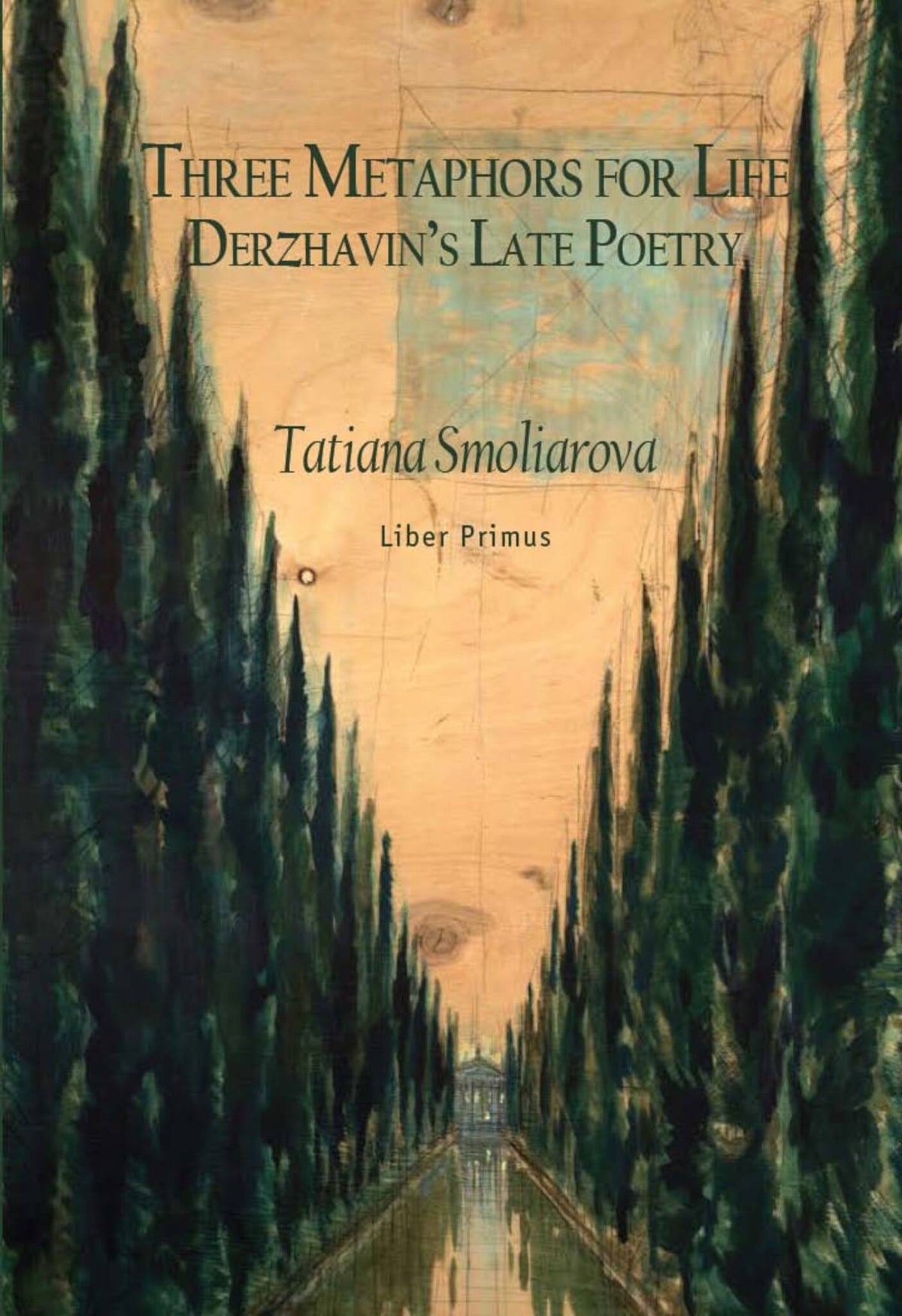


— Angela Brintlinger, Associate Professor of Slavic Languages and Literatures, Ohio State University
"Comparatist Tatiana Smoliarova’s 2011 book on Derzhavin’s late poetry was a memorably innovative study of Russia’s most accomplished eighteenth-century poet. This English version — elegantly written, translated, and edited — is in significant ways a new and even better book. It is more sharply focused on crucial metaphors in Derzhavin’s poetry and it adds new historical perspectives, taking its discussion into the twentieth and twenty-first centuries. Its deft, sophisticated illuminations from the history of science and from literary history are highly original and persuasive. The author accomplishes the most valuable of critical feats, compelling readers to see canonical texts with fresh and invigorated eyes."
— William Mills Todd III, Harvard University
“The Russian text on which this book is based was published in Moscow in 2011 by Novoe literaturnoe obozrenie under the title Zrimaia lirika. It was warmly received, saluted especially for its adventurous, deeply informed intellectual scope. This English version must be acclaimed first of all as a feat of translation; the particular contribution of each of the three individuals credited is not specified. The main difficulty arises, needless to say, in translating adequately the primary material concerned, which is exhaustively and bilingually cited here. … This poetry is rugged, pocked with archaisms, and seems to revel in syntax that is sometimes maddeningly convoluted. The task of translation has been accomplished with rare sensitivity and insight; chasteningly, it is hard to imagine anybody reading the result who cannot at least make at least a stab at the original Russian. … All in all, this book will be useful reading for anyone interested in how best to read Russian poetry before Pushkin; rather than driving home hard conclusions, though, it will stimulate and suggest.” — G. S. Smith, New College, University of Oxford, Slavonic and East European Review Vol. 79, No. 3
— G. S. Smith
“Much of eighteenth-century Russian literature is not easily accessible to an anglophone audience, partly because many of its concerns depend on specifically Russian historical and linguistic contexts and partly because its values were largely rejected by the discourse of romanticism which has dominated Russian criticism since the early nineteenth century. By focussing on Derzhavin’s connections to the west European Enlightenment, and on his affinity for visual metaphors, Smoliarova offers an accessible and stimulating introduction to a vital and strongly influential period in Russian literary history.” —David Wells, Curtin University, Australian Slavonic and East European Studies, Vol. 33
In Search of a Metaphor: In Place of an Introduction
Part 1. Magic Lantern (Projection)
Chapter 1. A Text in Performance
Shadows Only
Pregnant Moments
An Attempt in the Dramatic Field
Chapter 2. Lanterns and Lanternists
Laterna Magica
Citizen Robertson
The Fantasmagoria
Part 2. Rainbow (Refraction)
Chapter 1. Unweaving the Rainbow
The Meteorological Cycle
From Allegory to . . . Allegory
Magic Made Simple or Do-It-Yourself
Addison and His Pleasures
Chapter 2. The Limits of Imitation
Apelles and His Lines
Camera Obscura
The Child of Thaumas
Part 3. Garden of Memory (Reflection)
Chapter 1. The Keys to Zvanka
Beatus, My Brother
Essay on Man
The Art of Memory
A Peculiar Vision: Approaches to the Text
Chapter 2. Nine Views
Pleasures of the Imagination
Choral Vision
Fifteen Stanzas of Solitude
Chapter 3. The Poet’s House
The Bard Lived There
Zvanka’s Echo
Pindar, Derzhavin, and the 1920s: In Place of a Conclusion
Notes
References