


Some error occured while loading the Quick View. Please close the Quick View and try reloading the page.
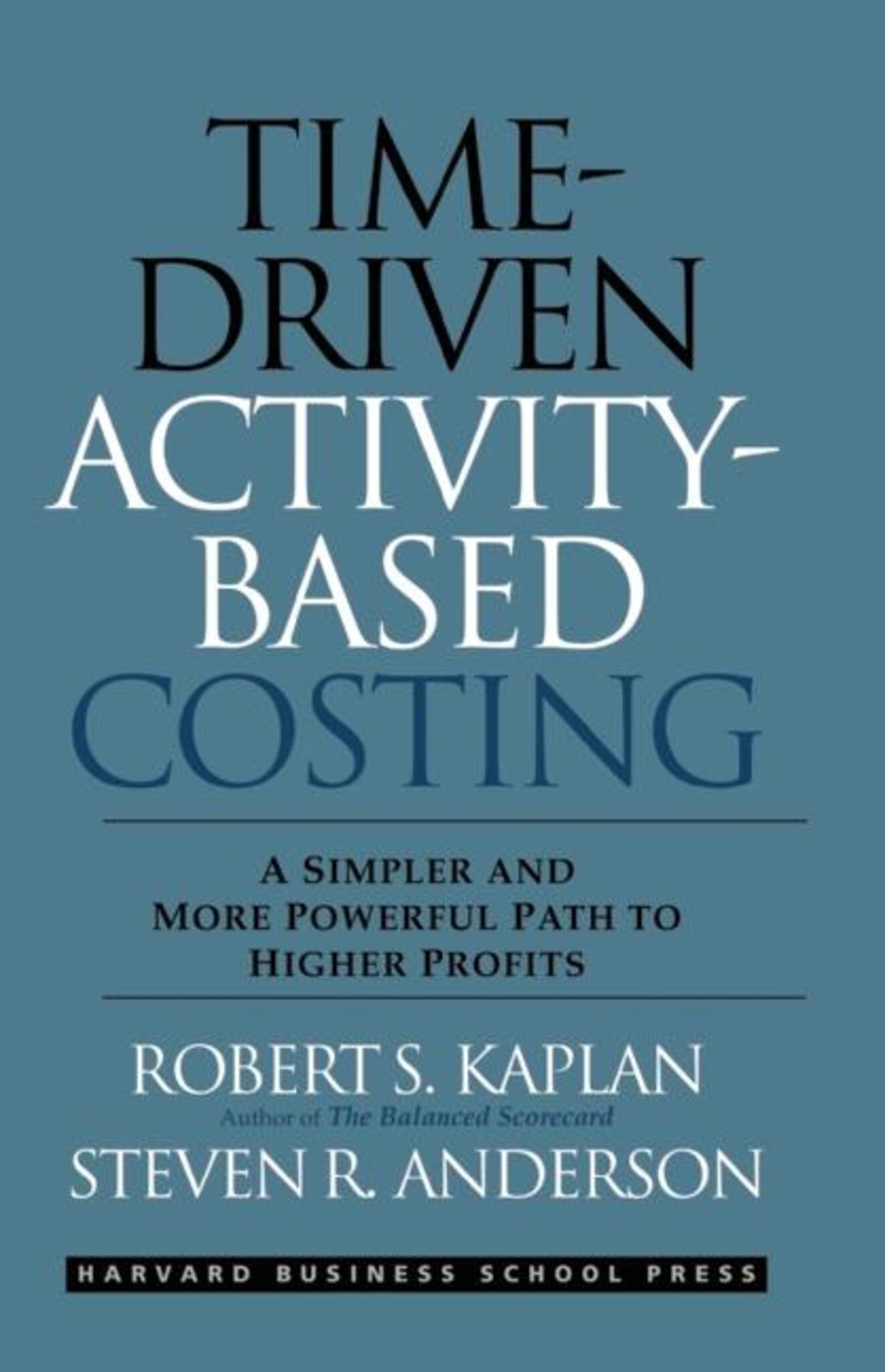
In the classroom, ABC looks like a great way to manage a company’s resources. But many executives who have tried to implement ABC on a large scale in their organizations have found the approach limiting and frustrating. Why? The employee surveys that companies used to estimate resources required for business activities proved too time-consuming, expensive, and irritating to employees.
This book shows you how to implement time-driven activity-based costing (TDABC), an easier and more powerful way to implement ABC. You can now estimate directly the resource demands imposed by each business transaction, product, or customer. The payoff? You spend less time and money obtaining and maintaining TDABC data—and more time addressing problems that TDABC reveals, such as inefficient processes, unprofitable products and customers, and excess capacity. The authors also show how to use TDABC to link strategic planning to operational budgeting, to enhance the due diligence process for mergers and acquisitions, and to support continuous improvement activities such as lean management and benchmarking.
In presenting their model, the authors define the two questions required to build TDABC:
1) How much does it cost per time unit to supply resource capacity for each business process?
2) How much resource capacity (time) is required to perform work for a company’s many transactions, products, and customers?
The book demonstrates how to develop simple, valid answers to these two questions.
Kaplan and Anderson illustrate the TDABC approach with a wealth of case studies, in diverse settings, based on actual implementations.
This book shows you how to implement time-driven activity-based costing (TDABC), an easier and more powerful way to implement ABC. You can now estimate directly the resource demands imposed by each business transaction, product, or customer. The payoff? You spend less time and money obtaining and maintaining TDABC data—and more time addressing problems that TDABC reveals, such as inefficient processes, unprofitable products and customers, and excess capacity. The authors also show how to use TDABC to link strategic planning to operational budgeting, to enhance the due diligence process for mergers and acquisitions, and to support continuous improvement activities such as lean management and benchmarking.
In presenting their model, the authors define the two questions required to build TDABC:
1) How much does it cost per time unit to supply resource capacity for each business process?
2) How much resource capacity (time) is required to perform work for a company’s many transactions, products, and customers?
The book demonstrates how to develop simple, valid answers to these two questions.
Kaplan and Anderson illustrate the TDABC approach with a wealth of case studies, in diverse settings, based on actual implementations.

Price: $45.00
Pages: 288
Publisher: Harvard Business Review Press
Imprint: Harvard Business Review Press
Publication Date:
01 April 2007
Trim Size: 9.50 X 6.60 in
ISBN: 9781422101711
Format: Hardcover

Robert S. Kaplan, a co-creator of both Activity-Based Costing (ABC) and the Balanced Scorecard, is Baker Foundation Professor at Harvard Business School. Steven R. Anderson is the founder and chairman of Acorn Systems, a software and consulting firm headquartered in Houston, TX.