


Some error occured while loading the Quick View. Please close the Quick View and try reloading the page.
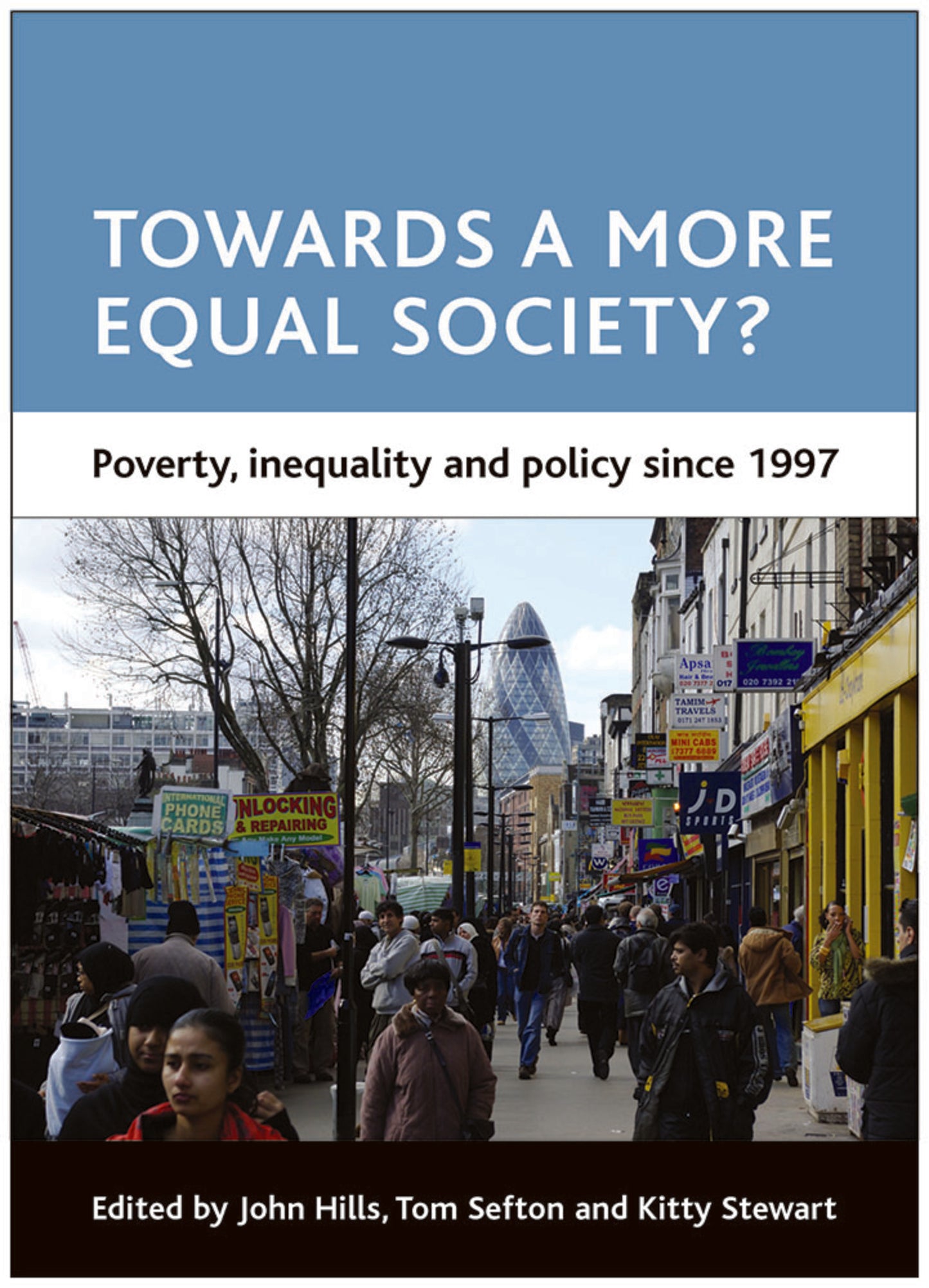
When New Labour came to power in 1997, its leaders asked for it to be judged after ten years on its success in making Britain 'a more equal society'. As it approaches the end of an unprecedented third term in office, this book asks whether Britain has indeed moved in that direction.
The highly successful earlier volume "A more equal society?" was described by Polly Toynbee as "the LSE's mighty judgement on inequality". Now this second volume by the same team of authors provides an independent assessment of the success or otherwise of New Labour's policies over a longer period. It provides:
· consideration by a range of expert authors of a broad set of indicators and policy areas affecting poverty, inequality and social exclusion;
· analysis of developments up to the third term on areas including income inequality, education, employment, health inequalities, neighbourhoods, minority ethnic groups, children and older people;
· an assessment of outcomes a decade on, asking whether policies stood up to the challenges, and whether successful strategies have been sustained or have run out of steam;
chapters on migration, social attitudes, the devolved administrations, the new Equality and Human Rights Commission, and future pressures.
The book is essential reading for academic and student audiences with an interest in contemporary social policy, as well as for all those seeking an objective account of Labour's achievements in power.


"Welfare reform has been at the heart of the New Labour project. This book is the definitive assessment of those reforms: where they succeeded, where they failed - and why." Alan Deacon, Emeritus Professor of Social Policy, University of Leeds
"The LSE's mighty judgement on inequality" Polly Toynbee, The Guardian, on A More Equal Society
"Hills is the great authority, the chief examiner most feared and respected, social policy's equivalent of an Ofsted inspector. This great tome, with its hundreds of graphs and tables, will prove to be the definitive academic judgment." Polly Toynbee, The Guardian
John Hills (1954-2020) was Richard Titmuss Professor of Social Policy and Co-Director of the International Inequalities Institute at the London School of Economics. He wrote extensively on inequality, public policy and the welfare state. He was a member of the Pensions Commission and Chair of the National Equality Panel for the Labour government and led a review of the measurement of fuel poverty for the Coalition government. He was knighted in 2013 for services to the development of social policy.
Tom Sefton was formerly a research fellow at CASE, and now works for the Church Urban Fund.
Kitty Stewart is a lecturer in social policy at LSE and a research associate at CASE.
Introduction ~ Kitty Stewart, Tom Sefton and John Hills;
Part One: Dimensions of policy outcomes: Poverty, inequality and redistribution ~ Tom Sefton, John Hills and Holly Sutherland; 'A scar on the soul of Britain': child poverty and disadvantage under New Labour ~ Kitty Stewart; Education: New Labour's top priority ~ Ruth Lupton, Natalie Heath, Emma Salter; More equal working lives? An assessment of New Labour policies ~ Abigail McKnight; New Labour and unequal neighbourhoods ~ Anne Power; Health inequalities: a persistent problem ~ Franco Sassi; Pensions and income security in later life ~ Maria Evandrou and Jane Falkingham; Ethnic inequalities: another ten years of the same? ~ Coretta Phillips; Migration, migrants and inequality ~ Jill Rutter and Maria Latorre;
Part Two: Cross-cutting issues: Moving in the right direction? Public attitudes to poverty, inequality and redistribution ~ Tom Sefton; Inequality and the devolved administrations: Scotland, Wales and Northern Ireland ~ Tania Burchardt and Holly Holder; Poverty, inequality and child well-being in international context: still bottom of the pack? ~ Kitty Stewart;
Part Three: The Equality and Human Rights Commission: a new point of departure in the battle against discrimination and disadvantage ~ Polly Vizard; Future pressures: intergenerational links, wealth, demography and sustainability ~ John Hills; Conclusions: Climbing every mountain or retreating from the foothills? ~ John Hills, Tom Sefton and Kitty Stewart.