


Some error occured while loading the Quick View. Please close the Quick View and try reloading the page.
WINNER, AATI FIRST BOOK PRIZE
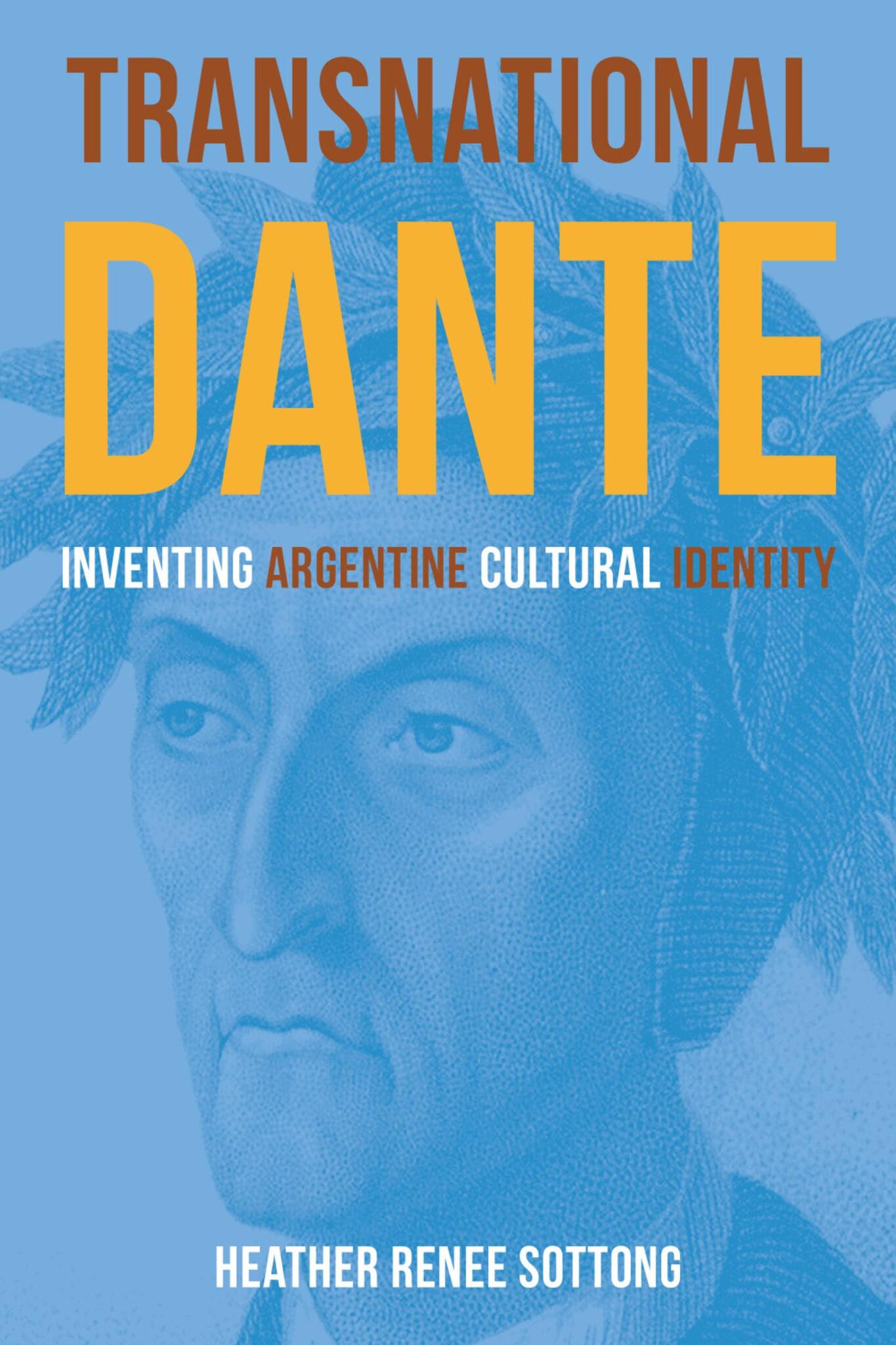
Opens the field of Dante Studies to further transnational studies of the Divine Comedy’s circulation, translation, and global influence
This fascinating book examines how Dante was repurposed by Argentine politicians and authors who were concerned with the construction of Argentine national identity in the late nineteenth and early twentieth centuries. Sottong’s work is informed by the theories of Eric Hobsbawm, Benedict Anderson, and Nicolas Shumway, who coined the concepts of “invented traditions,” “imagined communities,” and “guiding fictions,” respectively. Sottong has applied these notions to the case of Argentina, which, after the War of Independence from Spain (1810–1818), had to develop its own national cultural identity.
In this volume, she investigates Dante’s transnational influence in Argentina: Why did Argentine authors consistently call upon Dante in their attempts to develop Argentine literature? What are the textual and thematic characteristics of Dante’s Divine Comedy that make it an ideal vehicle for literary appropriation? What are the historical and cultural factors that account for Dante’s enduring popularity in Italy and beyond? How did the strong presence of Italians in Argentina influence cultural production in the developing nation? And how are the re-writings of Dante in the Argentine canon in dialogue with one another?
What Sottong found, remarkably, was that rewriting Dante was a way for Argentine authors to voice their views on the direction that should be taken to develop Argentine letters; Dante became something of a literary guide as Argentine intellectuals navigated the complex labyrinth of their national identity. The consistent rewriting of the Divine Comedy in the Argentine context testifies to the fact that great works of literature can be revived during different periods and even reappropriated by various peoples to foster mythologies of inclusion or exclusion related to national identity.


In this pioneering book Heather Sottong explores illuminating connections between Argentine literature and Dante, offering many insights and aperçus in carefully chosen case studies from the nineteenth and twentieth centuries. Sottong opens revelatory ground, for example, when foregrounding president Bartolomé Mitre’s engagements with Dante, including his 1889 translation of the Comedy, in the context of his communications with Giuseppe Garibaldi, when the two statesmen were respectively working to create the modern nations of Argentina and Italy.---Efraín Kristal, Distinguished Professor of Comparative Literature, University of California, Los Angeles
Transnational Dante might particularly interest those studying the influence of migration on Latin American literature and culture, especially in Argentina. Recommended.
Introduction | 1
1. Bartolomé Mitre on Immigration and Argentine Identity | 17
2. Bartolomé Mitre’s Translation of the Divine Comedy: An Anti–Martín Fierro | 40
3. Leopoldo Lugones on Immigration and Argentine Identity | 58
4. Hypermedievalizing and Demedievalizing Dante:
Leopoldo Lugones’s and Jorge Luis Borges’s Rewritings of Inferno V | 76
5. Rewriting Dante to Parody Lugones: Borges’s “The Aleph” | 94
6. Leopoldo Marechal on Immigration and Argentine Identity | 117
7. Dante’s Vita nuova and Book 6 of Adán Buenosayres:
Solveig as Beatrice, Solveig as Argentina | 147
8. The Journey to Cacodelphia: A Parody of Inferno and Modern-Day Argentina | 164
Conclusion: Argentina’s Failure to Produce a Divine Comedy | 200
Notes | 205
Bibliography | 243
Index | 255