


Some error occured while loading the Quick View. Please close the Quick View and try reloading the page.
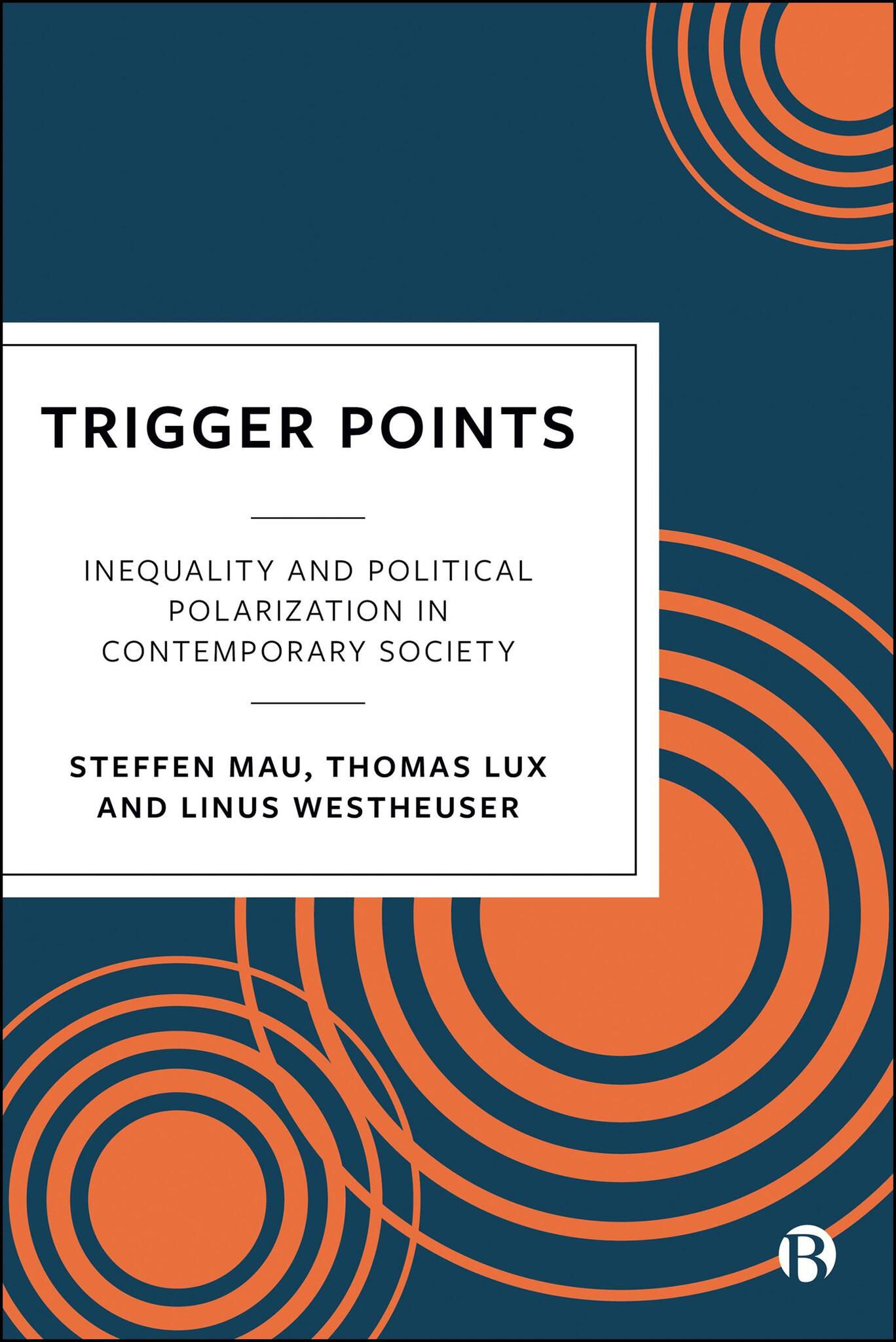
Available open access digitally under CC-BY-NC-ND licence.
Today’s political debates are fiercely polarized. But looking beyond the headlines, this book shows that ordinary citizens hold much more nuanced, less divided views.
Drawing on rich survey data and group discussions, this work maps four major areas of conflict: migration, climate change, diversity, and economic justice.
Across these conflicts, most citizens take positions that are middle-of-the-road, contradictory, or undecided. It is only certain ‘trigger points' – like gendered pronouns or refugee admissions – that predictably ignite tensions and deep disagreement.
Political entrepreneurs know this and weaponize trigger points for their agenda. Yet the real key to contemporary conflicts, the book argues, lies in social inequality.
This is a vital work that maps today’s political landscape without sensationalism, offering a fresh lens on public debate.


‘Trigger Points is truly a tour de force: The authors develop a radically innovative and persuasive argument with broad implications for rethinking the polarization of contemporary societies. While their focus is on inequality, cleavages and boundaries in Germany, their analysis will help us understand other societies in the context of the growing influence of the radical right. Their book deserves a broad hearing by social scientists everywhere.’ Michèle Lamont, Harvard University
‘We live in a moment when claims of polarization and democratic breakdown often outrun the facts. Trigger Points restores analytical clarity. Grounded in exceptional empirical research and animated by a deep concern for democracy, it explains why certain issues ignite conflict—and why democracies are more resilient than we are often told. A major bestseller in Germany, this book is sure to have broad international resonance for all of our democracies as they face new and old perils.’ Daniel Ziblatt, Harvard University
‘In this rightly acclaimed book, Mau, Lux and Westheuser map the political fault lines in today's society and discuss the conditions under which they are mobilized and polarized. It is essential reading to understand both the deepening political divides of our time, as well as prospects for their mitigation.’ Silja Häusermann, University of Zurich
‘The arguments of Trigger Points are of huge importance to readerships across the world. The book develops an unusually rich, empirically robust, sociological account of political dynamics and offers a nuanced and subtle understanding of the malaise of 21st century liberal democracies.’ Mike Savage, London School of Economics and Political Sciences
Steffen Mau is Director at the Max Planck Institute of Political and Social Science and Professor of Macrosociology at Humboldt-University of Berlin.
Thomas Lux is Senior Researcher at the Max Planck Institute of Political and Social Science.
Linus Westheuser is Senior Researcher at the Max Planck Institute of Political and Social Science.
Foreword by Mike Savage
1. Introduction
2. Arenas of Inequality Conflicts
3. Top–Bottom Inequalities
4. Inside–Outside Inequalities
5. Us–Them Inequalities
6. Today–Tomorrow Inequalities
7. Trigger Points
8. The Social Space of Inequality Conflicts
9. Affect and Structure
10. The Political Space of Inequality Conflicts
11. Politicization and Conflict in Contemporary Society