


Some error occured while loading the Quick View. Please close the Quick View and try reloading the page.
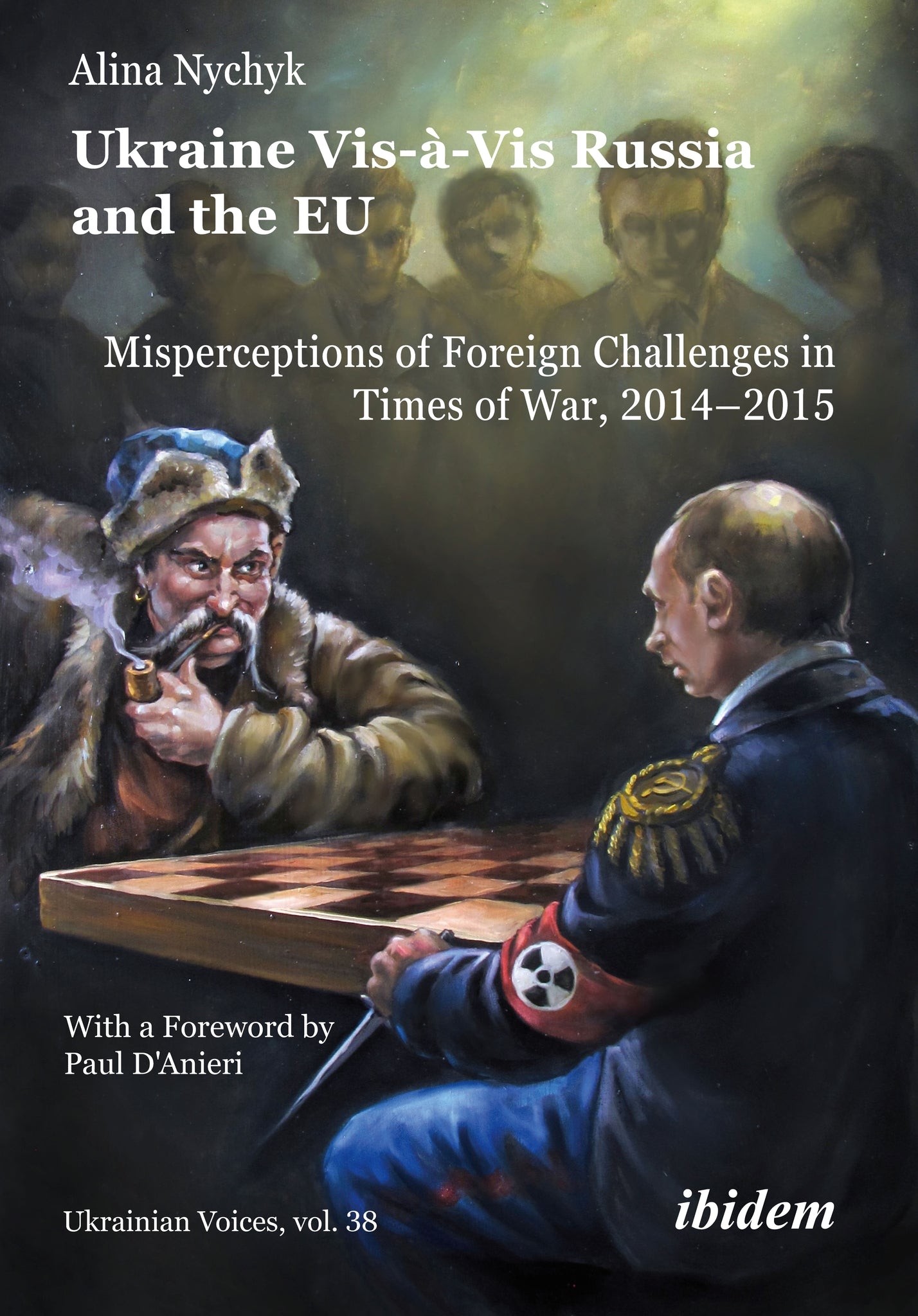
This book investigates the making of Ukraine’s foreign policy towards the European Union and Russia between February 2014 and February 2015. To contextualize the events of the first year of the Russian-Ukrainian War, Nychyk lays out the history of the EU-Ukraine-Russia triangle since 1991 and draws lessons relevant for the 2022 Russian full-scale invasion of Ukraine. The book is based on her doctoral research and rests on a game-theory-inspired approach to foreign policy analysis. It relies on 38 elite interviews, official documents, and media reports.
Nychyk uncovers various mutual misperceptions in EU-Ukraine-Russia relations. Looking at Ukraine’s ‘side of the story’, her analysis shows how Russian assertiveness and the EU’s passivity, but also Ukrainian leaders’ limited crisis management experience and erroneous policy decisions contributed to worse outcomes for Ukraine. The latter included poor analysis of foreign interlocutors, trust in their good intentions, and corruption. After 2015, a persistence—although with certain changes—of some of these pathologies left Ukraine in a weaker position in the face of Russia’s full-scale invasion in February 2022.


— Olga Onuch, Senior Lecturer in Politics, University of Manchester
At a time of mounting geopolitical instability and renewed power politics, Ukraine Vis-à-Vis Russia and the EU: Misperceptions of Foreign Challenges in Times of War, 2014–2015 stands out as a timely and incisive contribution. Alina Nychyk’s book offers not only a rigorous and balanced analysis of Russia’s illegal annexation of Crimea and the war in Donbas up to the Minsk II agreement, but, more importantly, a compelling reminder of the inherent complexity of foreign policy and geopolitics, resisting any simplistic reading of international relations. The epilogue further strengthens the book by explicitly linking the events of 2014 to those of 2022, convincingly portraying Russia’s full-scale invasion of Ukraine as a continuation, rather than a rupture, with Crimea as the pivotal starting point.
— Davide Genini