


Some error occured while loading the Quick View. Please close the Quick View and try reloading the page.
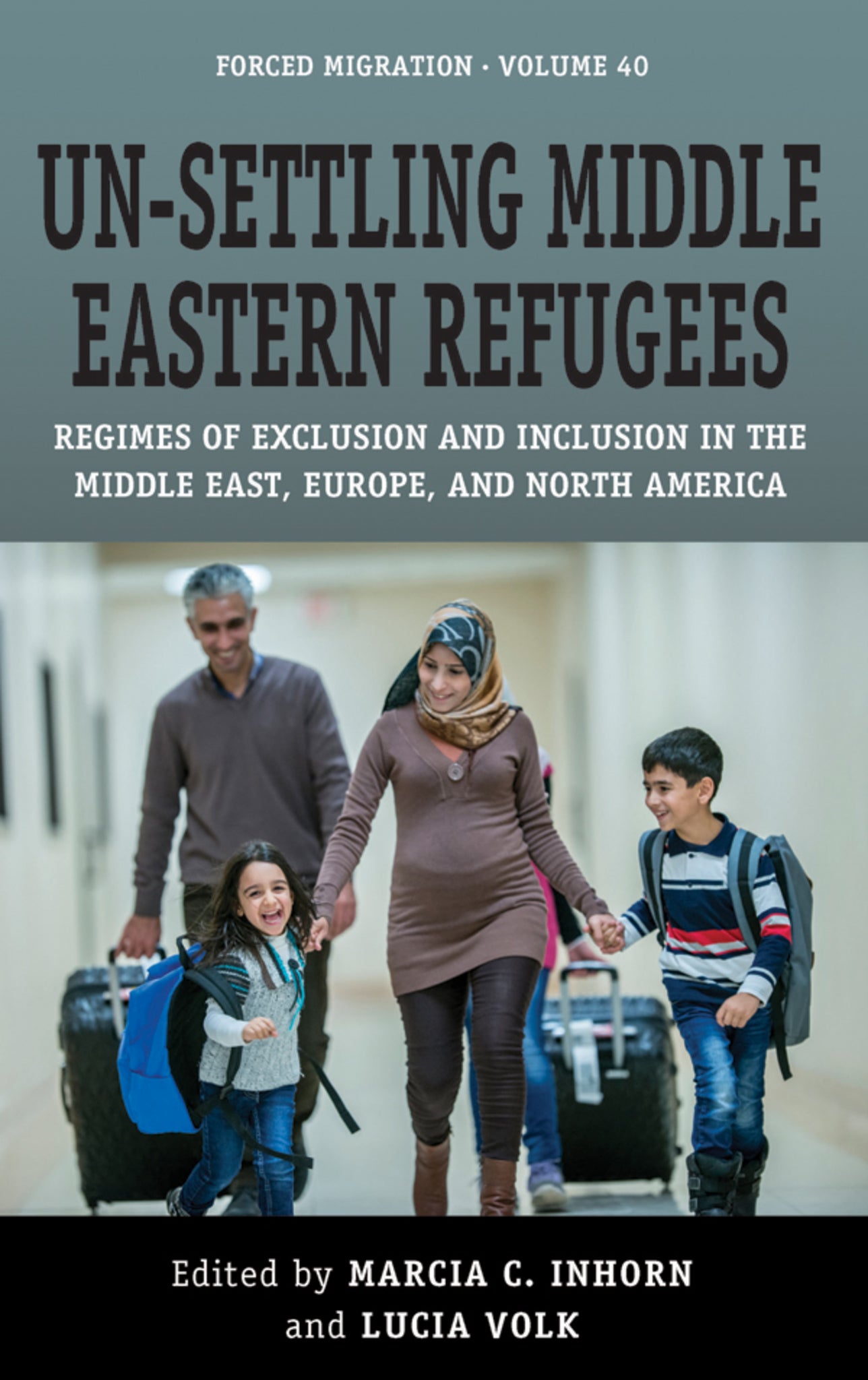
Since the Iraq war, the Middle East has been in continuous upheaval, resulting in the displacement of millions of people. Arriving from Afghanistan, Iraq, Palestine, and Syria in other parts of the world, the refugees show remarkable resilience and creativity amidst profound adversity. Through careful ethnography, this book vividly illustrates how refugees navigate regimes of exclusion, including cumbersome bureaucracies, financial insecurities, medical challenges, vilifying stereotypes, and threats of violence. The collection bears witness to their struggles, while also highlighting their aspirations for safety, settlement, and social inclusion in their host societies and new homes.


“This book is especially vital for North American readers in showing the breadth and complexity of Middle Eastern refugee flows, the widely varying ways that different countries respond to them, and the limitations and options of the refuge sought and sometimes found. Though attention to Canada and the US is limited, the focus on health issues is valuable, especially for highlighting the physical and social barriers that refugee women confront. Highly Recommended.” • Choice
“[This] is a complex and most enlightening work in which each chapter provides very important insights on refugee-related policies in different contexts. And it is here that the book is of utmost importance as it is through state policies, practices, and behaviours that displaced populations are prevented from being treated humanely and obtain stable legal statuses that recognize them as worthy of being welcomed, beyond the present reductionist labels of ‘refugees’ or ‘displaced’ persons. As such, this work is important for policy makers, graduate students, scholars, and faculty as well as the well-read citizen who seeks clarity, explanation, and solutions to a socio-political phenomenon of world-wide importance.” • Journal of the Royal Anthropological Institute (JRAI)
“The book offers an important and much-needed contribution to the anthropological literature on displacement and humanitarianism, as well as to the interdisciplinary study of Middle Eastern refugees… it addresses an important gap in both academic and public debates on its subject matter in an eloquent and powerful way.” • Secil Dagtas, University of Waterloo
Marcia C. Inhorn is William K. Lanman, Jr. Professor of Anthropology and International Affairs at Yale University, where she is Chair of the Council on Middle East Studies. Her most recent publications include America’s Arab Refugees: Vulnerability and Health on the Margins (Stanford, 2018) and The New Arab Man: Emergent Masculinities, Technologies, and Islam in the Middle East (Princeton, 2012).
List of Illustrations
Acknowledgements
Introduction: Un-Settling Middle Eastern Refugees
Lucia Volk and Marcia C. Inhorn
Part I: (Dis)Counting Refugees
Chapter 1. When States Need Refugees: Iraqi Kurdistan and the Security Alibi
Kali Rubaii
Chapter 2. Navigating Precarity, Prejudice, and “Return”: The (Un)Settlement of Displaced Afghans in Iran and Afghanistan
Naysan Adlparvar
Chapter 3. Unsettling “Refugees” as a Category: Labeling, Imagined Populations, and Statistics in a Palestinian Refugee Camp in Beirut
Gustavo Barbosa
Part II: Protesting Exclusion
Chapter 4. Middle Eastern Refugeehood in the Happiest Place on Earth: Syrians and Iraqis Entering Finland’s Welfare State Bureaucracy
Lindsay A. Gifford
Chapter 5. “I Live Here; I Have a Right to be Here”: An Afghan Refugee’s Disorientations and Insistence on Inclusion through Theater
Julie Nynne Bune
Chapter 6. Demanding their Welcome: Agency-in-Waiting at a Protest Camp in Dortmund, Germany
Lucia Volk
Part III: Making Lives in Exile
Chapter 7. Living as Enduring: The Struggle for Life against the Limits of Refuge among Gaza Refugees in Jordan
Michael Vicente Pérez
Chapter 8. Reimagining “the Arab Way” in Exile: Futures “Off Line” among Syrian Men in Amman
Emilie Lund Mortensen
Chapter 9. Proactive Reciprocity: Educational Trajectories Reclaimed through Patterns of Care among Refugee Men in Greece
Árdís K. Ingvars
Part IV: Seeking Health
Chapter 10. America’s Wars and Iraqis’ Lives: Toxic Legacies, Refugee Vulnerabilities, and Regimes of Exclusion in the United States
Marcia C. Inhorn
Chapter 11. Regimes of Exclusion in the Reproductive Healthcare Setting: Exploring Experiences of Syrian Refugees in San Diego, California
Morgen Chalmiers
Chapter 12. Valuing Health, Negotiating Paradoxes: Medicalization of the Hymen, Hymenoplasty, and Women’s Healthcare in Ontario
Verena E. Kozmann
Part V: Reshaping Humanitarianism
Chapter 13. A Death Sentence? UNWRA in the Trump Era
Khaldun Bshara
Chapter 14. Race, Religion, and Afghan Refugees’ Practices of Care in Greece
Zareena A. Grewal
Chapter 15. Blurred Lines and Syrian Tea: Negotiations of Humanitarian-Refugee Relationships in France
Rachel J. Farell
Chapter 16. Inclusive Partnerships: Building Resilience Humanitarianism with Syrian Refugee Youth in Jordan
Catherine Panter-Brick
Conclusion: Rethinking Exclusion and Inclusion in Refugee Resettlement
Marcia C. Inhorn and Lucia Volk