


Some error occured while loading the Quick View. Please close the Quick View and try reloading the page.
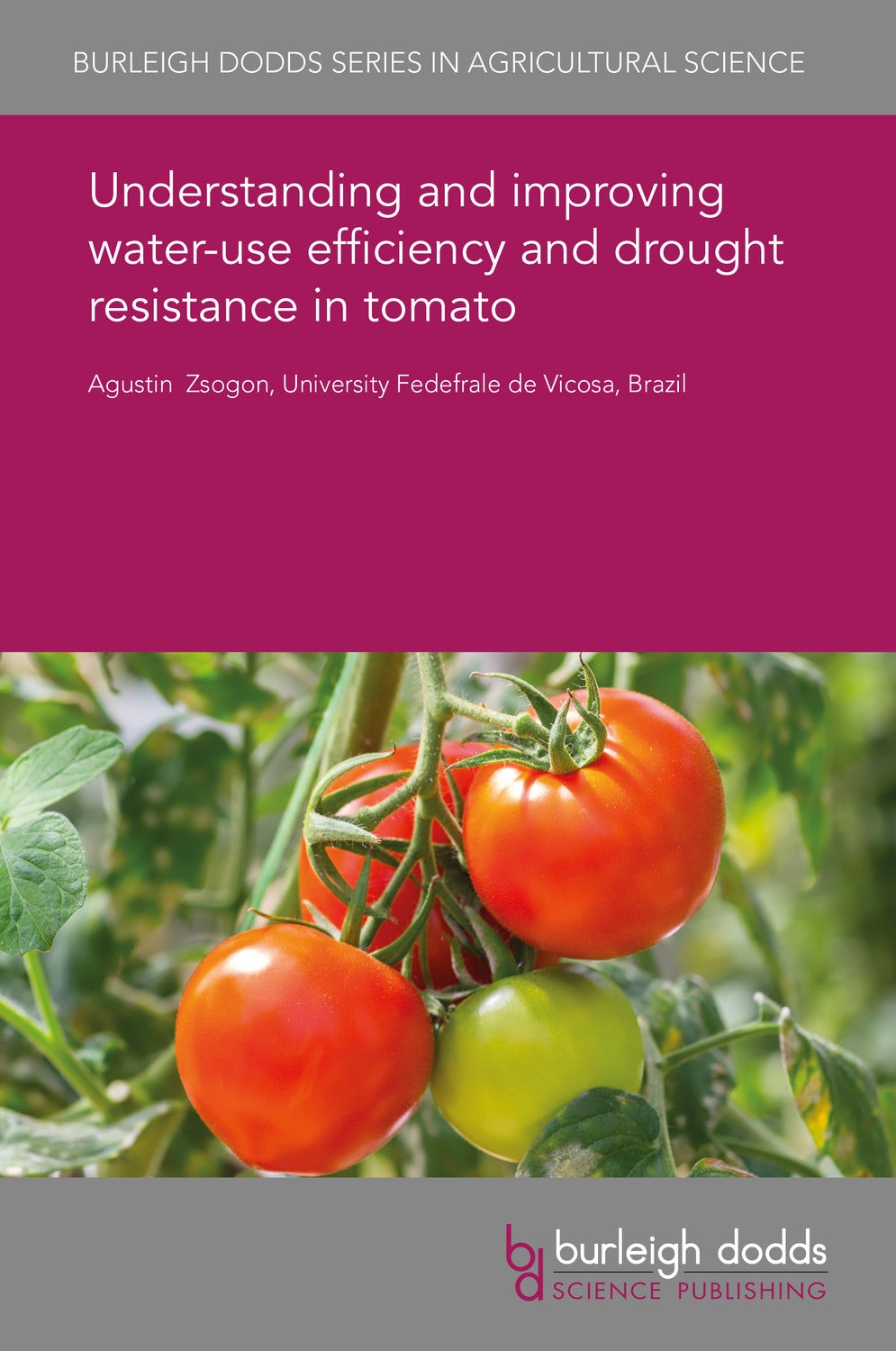
The tomato (Solanum lycopersicum L.) is both a well-established genetic model for plant biology and a horticultural cash crop of increasing importance to human nutrition. Tomato is mainly cultivated under irrigated conditions, so water use is of considerable significance for healthy plant growth and adequate yield. This chapter reviews recent advances in tomato physiology, with particular emphasis on the promising convergence between developmental physiology and water relations. It also endeavours to integrate recent findings with selected earlier studies, and includes a case study of the potential of the wild species Solanum pennellii as a source of drought-resistance for cultivated tomatoes.

Price: $32.50
Publisher: Burleigh Dodds Science Publishing
Imprint: Burleigh Dodds Science Publishing
Series: Burleigh Dodds Series in Agricultural Science
Publication Date:
31 March 2017
ISBN: 9781838792787
Format: eBook
BISACs:
TECHNOLOGY & ENGINEERING / Agriculture / Sustainable Agriculture, SCIENCE / Life Sciences / Horticulture, TECHNOLOGY & ENGINEERING / Agriculture / Agronomy / Crop Science

1 Introduction 2 Tomato as a genetic model in plant biology 3 Patterns in tomato plant development 4 Water relations in tomato 5 Natural genetic variations in tomato 6 Case study: Solanum pennellii as a source of drought-resistance 7 Plant development and water relations 8 Future trends and conclusion 9 Where to look for further information 10 References