


Some error occured while loading the Quick View. Please close the Quick View and try reloading the page.
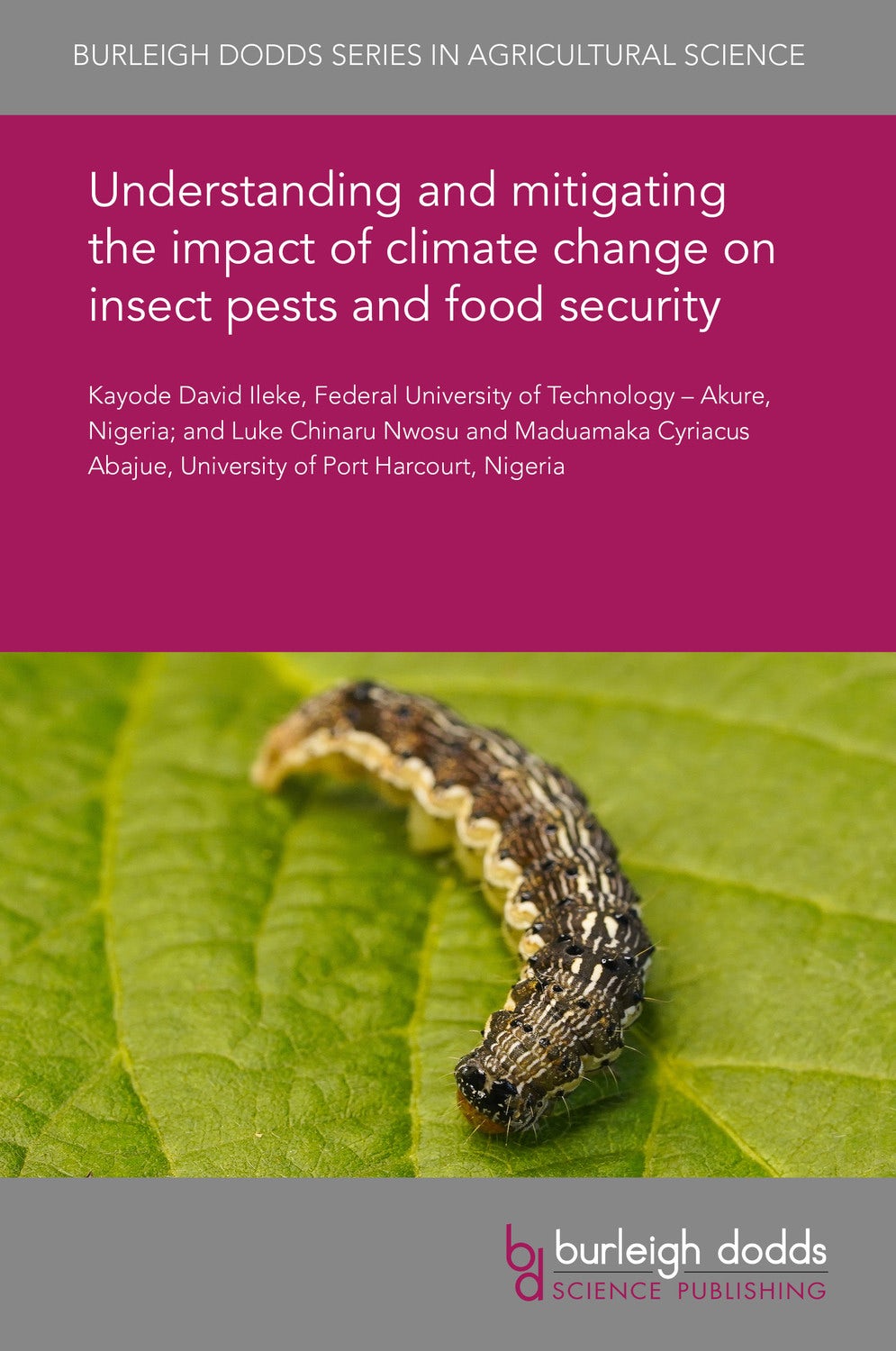
This chapter reviews the impact of climate change on insect pests, agricultural productivity and food security. Increased temperatures, elevated levels of carbon dioxide and fluctuations in precipitation pattern impact insect pest populations. The chapter reviews how climate change has affected insect development and population dynamics, activity, abundance, diversity and geographical distribution of insect pests. It also assesses insect-host plant interactions, impacts on insect pollinators and the on effectiveness of crop pest management techniques

Price: $32.50
Publisher: Burleigh Dodds Science Publishing
Imprint: Burleigh Dodds Science Publishing
Series: Burleigh Dodds Series in Agricultural Science
Publication Date:
24 November 2020
ISBN: 9781786768414
Format: eBook
BISACs:
TECHNOLOGY & ENGINEERING / Pest Control, TECHNOLOGY & ENGINEERING / Agriculture / Sustainable Agriculture, TECHNOLOGY & ENGINEERING / Agriculture / Agronomy / Crop Science

1 Introduction 2 Climate change effects on insect pests 3 Climate change impacts on insect pest population dynamics 4 Climate change impacts on insect pest behaviour and activity 5 Climate change impacts on the geographical distribution of insect pests 6 Climate change impacts on host plant resistance to insects 7 Climate change impacts on insect pollinators 8 Climate change impacts on the effectiveness of pest management techniques 9 Conclusions 10 Where to look for further information 11 References