


Some error occured while loading the Quick View. Please close the Quick View and try reloading the page.
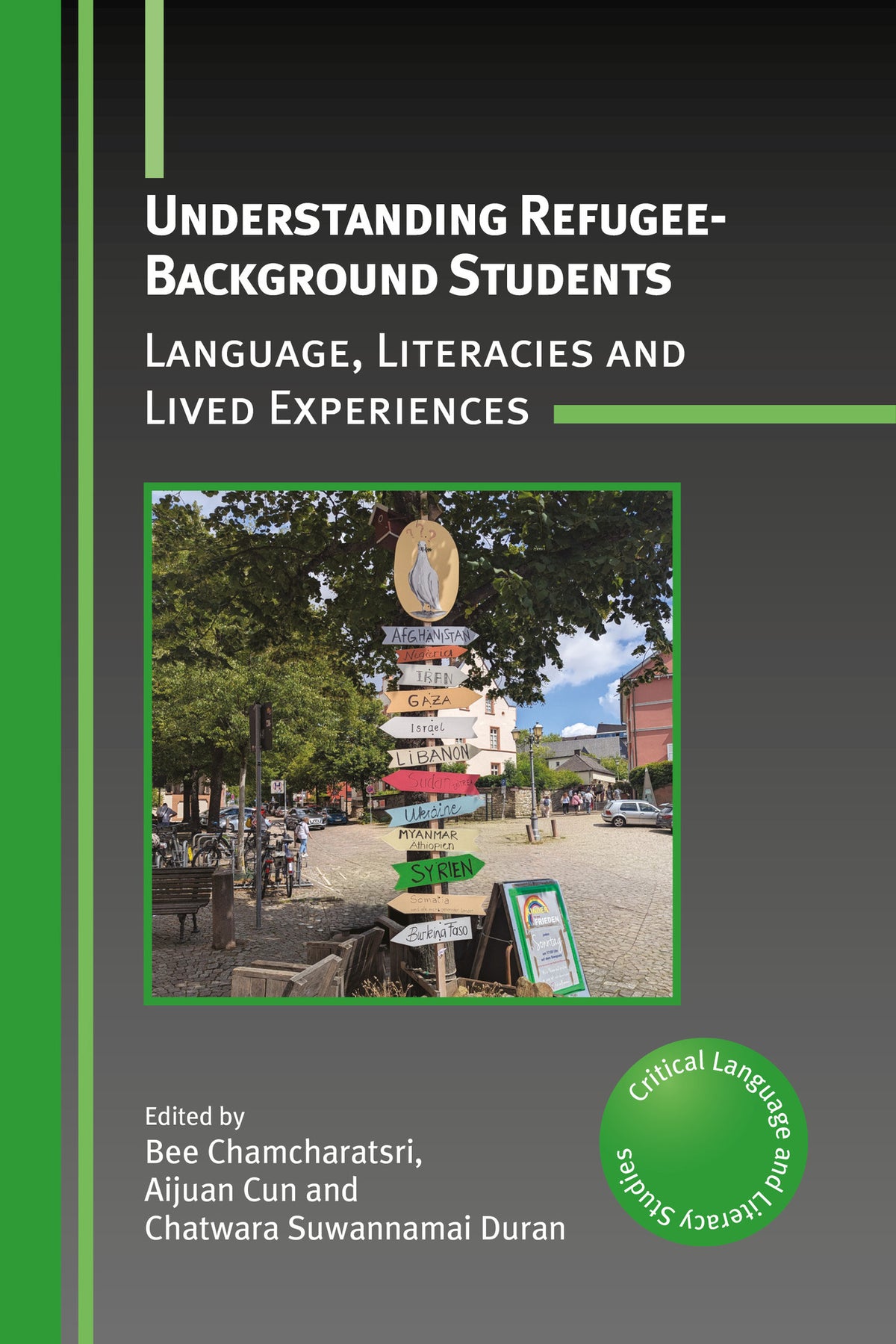
Including voices that are often silenced or not heard, this book argues that all linguistic funds of knowledge should be recognised and valued in the host countries
This edited book presents stories and research focusing on literacies and language learning practices – across multiple modalities – in refugee communities from different countries, including Afghanistan, China, Iran and Myanmar, among others.
The chapters draw upon sociocultural perspectives on literacies, which emphasize the wide range and multiple literacies that bilinguals or multilinguals use in their real-life contexts. The authors engage with a wide range of commonly occurring questions in research and teaching with refugee communities, from how researchers can ethically engage refugees in research projects to how refugee background students can be supported in sharing their stories, and from how home languages can be maintained in the classroom to how refugee background students engage in language learning within their own families and communities.
Together the chapters underscore the importance of recognizing refugee-background students and families as multilingual learners whose skills enrich educational spaces.


Bee Chamcharatsri is a Professor in the Department of Language, Literacy, and Sociocultural Studies and the Department of English at the University of New Mexico, USA. His research interests include second language writing, emotions, identity, and arts-based research.
Aijuan Cun is an Associate Professor in the Department of Language, Literacy, & Sociocultural Studies at the University of New Mexico, USA. Her research interests focus on family literacy practices of children and families with immigrant and refugee backgrounds, community literacy and multimodality.
Chatwara Suwannamai Duran is an Associate Professor at the University of Houston, USA, where she teaches Sociolinguistics and Applied Linguistics classes. Her ethnographic research focuses on multilingualism and literacies among immigrants and refugee-background families.
Introduction. Bee Chamcharatsri, Aijuan Cun & Chatwara Suwannamai Duran
Section I: Refugee Background Students’ Voices and Multiliteracies
Chapter 1. Iuliia Fakhrutdinova: “I Can Tell You One Story:” Personal Narratives of Refugee Background Students
Chapter 2. Melissa Meola Shanahan & Erin Kearney: “If I had to do it myself, I think that would be really hard”: Refugee Background Youth’s Path to College
Chapter 3. Ting Huang & Aijuan Cun: Heritage Language Learning Through Watching Videos: A Case of Chinese American Students From Refugee Background Families
Chapter 4. Negar Siyari: “I Don’t Wanna Be a Regular Citizen”: Afghan Newcomers’ Perceptions of Language Learning and Literacies
Chapter 5. Anthea Fester & Jenny Field: Multimodalities and the Impact on Adults’ Emerging L2 Literacy: A New Zealand Scenario
Section II: Teachers’ Perspectives on Multiliteracies and Pedagogy
Chapter 6. Rachel L. W. Gilbertson & Lindsay N. Harris: Home Language and Culture Affirmation as a Means of Meeting the Social-emotional Needs of Newcomer Refugee Students
Chapter 7. Svetlana Mylnikova & Natalia Rud: Teachers Rediscovering the Concept of (Bi)literacy with Trauma-Affected ESOL Refugee Students: Duoethnography Based on Sociocultural Perspective
Section III: Narrative Chapters
Chapter 8. Ali Elhami: From Voluntary to Forced Migration: A Rocky Start, But A Rosy Ending: Language Learning and Integration Experiences in Spain
Chapter 9. Svetlana Mylnikova & Natalia Rud: Bolstering Adult ESL Refugee Students’ Self-advocacy: A Collection of Instructors’ Reflective Anecdotes
Chapter 10. Chatwara Suwannamai Duran: “Yes. That Happens.”: Co-Constructing Narratives Between a Karenni Mother and Her Daughter
Afterword. Doris Warriner