


Some error occured while loading the Quick View. Please close the Quick View and try reloading the page.
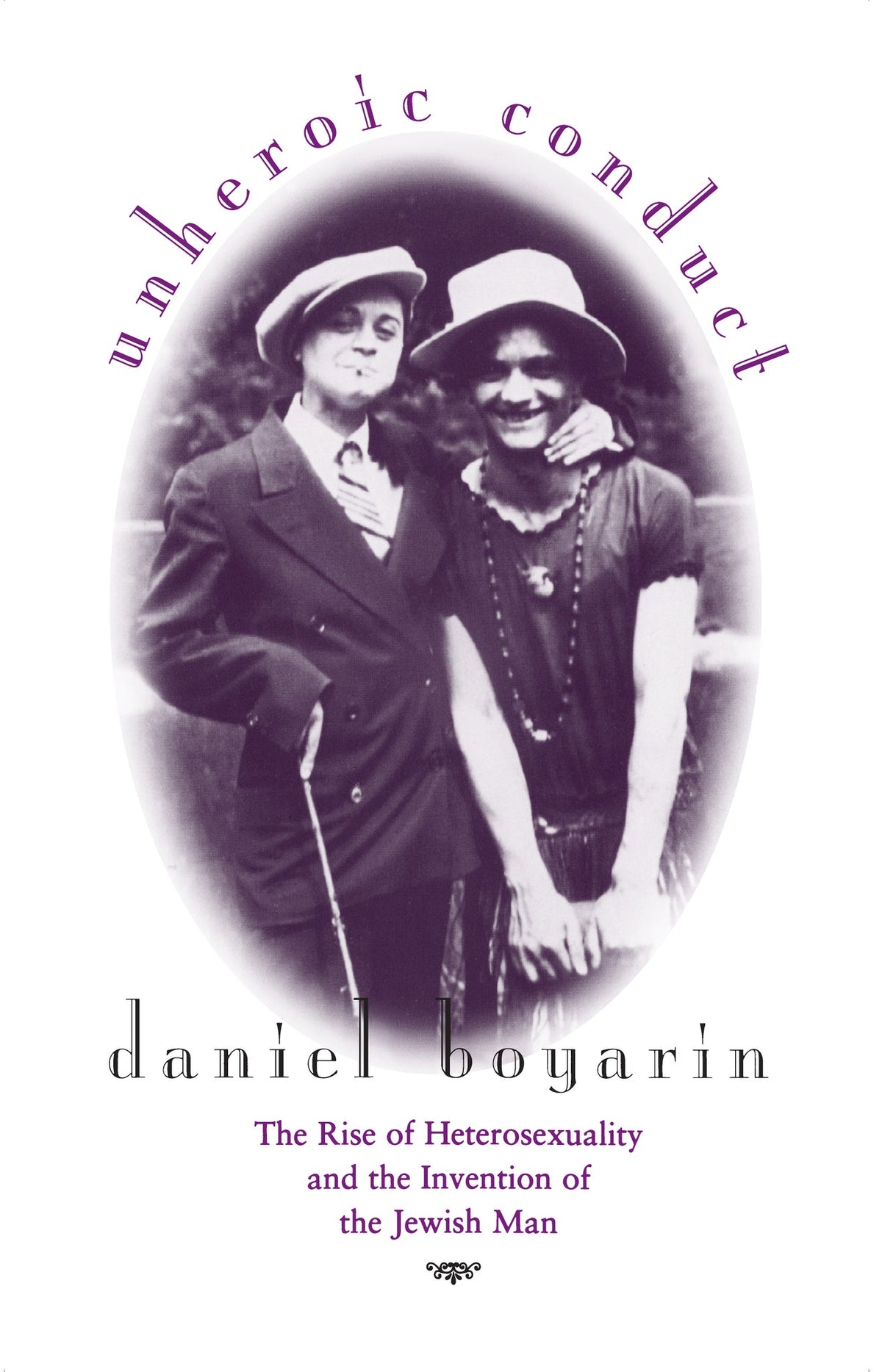
In a book that will both enlighten and provoke, Daniel Boyarin offers an alternative to the prevailing Euroamerican warrior/patriarch model of masculinity and recovers the Jewish ideal of the gentle, receptive male. The Western notion of the aggressive, sexually dominant male and the passive female reaches back through Freud to Roman times, but as Boyarin makes clear, such gender roles are not universal. Analyzing ancient and modern texts, he reveals early rabbis—studious, family-oriented—as exemplars of manhood and the prime objects of female desire in traditional Jewish society.
Challenging those who view the "feminized Jew" as a pathological product of the Diaspora or a figment of anti-Semitic imagination, Boyarin argues that the Diaspora produced valuable alternatives to the dominant cultures' overriding gender norms. He finds the origins of the rabbinic model of masculinity in the Talmud, and though unrelentingly critical of rabbinic society's oppressive aspects, he shows how it could provide greater happiness for women than the passive gentility required by bourgeois European standards.
Boyarin also analyzes the self-transformation of three iconic Viennese modern Jews: Sigmund Freud, the father of psychoanalysis; Theodor Herzl, the founder of Zionism; and Bertha Pappenheim (Anna O.), the first psychoanalytic patient and founder of Jewish feminism in Germany. Pappenheim is Boyarin's hero: it is she who provides him with a model for a militant feminist, anti-homophobic transformation of Orthodox Jewish society today.
Like his groundbreaking Carnal Israel, this book is talmudic scholarship in a whole new light, with a vitality that will command attention from readers in feminist studies, history of sexuality, Jewish culture, and the history of psychoanalysis.
Many titles in the Voices Revived program are also newly available as ebooks, offered at a discounted price to support wider access to scholarly work.
Challenging those who view the "feminized Jew" as a pathological product of the Diaspora or a figment of anti-Semitic imagination, Boyarin argues that the Diaspora produced valuable alternatives to the dominant cultures' overriding gender norms. He finds the origins of the rabbinic model of masculinity in the Talmud, and though unrelentingly critical of rabbinic society's oppressive aspects, he shows how it could provide greater happiness for women than the passive gentility required by bourgeois European standards.
Boyarin also analyzes the self-transformation of three iconic Viennese modern Jews: Sigmund Freud, the father of psychoanalysis; Theodor Herzl, the founder of Zionism; and Bertha Pappenheim (Anna O.), the first psychoanalytic patient and founder of Jewish feminism in Germany. Pappenheim is Boyarin's hero: it is she who provides him with a model for a militant feminist, anti-homophobic transformation of Orthodox Jewish society today.
Like his groundbreaking Carnal Israel, this book is talmudic scholarship in a whole new light, with a vitality that will command attention from readers in feminist studies, history of sexuality, Jewish culture, and the history of psychoanalysis.
Many titles in the Voices Revived program are also newly available as ebooks, offered at a discounted price to support wider access to scholarly work.

Price: $19.95
Pages: 433
Publisher: University of California Press
Imprint: University of California Press
Series: Contraversions: Critical Studies in Jewish Literature, Culture, and Society
Publication Date:
June 13, 1997
ISBN: 9780520919761
Format: eBook

Elaborate Acknowledgments
Prologue: Justify My Love
Introduction
PART ONE: MEN WHO ROAM WITH THE SHEEP:
DIASPORA AND THE IMAGE OF THE JEWISH MAN
I. Goyim Naches;
Or, the Mentsh and the Jewish Critique of Romance
2. Jewish Masochism:
On Penises and Politics, Power and Pain
3· Rabbis and Their Pals:
Rabbinic Homosociality and the Lives of Women
4· Femminization and Its Discontents:
Torah Study as a System for the Domination of Women
PART TWO: THE RISE OF HETEROSEXUALITY AND
THE INVENTION OF THE MODERN JEW
5· Freud's Baby, Fliess's Maybe;
Or, Male Hysteria, Homophobia, and the
Invention of the Jewish Man
6. "You May Not Tell the Boys":
The Diaspora Politics of a Bitextual Jew
7· The Colonial Drag: Zionism, Gender, and Mimicry
8. Retelling the Story of 0.;
Or, Bertha Pappenheim, My Hero
Works Cited
Index
Prologue: Justify My Love
Introduction
PART ONE: MEN WHO ROAM WITH THE SHEEP:
DIASPORA AND THE IMAGE OF THE JEWISH MAN
I. Goyim Naches;
Or, the Mentsh and the Jewish Critique of Romance
2. Jewish Masochism:
On Penises and Politics, Power and Pain
3· Rabbis and Their Pals:
Rabbinic Homosociality and the Lives of Women
4· Femminization and Its Discontents:
Torah Study as a System for the Domination of Women
PART TWO: THE RISE OF HETEROSEXUALITY AND
THE INVENTION OF THE MODERN JEW
5· Freud's Baby, Fliess's Maybe;
Or, Male Hysteria, Homophobia, and the
Invention of the Jewish Man
6. "You May Not Tell the Boys":
The Diaspora Politics of a Bitextual Jew
7· The Colonial Drag: Zionism, Gender, and Mimicry
8. Retelling the Story of 0.;
Or, Bertha Pappenheim, My Hero
Works Cited
Index