


Some error occured while loading the Quick View. Please close the Quick View and try reloading the page.
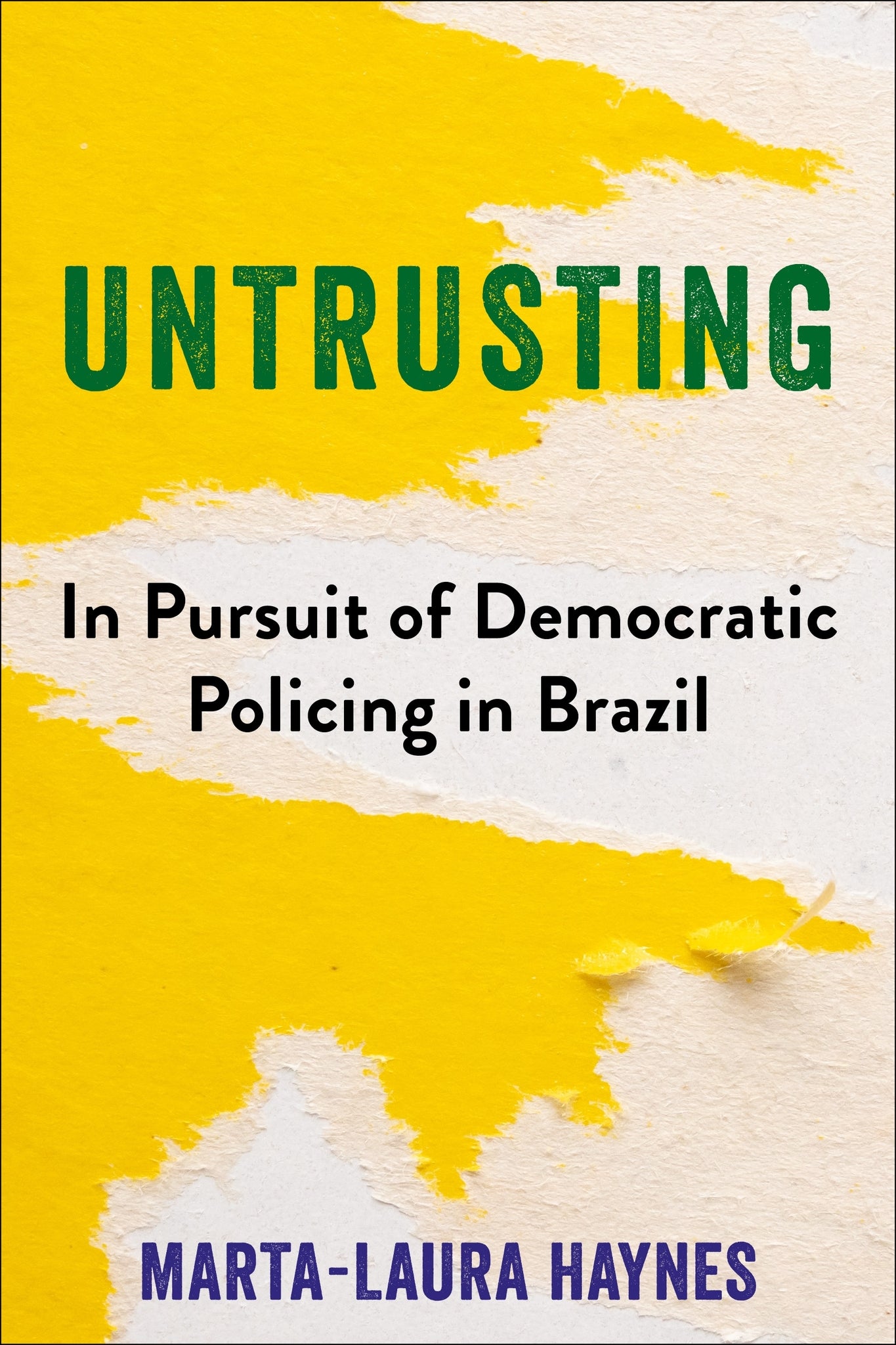
What does it mean to trust in a world shaped by violence and inequality? This book investigates the fraught pursuit of democratic policing in Brazil, where trust is both a necessity and a precarious gamble. Marta-Laura Haynes follows police officers and favela residents through patrols, crime scenes, fishing trips, drumming circles, and neighborhood gatherings to reveal how trust is not simply given or earned—but actively performed, negotiated, and also refused. These stories show how trust intersects with local ideas of citizenship, legitimacy, race, and power while also exposing the pervasive and often generative role of mistrust.
Far from being a stable foundation for democracy, trust in this context is a high-stakes wager, shaped by local hierarchies of race, gender, and class. In response, communities develop what Haynes calls “untrusting”: a mode of engagement that refuses blind faith in the state and instead turns mistrust into a form of care, resistance, and survival. By illuminating the contradictions and complexities of trust in Brazil, Untrusting challenges reductive narratives of policing and offers a nuanced perspective on how democratic ideals are contested and reimagined by people on the ground. Challenging the idea that distrust is merely a barrier to progress, Haynes shows how it can be a resource for agency, dignity, and alternative visions of justice.


— Marcos Mendoza, author of The Patagonian Sublime: The Green Economy and Post-Neoliberal Politics
Marta-Laura Haynes’s Untrusting is a powerful and well-substantiated critique of democratic policing experiments and the challenges of building public trust in societies structured by gendered and class-based racism. Haynes provides a necessary corrective to common narratives about why Black/Brown people living in the poorest neighborhoods distrust the police. She argues that this mistrust developed among the everyday witnesses and survivors of police terror and assassinations, unveiling a key political strategy of collective refusal, self-preservation, and care.
— Keisha-Khan Y. Perry, author of Black Women Against the Land Grab: The Fight for Racial Justice in Brazil
Marta-Laura Haynes’s fabulous ethnography presents a nuanced view of life in the favelas. All groups involved are portrayed with depth and care, showing not just their actions but also the deeper unsettling challenges of policing and public trust. Untrusting is a significant contribution to understanding policing, gender, violence, and sexuality.
— Jeremy Slack, author of Deported to Death: How Drug Violence Is Changing Migration on the US-Mexico Border
Amid efforts to make Brazilian police trustworthy that have spectacularly imploded, this vivid book speaks to a vital recognition: that even in the most troubled conditions, sociality, life, and mutual survival exist even among the most apparently disparate parties. And perhaps a modicum of trust must exist if violent inequality is the history, the status quo, and the trajectory.
— Graham Denyer Willis, author of Keep the Bones Alive: Missing People and the Search for Life in Brazil
Select Portuguese Terms
Acronyms
Acknowledgments
Introduction: Breaking Bread
1. Experimenting with Democracy
2. The “Good Citizen” of Rio de Janeiro
3. Policing the Amphibious City
4. From Papelão to Panopticon
5. Trust and Punishment
6. Honor: The Poor Man’s Treasure
7. Mistrust as Care
Conclusion: After Trust
Notes
Bibliography
Index