


Some error occured while loading the Quick View. Please close the Quick View and try reloading the page.
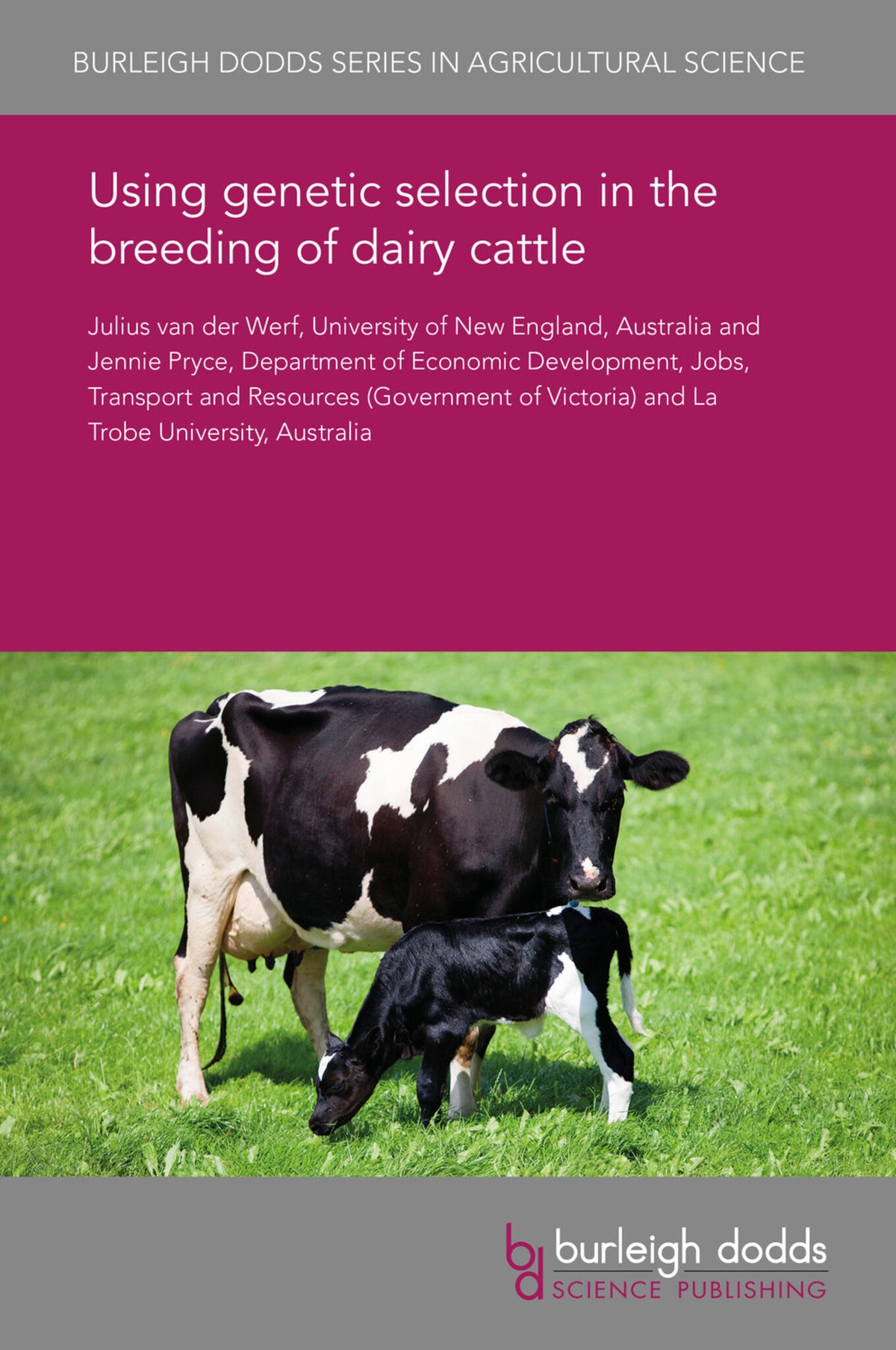
There has been a huge increase in the productivity of dairy cows over the last half a century, with the yield per cow more than doubling. This is substantially due to the use of genetic selection in dairy cattle breeding programmes. In this chapter, we review the use of artificial insemination (AI), progeny testing, embryo transfer and in vitro fertilization in breeding programmes. We then discuss how traditional progeny testing schemes are being replaced by genomic testing, resulting in a halving of the generation interval and a doubling of the rate of genetic gain. Finally, we review the objectives of breeding programmes, noting the move from focusing exclusively on production traits to an emphasis on other traits such as those related to health, fertility, functionality and feed efficiency.

Price: $32.50
Publisher: Burleigh Dodds Science Publishing
Imprint: Burleigh Dodds Science Publishing
Series: Burleigh Dodds Series in Agricultural Science
Publication Date:
31 January 2017
ISBN: 9781838791407
Format: eBook

1 Introduction 2 Breeding programmes: AI, progeny testing, embryo transfer and in vitro fertilization 3 The structure of dairy breeding programmes 4 The exchange and selection of genetic material 5 Genomic selection 6 Multi-trait selection 7 Breeding objectives 8 Genomic selection for functional traits 9 Conclusion 10 Where to look for further information 11 Acknowledgements 12 References