


Some error occured while loading the Quick View. Please close the Quick View and try reloading the page.
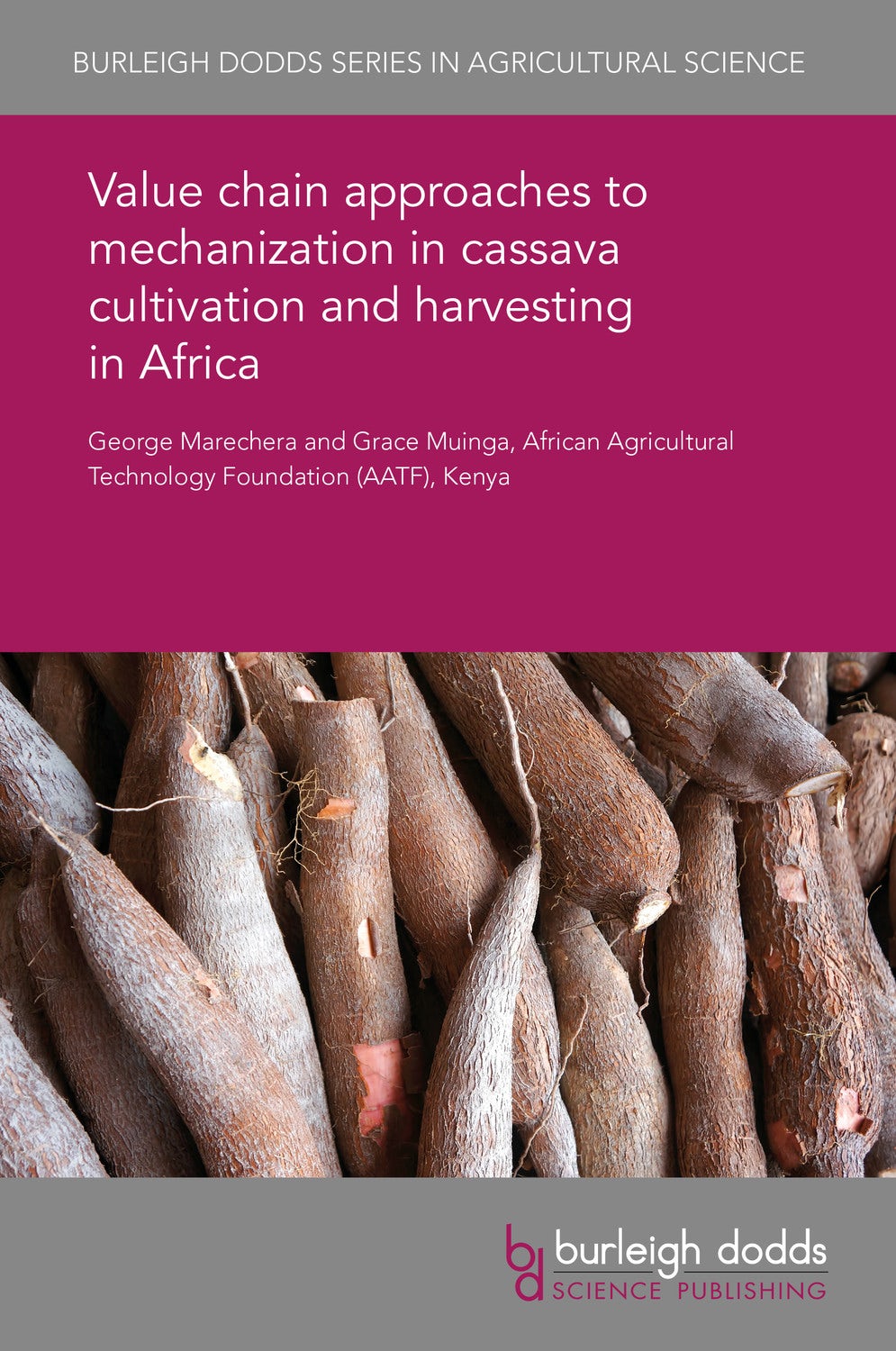
Cassava is a basic staple food in sub-Saharan African (SSA) countries. However, despite the use of improved varieties in some areas, yield levels have remained low due to inefficient production systems. Cassava production in SSA is mainly through manual labour, which is time consuming and inefficient, while cassava mechanization in Africa is almost non-existent. This is one of the key constraints to development of the sector. This chapter highlights mechanized production options. We begin by reviewing the benefits of mechanization, as well as the obstacles to mechanization on smallholder farms. We then review the valuable experience of the African Agricultural Technology Foundation (AATF) in promoting mechanization in SSA, the various mechanized production options and the business models which could give smallholder farmers access to the necessary machinery.

Price: $32.50
Publisher: Burleigh Dodds Science Publishing
Imprint: Burleigh Dodds Science Publishing
Series: Burleigh Dodds Series in Agricultural Science
Publication Date:
19 July 2017
ISBN: 9781838790745
Format: eBook
BISACs:
TECHNOLOGY & ENGINEERING / Agriculture / Tropical Agriculture, TECHNOLOGY & ENGINEERING / Agriculture / Agronomy / Crop Science, TECHNOLOGY & ENGINEERING / Agriculture / Sustainable Agriculture

1 Introduction 2 The benefits of mechanization 3 Obstacles to mechanization by smallholders 4 The AATF cassava mechanization experience 5 Mechanized production options for cassava 6 Assessing the effectiveness of mechanization 7 Business models for giving farmers access to farm machinery 8 Conclusions 9 References