


Some error occured while loading the Quick View. Please close the Quick View and try reloading the page.
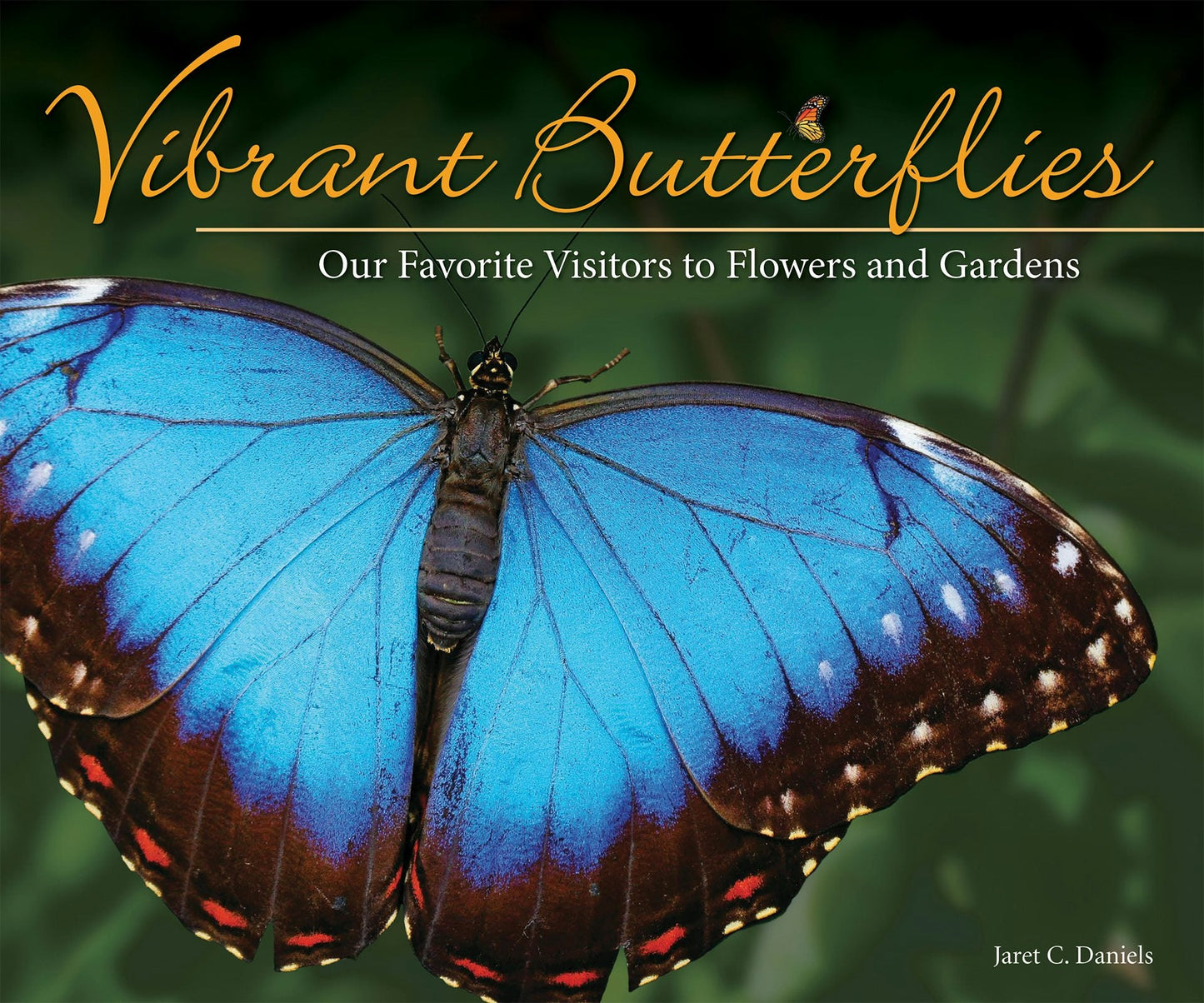
A Celebration of Beautiful Butterflies
More than 700 species of butterflies live in North America, and all are worthy of our admiration. Butterflies are perhaps the most beautiful and easily recognizable insects in the world. They hold our attention like none other, they capture our imaginations, and they fill us with a sense of amazement.
Jaret C. Daniels has spent more than 30 years studying and photographing butterflies across the continent—both native species and nonnative ones common at living exhibits and butterfly gardens. He has collected his knowledge and expertise in this gorgeous book, guiding you through the fascinating lives of butterflies while highlighting their most amazing characteristics. Learn about everything from the miraculous metamorphosis and intricate wing patterns to the Monarch’s epic migration and even butterfly-friendly plants that attract butterflies. The book’s photography shows the true grace and elegance of butterflies in their natural environments, while the text reveals facets of their lives that will surprise and amuse you.
Immerse yourself in the world of these winged jewels. You’ll develop a new appreciation for their beauty and strength, and you’ll never look at butterflies the same way again.


Jaret C. Daniels, Ph.D., is a professional nature photographer, author, native plant enthusiast, and entomologist at the University of Florida, specializing in insect ecology and conservation. He has authored numerous scientific papers, popular articles, and books on gardening, wildlife conservation, insects, and butterflies, including butterfly field guides for Florida, Georgia, the Carolinas, Ohio, and Michigan. He is also co-author of the Wildflowers of Florida Field Guide. Jaret lives in Gainesville, Florida, with his wife, Stephanie.
Our Vibrant Butterflies
- EVOLUTIONARY ORIGIN
- DIFFERENCES BETWEEN BUTTERFLIES AND MOTHS
- COCOON VS. CHRYSALIS
- WING POSTURE
- EXCEPTIONS TO THE RULE
An Elegant Life Cycle
- STAGE BY STAGE
- The Egg
- Glued in Place
- Many Shapes and Colors
- Camouflage and Protection
- THE LARVA
- Larval Anatomy
- A World of Variety
- Clever Disguises
- Chemical Weapons
- Hiding Out
- Unusual Allies
- THE CHRYSALIS
- A Lot Going on Behind the Scenes
Adult Butterflies
- THE BASICS OF BUTTERFLY ANATOMY
- A Butterfly’s Head
- The Thorax
- The Abdomen
- BUTTERFLY SENSES
- Vision
- Seeing in Light—and Ultraviolet
- BUTTERFLY VISION VS. YOURS
- Taste
- Smell
- Smell, Courtship and Mating
- Hearing
- WING STRUCTURE
- Incredible Scales
- The Role of Wings and Scales
- More Than Window Dressing
- Many Different Adaptations
- LONGEVITY
- FLOWER POWER
- Collecting Pollen: A Rarity
- Not Always Found at Flowers
- MIMICRY
- Types of Mimicry
- An Amplified Warning
- COURTSHIP AND MATING
- Defending Territory
- Long-Range Efforts
- MIGRATION
- An Incredible Journey
Butterfly Families
- SWALLOWTAILS AND PARNASSIANS (PAPILIONIDAE )
- A Conservation Icon
- WHITES, SULPHURS, AND YELLOWS (PIERIDAE)
- The Cloudless Sulphur
- The Southern Dogface
- GOSSAMER WINGS (LYCAENIDAE)
- Coppers
- Blues
- The Western Pygmy Blue
- A Disappearing Gem
- Big Purple
- A Butterfly with Carnivorous Larvae
- BRUSH-FOOTS (NYMPHALIDAE)
- An Unexpected Color
- You Can’t Miss the Buckeye
- Zebra Longwing
- Pupal Mating
- The American Snout
- Often Mistaken for Moths
- The Mourning Cloak
- Admirals
- True Gems
- METALMARKS (RIODINIDAE)
- The Blue Metalmark
- SKIPPERS (HESPERIIDAE)
- Grass Skippers
- The Dicot Skippers
- A Misleading Name
- Spread-Wing Skippers
- WHY BUTTERFLIES ARE IMPORTANT
- Pollination
- Food for Other Organisms
- Nutrient Recycling
- Environmental Indicators
Conservation & How You Can Help
- BUTTERFLY CONSERVATION TIPS
- BUTTERFLY HOUSES
- WATCHING WILDLIFE AND BUTTERFLY GARDENING
- BUTTERFLIES IN YOUR BACKYARD
Commonly Seen Caterpillars and the Butterflies and Moths They Become
Common Native Butterfly Species
Nonnative Butterfly Species Commonly on Display in Living Exhibits
Butterfly-friendly Plants, by Region
Glossary
About the Author