


Some error occured while loading the Quick View. Please close the Quick View and try reloading the page.
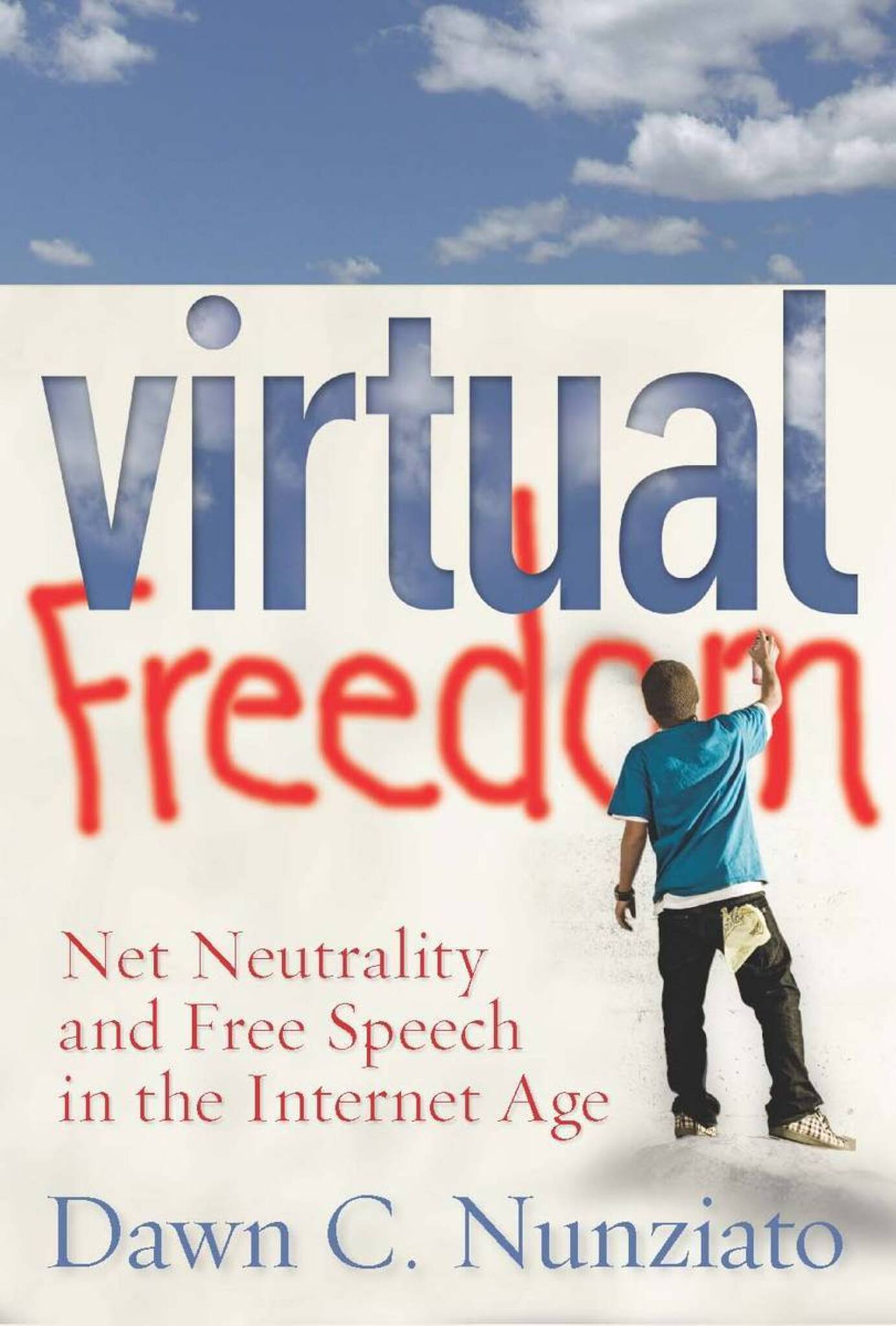
Communications giants like Google, Comcast, and AT&T enjoy increasingly unchecked control over speech. As providers of broadband access and Internet search engines, they can control online expression. Their online content restrictions—from obstructing e-mail to censoring cablecasts—are considered legal because of recent changes in free speech law.
In this book, Dawn Nunziato criticizes recent changes in free speech law in which only the government need refrain from censoring speech, while companies are permitted to self-regulate. By enabling Internet providers to exercise control over content, the Supreme Court and the FCC have failed to protect the public's right to access a broad diversity of content. Nunziato argues that regulation is necessary to ensure the free flow of information and to render the First Amendment meaningful in the twenty-first century. This book offers an urgent call to action, recommending immediate steps to preserve our free speech rights online.


"Nunziato . . . provides a well-written, insightful work that discusses private censorship of online communication and that proffers wise solutions designed to protect free speech in the Internet age."—Pat Newcombe, Law Library Journal
"Whether sympathetic to net neutrality or not, readers will find Virtual Freedom a commanding argument for affirmative free speech rights online."—Harvard Law Review
"Ultimately, Virtual Freedom is an informative tour of relevant law and a provocative discourse on how that law should—and should not—apply to the Internet."—S.B. Lichtman, Choice
"This short but detailed book provides a great deal of information about an important subject, conveying it in the context of the author's open opposition to current policy and support for bringing greater neutrality to the Internet. It is a useful book about a subject that will likely be of considerable legal interest for decades to come."—Gloria C. Cox, Law and Politics Book Review
"Dawn Nunziato has written a first rate critique of the law's failure to address the ways in which control of digital networks may threaten our speech freedoms. With careful explication of the First Amendment case law as it has developed over the past century, Professor Nunziato makes a strong argument for changing the way courts currently deal with freedom of expression in the digital environment. This book will be of great value to anyone who is interested in the First Amendment, media law, or cyberlaw and is of relevance to anyone who uses the Internet." —Ellen Goodman, Rutgers University
"This powerful, thought-provoking book provides a useful framework for many online speech debates, current and future. Dawn Nunziato moves elegantly from theory to practice, and the work will play an important role in the much-debated topic of net neutrality." —Michael D. Birnhack, Tel Aviv University
"In Virtual Freedom, Dawn Nunziato takes a fresh and insightful look at the state of free speech on the Internet. Her book chronicles some alarming examples of censorship on the Internet, and the surprise the book reveals is that the source of the censorship is not the government but the Internet's dominant private players. This valuable work not only illustrates the free speech problems that beset the Internet but provides solutions as well." —Jerome A. Barron, George Washington University Law School
"Dawn Nunziato's extraordinary book blows apart the myth of the Internet as an expressive utopia, revealing convincingly with ample and alarming detail how the Internet is rapidly becoming a dystopia of covert distortion and outright censorship of valuable speech. This is an important, timely, and beautifully written book that is required reading for anyone concerned about freedom of expression in the digital realm and the future of democracy itself."—Anthony E. Varona, American University