


Some error occured while loading the Quick View. Please close the Quick View and try reloading the page.
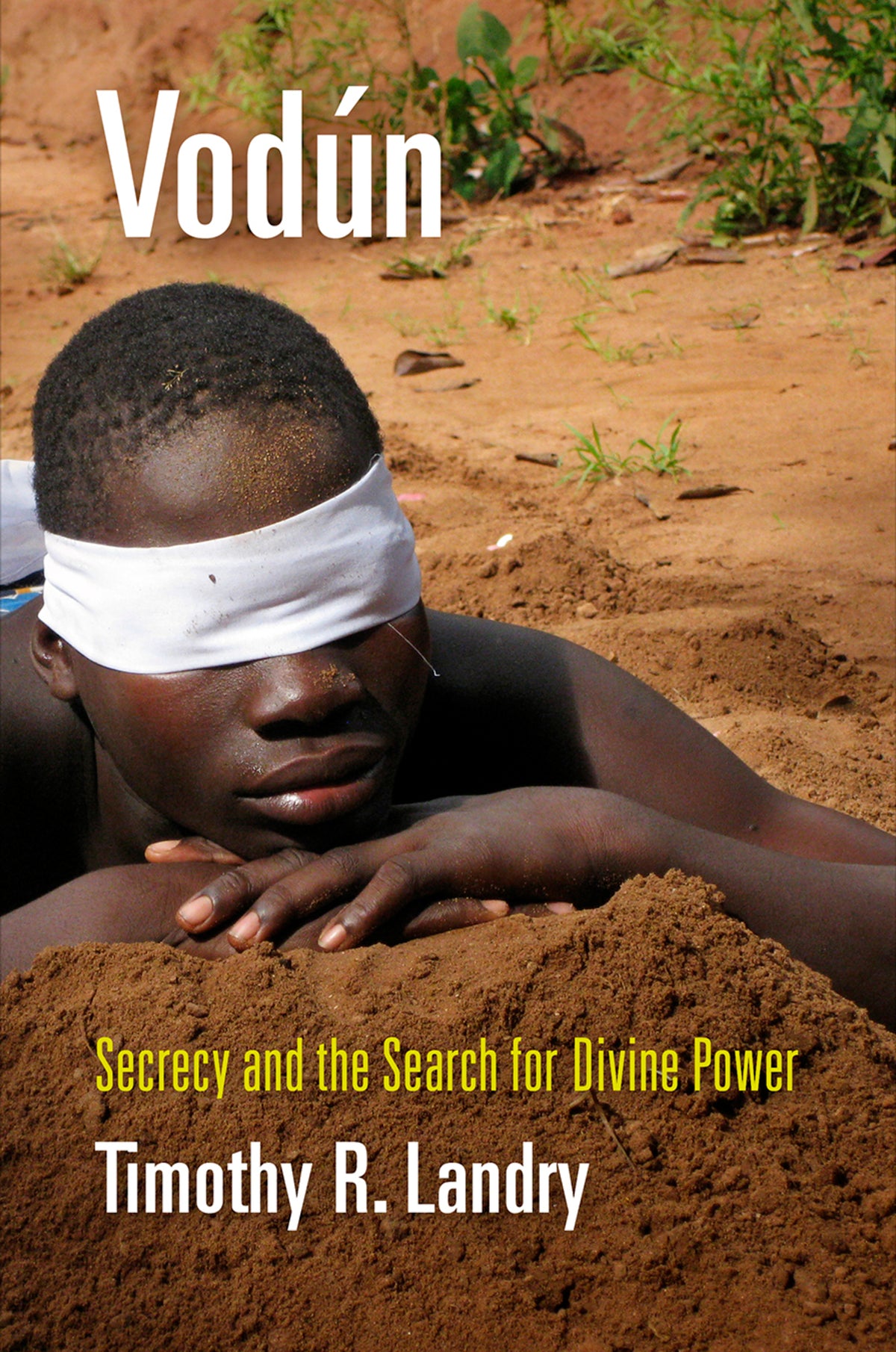
Tourists to Ouidah, a city on the coast of the Republic of Bénin, in West Africa, typically visit a few well-known sites of significance to the Vodún religion—the Python Temple, where Dangbé, the python spirit, is worshipped, and King Kpasse's sacred forest, which is the seat of the Vodún deity known as Lokò. However, other, less familiar places, such as the palace of the so-called supreme chief of Vodún in Bénin, are also rising in popularity as tourists become increasingly adventurous and as more Vodún priests and temples make themselves available to foreigners in the hopes of earning extra money.
Timothy R. Landry examines the connections between local Vodún priests and spiritual seekers who travel to Bénin—some for the snapshot, others for full-fledged initiation into the religion. He argues that the ways in which the Vodún priests and tourists negotiate the transfer of confidential, sacred knowledge create its value. The more secrecy that surrounds Vodún ritual practice and material culture, the more authentic, coveted, and, consequently, expensive that knowledge becomes. Landry writes as anthropologist and initiate, having participated in hundreds of Vodún ceremonies, rituals, and festivals.
Examining the role of money, the incarnation of deities, the limits of adaptation for the transnational community, and the belief in spirits, sorcery, and witchcraft, Vodún ponders the ethical implications of producing and consuming culture by local and international agents. Highlighting the ways in which racialization, power, and the legacy of colonialism affect the procurement and transmission of secret knowledge in West Africa and beyond, Landry demonstrates how, paradoxically, secrecy is critically important to Vodún's global expansion.


"Landry's book is a delightful read, for it is essentially a memoir of Landry's eighteen months in Ouidah that is peppered with rigorous empirical and theoretical insights . . . [T]his book is more than an ethnography of an African religious tradition,it is a thoughtful personal reflection on the ethnographic process that would make a nice addition to syllabi on research methods."
"A compelling ethnographic expose, Timothy R. Landry's Vodun examines how the deeply localized Vodun tradition of Benin has become a global urban religion in the twenty-first century."
"Landry's work is a signal accomplishment.he has successfully addressed an aspect of modern Vod'un that few others take seriously-unless they approach it as a threat to a romanticized, "pure" Vod'un. In doing so, he has shed new, valuable light on the religion from both the B'eninois and foreign seekers' perspectives. Just as important, he has helped define its vibrant place in global society."
"Vodún is a well-written, entertaining, and insightful ethnography . . . [I]t debunks many misconceptions about the religion and its local variants (like voodoo in Haiti and the United States) while making observations that are applicable far behind that particular family of religions. Anthropologists and others increasingly appreciate the materiality, flexibility, and transportability of religions including Christianity, and the book is a welcome addition to an important and growing literature on dynamic global religious processes."
"In Vodún, Tim Landry skillfully weaves narrative and analysis to craft an engaging and powerful book on the play of traditional religious practice in our transnational world. In this superb work Landry not only refines our comprehension of contemporary Vodún but also underscores the centrality of secrecy in religious practices. Based upon a long and complicated apprenticeship among Vodún practitioners in Benin, Landry's path breaking work is a model for doing the anthropology of religion in the twenty-first century."
"A sensitive, nuanced account that captures the joys and struggles of ethnographic inquiry, Vodún reads as both a personal narrative of apprenticeship in Beninois Vodún ritual and a thick description of informants' discourses, life histories, and religious worldviews."
A Note on Orthography and Style
Introduction
Chapter 1. Touring the Forbidden
Chapter 2. Receiving the Forest
Chapter 3. Secrecy, Objects, and Expanding Markets
Chapter 4. Belief, Efficacy, and Transnationalism
Chapter 5. Global Vodún, Diversity, and Looking Ahead
Epilogue
Notes
Works Cited
Index
Acknowledgments