


Some error occured while loading the Quick View. Please close the Quick View and try reloading the page.
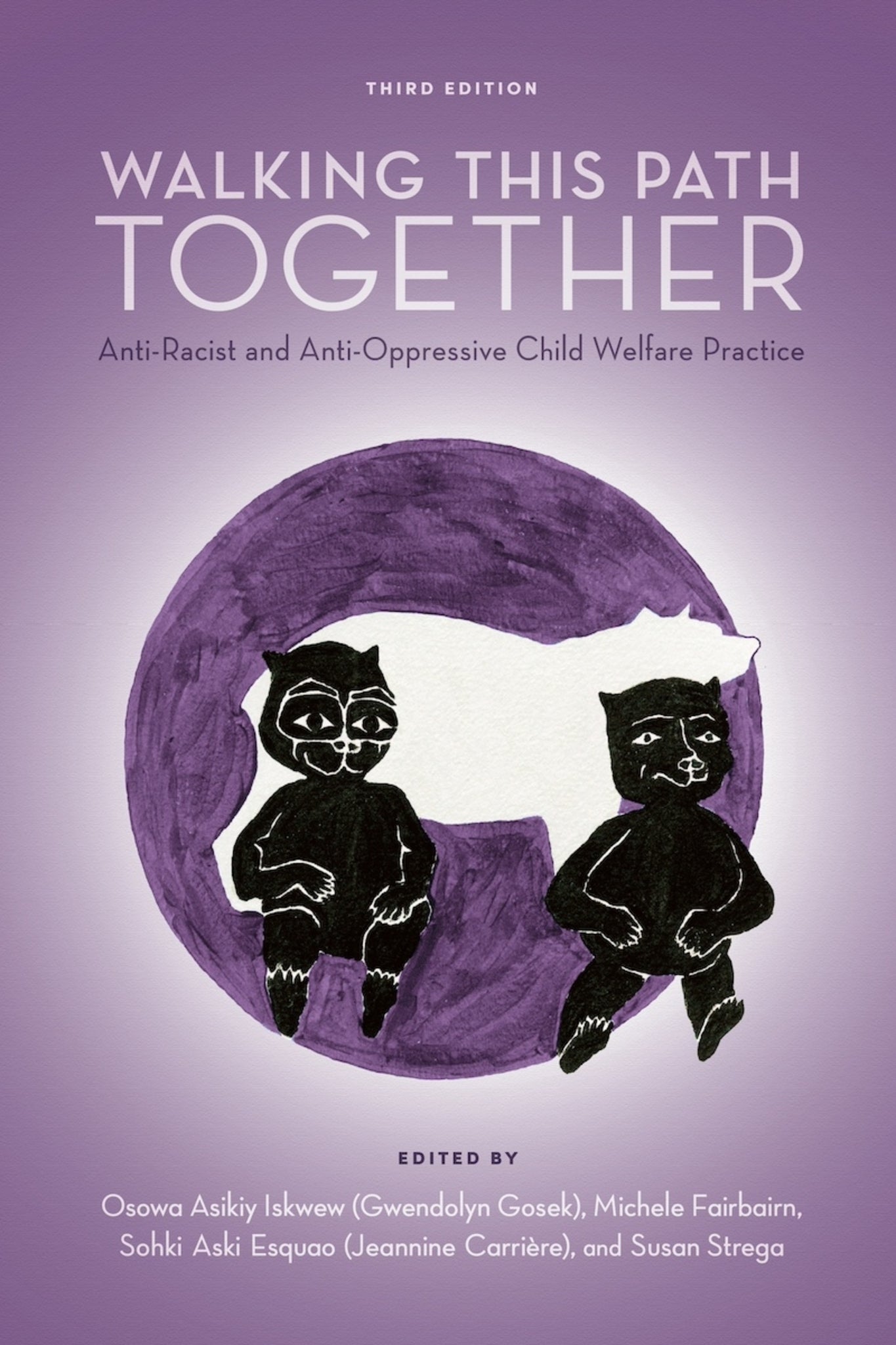
Canadian child welfare policies and practices have been central to maintaining a settler colonial nation by controlling and managing the childhoods and future lives of children. While ostensibly grounded in the “best interests of the child,” child welfare policies and practices far too often make the lives of young people more precarious because they are stratified along race and class lines rather than caring for their wellbeing. There have been dire consequences for Indigenous communities but also for Black, newcomer, non-citizen and poor people, who are also disproportionately the primary focus of child welfare. The contributors to this book reveal these unjust conditions so that workers can contribute to the ongoing transformation of child welfare to facilitate child wellbeing.
The third edition of Walking This Path Together continues the transformative vision of the first two editions and charts a new way forward. There are several new chapters and authors, who focus on Métis kinship protocols, family group conferencing, decolonizing child welfare, and the criminalization of newcomers, refugee children and Indigenous youth in care. They demonstrate how to bring forward transformative practices to moving child welfare into a truly new decolonial era. This transformative vision is the path that we are walking.


Osawa Askiy Iskwew (Gwendolyn Gosek) is a member of Lac La Ronge First Nations. She is an assistant professor with the School of Social Work, University of Victoria, located on the unceded territory of the lək̓ʷəŋən-speaking peoples, including the Songhees, Esquimalt and WSÁNEĆ Peoples.
Michele Fairbairn is an educator with the School of Social Work, University of Victoria, located on the unceded territory of the lək̓ʷəŋən-speaking peoples, including the Songhees, Esquimalt and WSÁNEĆ Peoples. Michele is a former ward of the child welfare system and a former child welfare worker.
Sohki Aski Esquao, Jeannine Carrière is Métis and was raised in St. Adolphe Manitoba. She has been teaching social work since 1994 in Alberta and at the School of Social Work, University of Victoria, since 2005. In 2024 Jeannine is retiring from her academic career after many years of service to Indigenous social work education. Her research contributions have included topics such as Metis children’s identity, and needs for cultural safety in adoptions and child welfare services.
Susan Strega taught in the School of Social Work, University of Victoria, until her retirement in 2021. Susan is a former youth in care and former child protection worker.
Chapter 1:: Decolonial, Antiracist and Equitable Child Welfare: An Introduction (Osawa Aski Iskwew [Gwendolyn Gosek] and Michele Fairbairn)
Chapter 2:: Indigenous Children in the Centre: Indigenous Perspectives on Anti-Oppressive Child Welfare Practice (Qwul’sih’yah’maht [Robina Thomas]and Kundoqk [Jacquie Green])
Chapter 3:: The Long and Twisted Road to Child Welfare: My Mother’s Story through Colonization, Trauma and Strength (Osawa Aski Iskwew [Gwendolyn Gosek])
Chapter 4:: Child Welfare Assessment, Documentation and Recordkeeping: Decolonial, Antiracist and Equitable Approaches (Michele Fairbairn)
Chapter 5:: Giidosendiwag: Walking Together with Indigenous Youth in Care (Nancy Stevens and Ziigwan Binesii [Rachel Charles])
Chapter 6:: Four Level Model of Consciousness with Family Group Conferences: A Wise Practice for Awareness of Colonization and Decolonization (Don Robinson)
Chapter 7:: Recentring Métis Kinship Protocols into Child Welfare Practices (Julie Mann-Johnson and Angie Tucker)
Chapter 8:: Decolonizing Prevention: A Risk-Benefit Analysis of Indigenous Participation in Family Service Programs (Erika Finestone)
Chapter 9:: “Your Best Can Only Take You to Where the Good Is”: Strange Things Black Parents Say and Do to Prepare Black Children for a Racist Society (Paul Banahene Adjei)
Chapter 10:: “Deportation Is Double Punishment”: Non-citizen Former Youth in Care and the Neoliberal “Crimmigration” System (Mandeep Kaur Mucina, Jessica Pratezina and Amira Abdel-Malek)
Chapter 11:: Decolonial Trauma-Informed School-Based Practice: Hearing the Voices of Refugee Newcomer Parents (Mehmoona Moosa-Mitha)
Chapter 12:: Taking Children’s Resistance Even More Seriously: A Response-Based Approach to Children Who Have Experienced Violence (Kineweskwêw [Cathy Richardson] and Shelly Dean)
Chapter 13: : Calling All Warriors: Indigenous Social Workers Fighting Inequity within the Child Welfare System (Wa Cheew Wapaguunew Iskew [Carolyn Peacock] and Brooke Lightning-Montour)