


Some error occured while loading the Quick View. Please close the Quick View and try reloading the page.
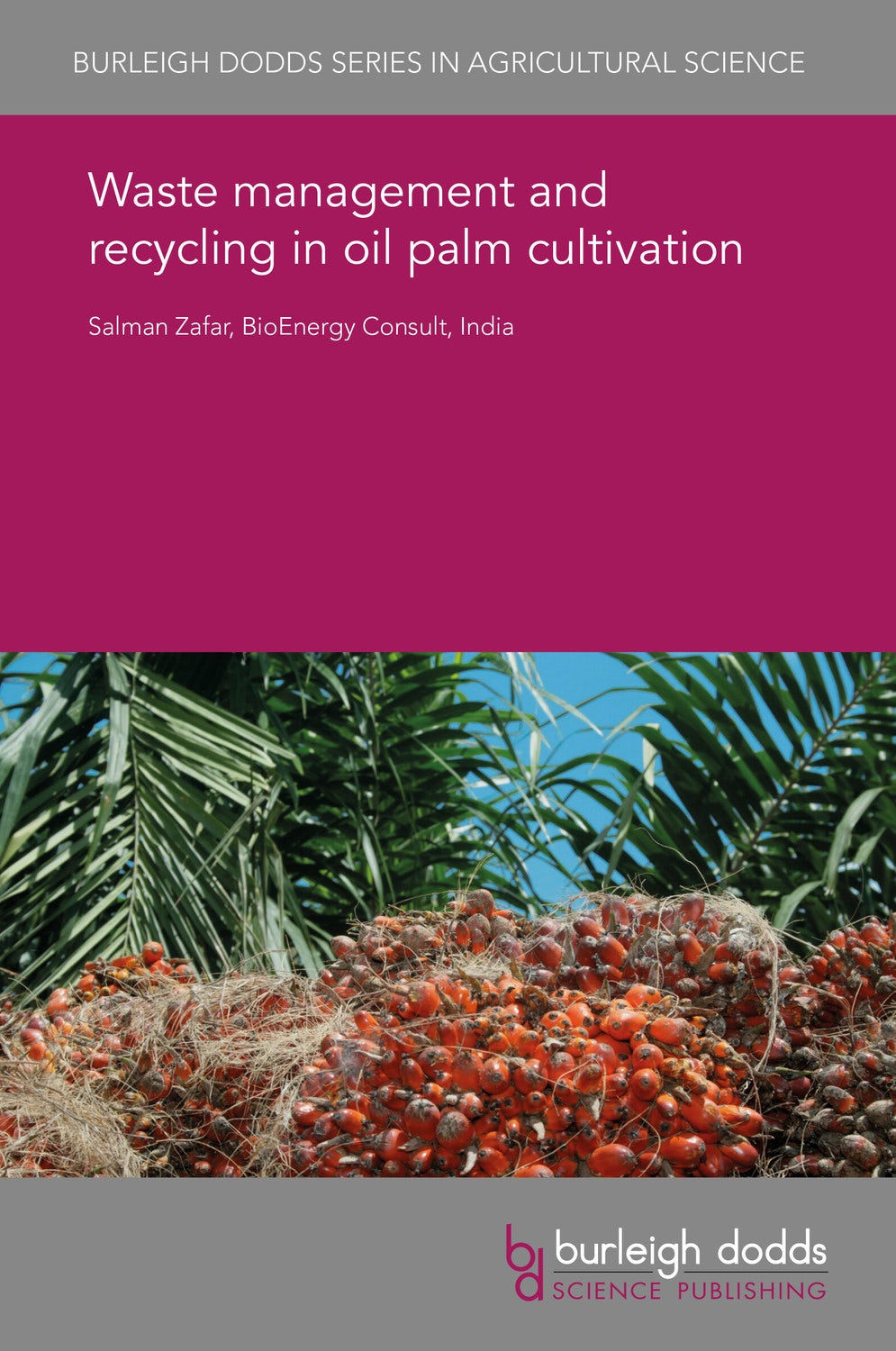
In a typical palm plantation, almost 70% of the fresh fruit bunches are turned into wastes in the form of empty fruit bunches, fibres and shells, as well as liquid effluent. Until recently, most of the wastes from palm oil mills were either burnt in the open or thrown away in waste ponds or open areas. This contributed enormously to global climate change by emitting carbon dioxide and methane. This chapter reviews the technological advancements which now make it possible to convert palm oil waste products into useful energy or recycle them into value-added products to generate additional profits for the industry.

Price: $32.50
Publisher: Burleigh Dodds Science Publishing
Imprint: Burleigh Dodds Science Publishing
Series: Burleigh Dodds Series in Agricultural Science
Publication Date:
19 March 2018
ISBN: 9781838794828
Format: eBook
BISACs:
TECHNOLOGY & ENGINEERING / Agriculture / Sustainable Agriculture, TECHNOLOGY & ENGINEERING / Agriculture / Tropical Agriculture, TECHNOLOGY & ENGINEERING / Agriculture / Agronomy / General

1 Introduction 2 Palm oil mills and their wastes: overview 3 Residues after processing: kernel shells, mesocarp fibres and effluent 4 Residues after processing: empty fruit bunches (EFBs) 5 Cogeneration technologies 6 Conclusion 7 Where to look for further information 8 References