


Some error occured while loading the Quick View. Please close the Quick View and try reloading the page.
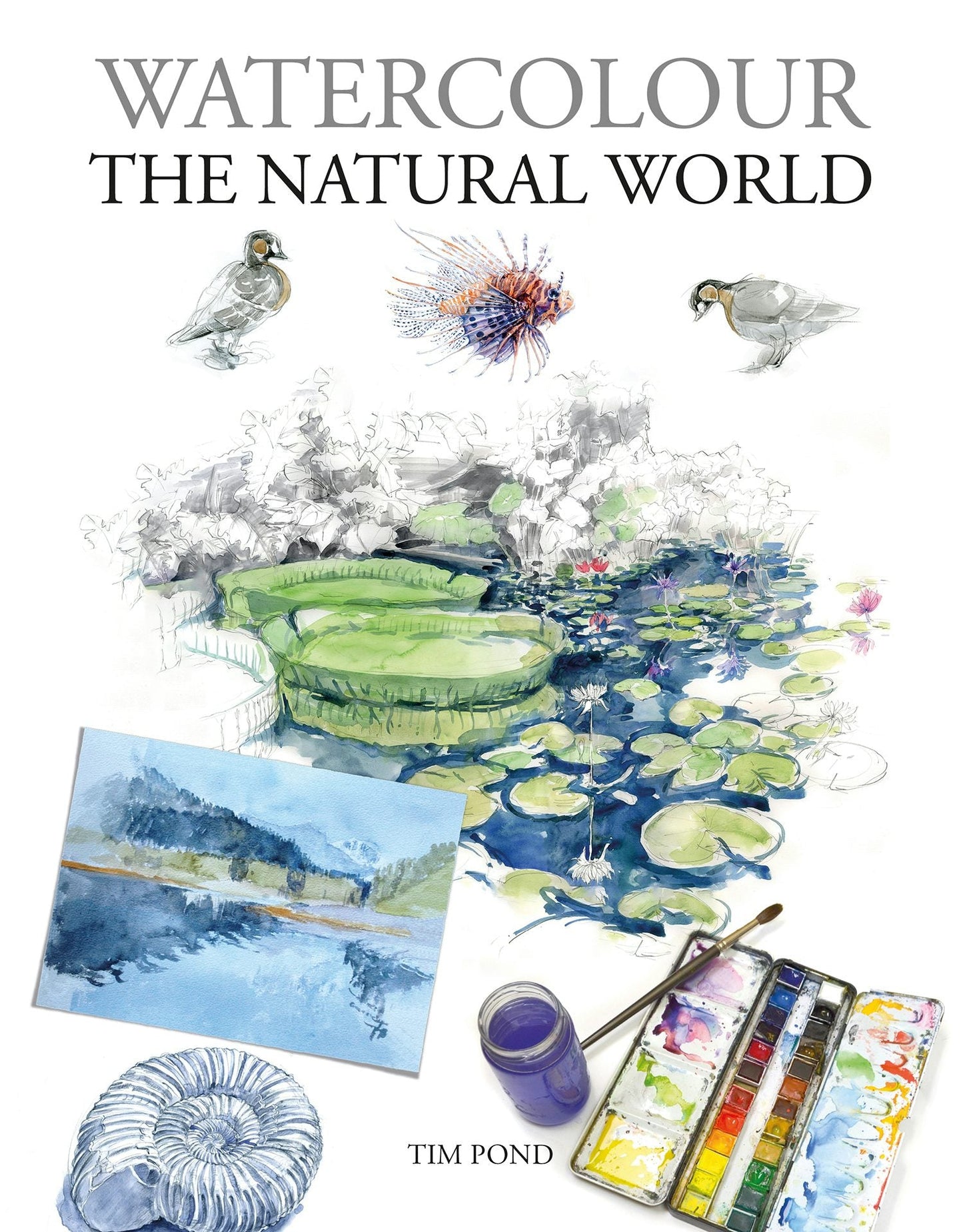
Watercolour the Natural World is a comprehensive guide to painting nature which also shows how art can promote understanding of our environment and the animals and plants that inhabit it.
Critically acclaimed wildlife painter Tim Pond takes the reader on a journey from pole to pole to discover pristine frozen wilderness areas, coniferous forests and dense tropical rainforests. They are introduced to species that have made these habitats their home and discover how they have evolved to survive fierce winters or sweltering rainforest temperatures.
Each section is packed with tips, techniques and concepts that can speed up the reader's progress in learning to paint mountains, forests, waterscapes, plants and animals. It applies the lessons of the life class to every subject and includes suggested activities such as painting in aquariums, zoos, Natural History museums and outdoors in the landscape. Working from a photograph is explored, too, so that readers that can’t see their subjects in real life can also fully participate.
This guide is suitable for all abilities, whether entirely new to watercolour painting or an experienced professional. Drawing methods are taught to help the reader conceive the fundamentals of form. It then explores colour theory and the best watercolour combinations to capture the brilliance of nature, from green leaves and the patterns of animal coats to the bright plumes of exotic birds. Key foundation techniques are fully explained, as well as specific techniques, such as using a dry brush to create the impression of fur.


"This new book takes the form of a series of studies, arranged by region,
habitat and season. It is thus possible to work with animals, birds, reptiles and fish along with their surroundings – Tim includes details of trees, waves
and even deserts – in a coherent way.
Introduction
Tools and materials
Fundamentals of form
Depth and perspective
Composition
Tonal value
Colour theory
Getting started with watercolour
Working from a photograph
Study sheets: working from life
Gesture drawings
Welcome to planet Earth
Animals and plants: the pioneers of places
What are habitats?
The global seasons
Capturing weather
Mountains
Craggy rocks
Lynx
Frozen habitats
Reindeer
Snow and glaciers
Temperate regions
Spring
Summer
Autumn
Winter
Coniferous forests
Wolf
Deciduous woodlands
Deciduous trees
Oak sprig
Insects
Grasslands
African savannah
Ungulates
Giraffe
Mara
Tropics and subtropics
Rainforests
Rainforest plants
Sandy deserts
American Sonaran Desert
Cacti
Meerkats
Camelids
Aquatic habitats
Waves and water
Shorelines
Molluscs
Venus comb murex
Coral reefs
Spotfin lionfish
Open oceans
Giant squid
Estuaries
Geese
Fresh water
Arowanas
Islands
Giant tortoise
Lemur
Kakapo
Glossary
Index