


Some error occured while loading the Quick View. Please close the Quick View and try reloading the page.
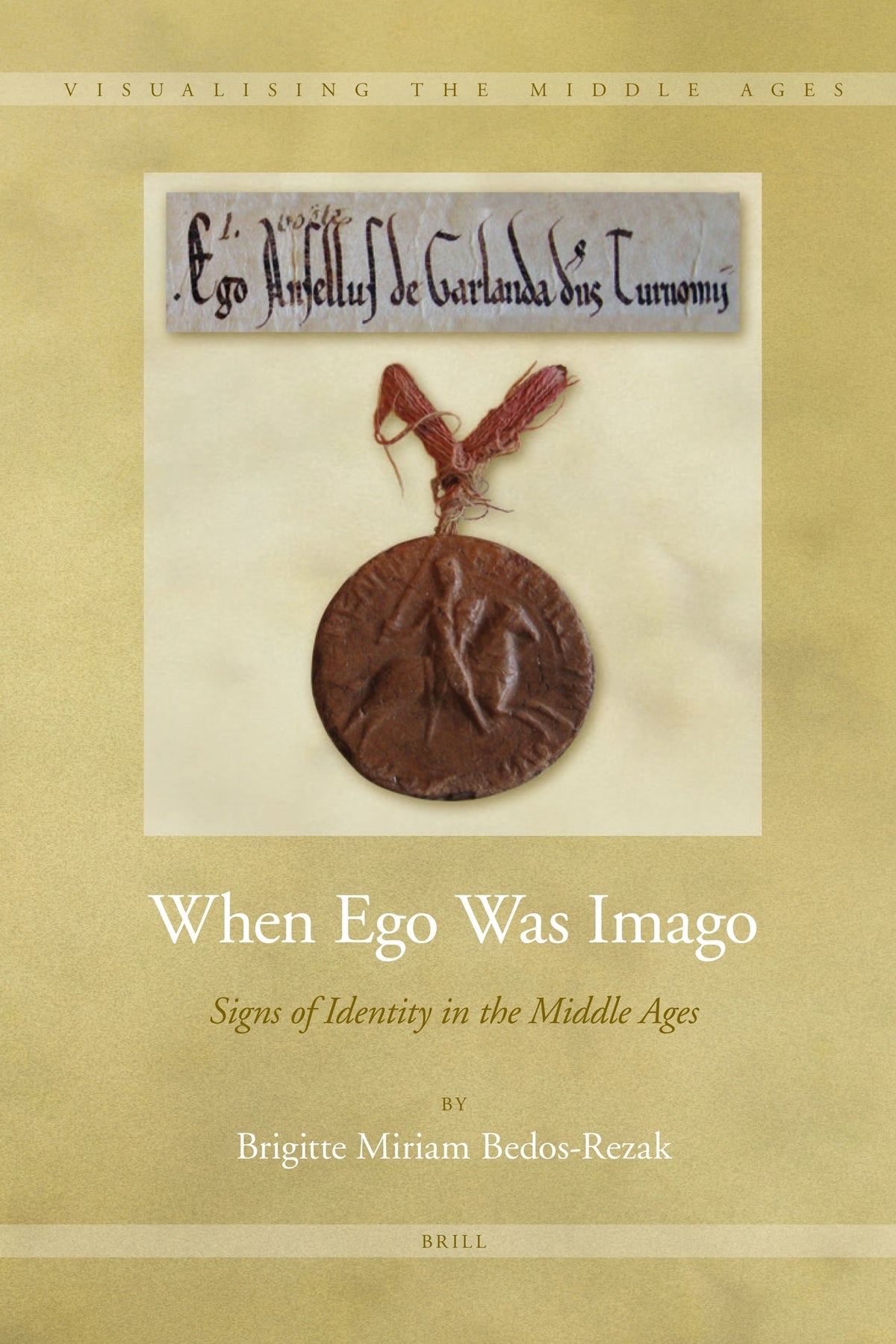
Twelfth-century individuals negotiated personal relationships along a continuum connecting rather than polarizing immediacy and mediated representation. Their markers of individuation, signs of identity and media of communication thus evidence practical engagement with contemporary medieval sign theory and perceptions of reality. In this study, the relevance of modern theory for the interpretation of medieval artifacts is shown to depend upon the parallel existence of theoretical activity by the producers and users of such artifacts. In the cultural landscape of the central Middle Ages, the axes of iconicity, semantics and materiality traced by charters, seals, and by both concrete and metaphorical images of the imprint, dynamically shaped the boundaries within which a sense of self was formulated, modulated, experienced, and enacted.

Price: $217.00
Pages: 322
Publisher: Brill
Imprint: Brill
Publication Date:
26 November 2010
ISBN: 9789004192171
Format: Hardcover

"...This important new book gives the lie to any such dichotomy between erudition and theoretical acumen. Brigitte Bedos-Rezak brings her unrivalled knowledge of specialists’ fields— diplomatics and charters in general and, above all, sigillography, the study of seal dies and their imprints—to the questions of representation in identity formation in the twelfth and thirteenth centuries. Rigorously following transformations in sealing practices and the simultaneous spread of the metaphor of sealing takes the book into extremely wide terrain that includes the multiple relations among discourses of royal authority, eucharistic theology, and personal and corporate accountability...Non-medievalists tend not to read the work of medievalists. This is to be especially deplored in the case of this book, [as is its price], for it is a model of post-postmodern historiography, that is, a return to the empirical historical subject and object while cognizant of the mediate role of language. By examining a significant historical example of the mediate role of the sign, Bedos-Rezak shows us what cultural history after the linguistic turn can be." – Robert M. Stein, Purchase College, in: Speculum 87/2 (April 2012)
"...As a book, When Ego was Imago: Signs of Identity in the Middle Ages is complex and intense, and yet exudes a manifest enthusiasm that lends it a charismatic appeal. It does credit to the series to which it belongs, providing a truly original vision of medieval thought that will, I suspect, remain with me for many years to come." – James Smith, The University of Western Australia, in: LIMINA, 15 July 2011
"...What interests me about this book is how it opens up a gap or lacuna between indexicality and iconicity, a gap of importance for medievalists and contemporary students of semiosis. Michel Foucault pointed toward such gaps and their possibilities in his classical study, The Order of Things ..." – Kathleen Biddick, Temple University,/i>, in: The Medieval Review, 2011
"...As a book, When Ego was Imago: Signs of Identity in the Middle Ages is complex and intense, and yet exudes a manifest enthusiasm that lends it a charismatic appeal. It does credit to the series to which it belongs, providing a truly original vision of medieval thought that will, I suspect, remain with me for many years to come." – James Smith, The University of Western Australia, in: LIMINA, 15 July 2011
"...What interests me about this book is how it opens up a gap or lacuna between indexicality and iconicity, a gap of importance for medievalists and contemporary students of semiosis. Michel Foucault pointed toward such gaps and their possibilities in his classical study, The Order of Things ..." – Kathleen Biddick, Temple University,/i>, in: The Medieval Review, 2011
Brigitte Miriam Bedos-Rezak, Professor of History, New York University, has published extensively on medieval seals as conceptual tools, markers of identity, and social agents, including Form as Order in Medieval France (Aldershot, 1993), and “Medieval Identity” (American Historical Review, 2000)