


Some error occured while loading the Quick View. Please close the Quick View and try reloading the page.
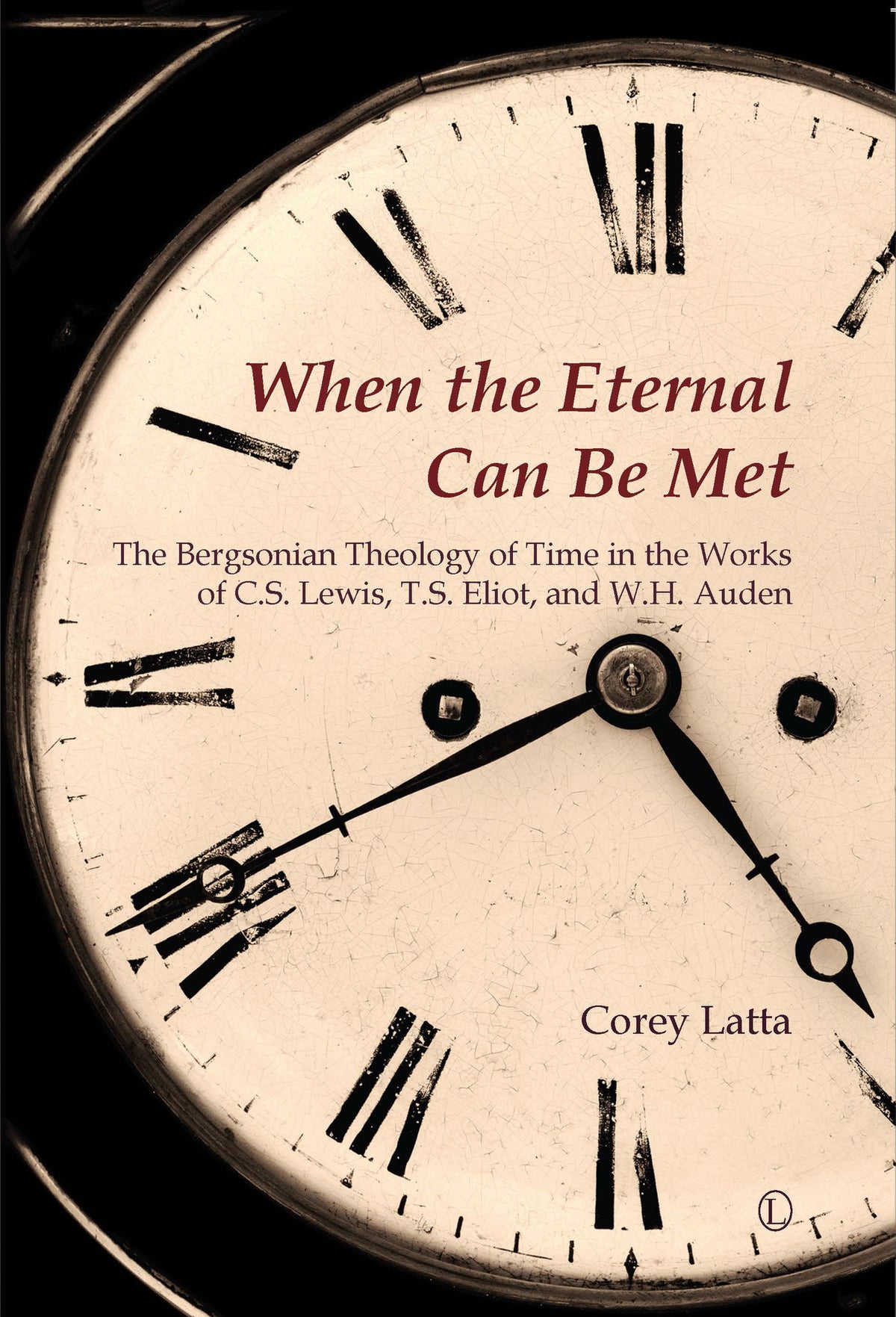
A study of the influence of the French philosopher Henri Bergson's theory of time on the works of three of the great Christian writers of the 20th century.
When the Eternal Can Be Met excavates the philosophy behind the theology of the twentieth century's most prominent Christian writers: C.S. Lewis, T.S. Eliot, and W.H. Auden. These three literary giants converted to Christianity within little more than a decade of one another, and interestingly, all three theological authors turned to the theme of time. All three authors also came to remarkably similar conclusions about time, positing that the temporal present moment allowed one to meet the eternal. The prominent philosopher Henri Bergson wrote about time's power to transform an individual's emotional and spiritual state decades before Lewis, Eliot, and Auden sought to creatively construct a fictive or poetic theology of time. When the Eternal Can Be Met argues that one cannot fully understand Lewis, Eliot, and Auden's theology of time without understanding Bergson's theories. From the secular philosophy of Bergson dawned the most important works of literary theology and treatments of time of the twentieth century, and in the Bergson-influenced literary constructs of Lewis, Eliot, and Auden, a common theological articulation sounds out - time present is where humans meet God.
When the Eternal Can Be Met excavates the philosophy behind the theology of the twentieth century's most prominent Christian writers: C.S. Lewis, T.S. Eliot, and W.H. Auden. These three literary giants converted to Christianity within little more than a decade of one another, and interestingly, all three theological authors turned to the theme of time. All three authors also came to remarkably similar conclusions about time, positing that the temporal present moment allowed one to meet the eternal. The prominent philosopher Henri Bergson wrote about time's power to transform an individual's emotional and spiritual state decades before Lewis, Eliot, and Auden sought to creatively construct a fictive or poetic theology of time. When the Eternal Can Be Met argues that one cannot fully understand Lewis, Eliot, and Auden's theology of time without understanding Bergson's theories. From the secular philosophy of Bergson dawned the most important works of literary theology and treatments of time of the twentieth century, and in the Bergson-influenced literary constructs of Lewis, Eliot, and Auden, a common theological articulation sounds out - time present is where humans meet God.

Price: $29.99
Pages: 234
Publisher: Boydell & Brewer Inc.
Imprint: Lutterworth Press
Publication Date:
28 August 2014
Trim Size: 9.02 X 6.02 in
ISBN: 9780718893606
Format: Paperback
BISACs:
LITERARY CRITICISM / General

A daring venture.. Latta's ambitious attempt to locate Lewis more clearly within the 20th century has much of interest.
— Brian Murdoch
— Brian Murdoch
Introduction
1 The Task of Theologizing Literature in the Twentieth Century
2 Bergsonian Conceptions of Time: Duration, Dualism, Intuition
3 Meeting the Eternal in the Present: Bergsonism and the Theology of Present Time in C.S. Lewis's 'The Great Divorce'
4 T.S. Eliot's Bergsonian "Always Present": Incarnation and Duration in Four Quartets
5 W.H. Auden's Themes of Time and Dualism: The Bergsonian Theology of "Kairos and Logos"
Conclusion
Bibliography
1 The Task of Theologizing Literature in the Twentieth Century
2 Bergsonian Conceptions of Time: Duration, Dualism, Intuition
3 Meeting the Eternal in the Present: Bergsonism and the Theology of Present Time in C.S. Lewis's 'The Great Divorce'
4 T.S. Eliot's Bergsonian "Always Present": Incarnation and Duration in Four Quartets
5 W.H. Auden's Themes of Time and Dualism: The Bergsonian Theology of "Kairos and Logos"
Conclusion
Bibliography