


Some error occured while loading the Quick View. Please close the Quick View and try reloading the page.
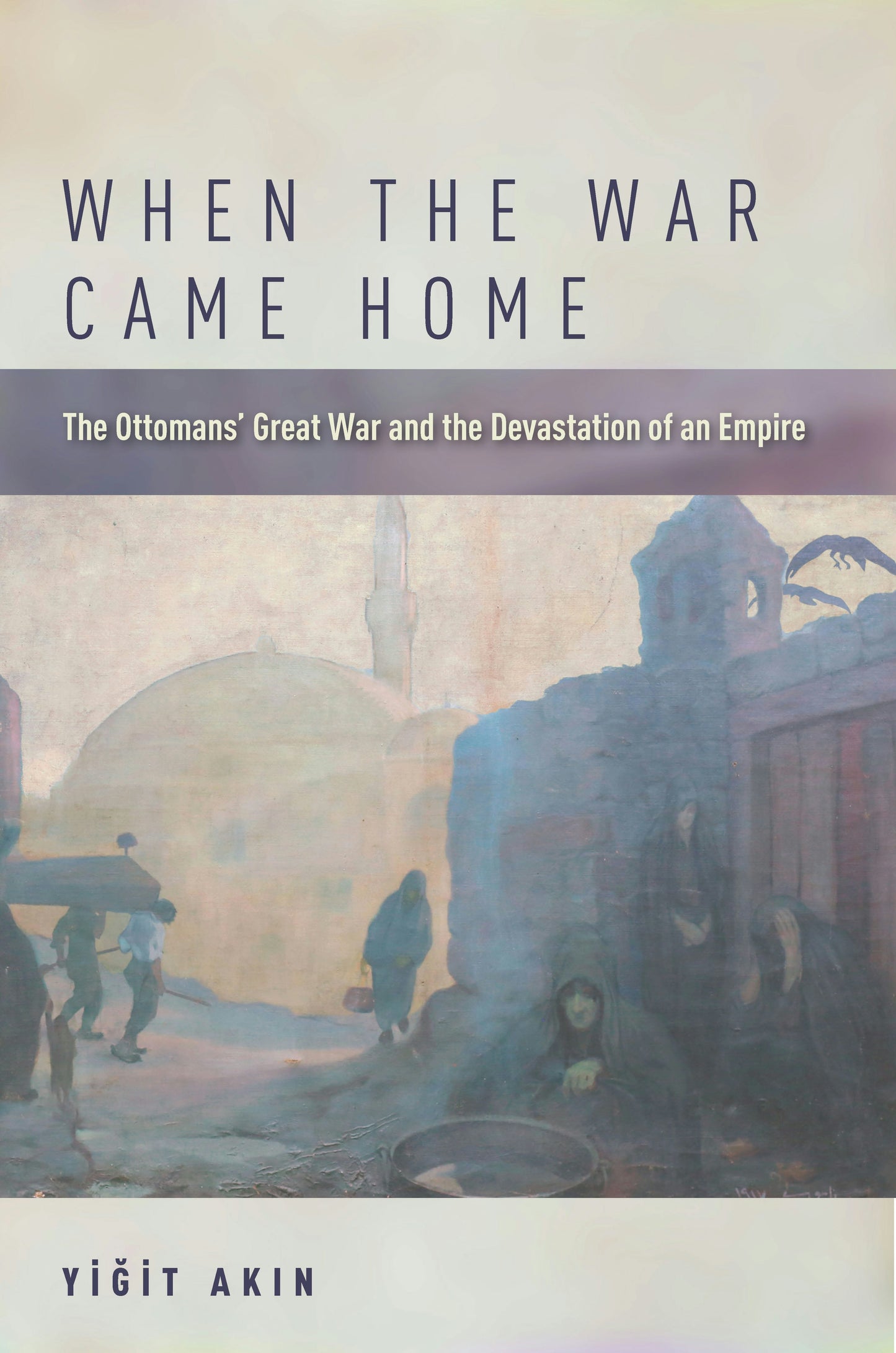
The Ottoman Empire was unprepared for the massive conflict of World War I. Lacking the infrastructure and resources necessary to wage a modern war, the empire's statesmen reached beyond the battlefield to sustain their war effort. They placed unprecedented hardships onto the shoulders of the Ottoman people: mass conscription, a state-controlled economy, widespread food shortages, and ethnic cleansing. By war's end, few aspects of Ottoman daily life remained untouched.
When the War Came Home reveals the catastrophic impact of this global conflict on ordinary Ottomans. Drawing on a wide range of sources—from petitions, diaries, and newspapers to folk songs and religious texts—Yiğit Akın examines how Ottoman men and women experienced war on the home front as government authorities intervened ever more ruthlessly in their lives. The horrors of war brought home, paired with the empire's growing demands on its people, fundamentally reshaped interactions between Ottoman civilians, the military, and the state writ broadly. Ultimately, Akın argues that even as the empire lost the war on the battlefield, it was the destructiveness of the Ottoman state's wartime policies on the home front that led to the empire's disintegration.


— Hasan Kayalı
"Yiğit Akın's treatment of the Ottoman homefront represents a critical breakthrough in the study of the First World War. Drawing upon highly original and interesting archival sources, as well as previously untapped published material, Akin vividly depicts the many hardships faced by Ottoman civilians during the course of the conflict. The book's artful prose makes it an engaging read for both students and scholars of the war, adding to its critical value for readers well beyond the field of modern Middle Eastern history."
— Ryan Gingeras
"Yiğit Akın has written a pioneering study, examining the long-neglected Ottoman home front during World War I. When the War Came Home illuminates the war's deep social and economic impact on the empire's civilian population."
— Mustafa Aksakal
"WW I has long been a topic of interest for Ottoman scholars, but the Ottoman home front has been largely ignored or, at best, unevenly treated. In this book Akın (Tulane Univ.) shows that the length and scale of the war meant that everyone in the Ottoman empire was affected....Akın's research was extensive (he even usedoften-ignored folklore), and it enabled him to provide vivid descriptions ofthose left behind struggling to meet the state's growing material demands, succumbing to starvation and banditry, and becoming increasingly alienated from the state."
— R.W. Zens
"Yiğit Akın's book, When the War Came Home: The Ottomans' Great War and the Devastation of an Empire, is a well-researched and sophisticated study of the impact of the Great War on Ottoman politics, society, and culture....Akın's study of the Ottoman civilian experience of the Great War brings to life a rich trove of sources. The book's strong research base, its sophisticated and multidisciplinary analysis, and comparative approach make it a valuable addition to the lively field of Ottoman Great War studies and to the broader scholarship on the history of the Great War."
— Najwa Al-Qattan
"Akın's When the War Came Home is an important historical revision that fully portrays the imperial home front for the first time. Moreover, this unique interdisciplinary work reconsiders existing temporal, geographical, and methodological approaches to the study of World War I in the Middle East."––Melanie S. Tanielian, Journal of Interdisciplinary History
"Yiğit Akın's fascinating book is an essential read for anyone interested in the history of World War I, the late Ottoman Empire and modern Turkey and is certain to occupy an important place in these fields for many years to come."
— Erdem Sönmez
The Ottoman Empire's Great War lasted four years and required the most comprehensive mobilization of men and resources in its long history. Four interrelated factors influenced the CUP government's policies and played a prominent role in shaping the empire's wartime experience: its infrastructural deficiencies, which curtailed its ability to wage a full-scale modern war; its lack of access to global resources and the need to fight the war within its borders; its disastrous performance during the Balkan Wars, immediately predating World War I; and, finally, the Unionists' perception of the war as an opportunity to restructure the empire demographically. The interweaving of these four factors rendered the Ottoman experience of World War I not only different from that in earlier wars, but also considerably distinct from the experiences of the other World War I belligerents.
This chapter discusses the profound impact the Balkan Wars (1912–13) had on the way the Ottoman Empire waged World War I. At all levels of Ottoman society, defeat in the First Balkan War by four smaller Balkan armies was perceived as evidence of imperial decline and led to widespread demoralization. It also sharpened the Ottoman leaders' awareness of the empire's weaknesses, however, and inspired a new sense of urgency. The defeat taught the CUP government that modern wars required much greater preparation and much deeper penetration of the state into society than had been the case in the past. This led to a series of reform measures regarding the military, a tightened Unionist grip on the empire's political and social life, an expanded civil society network, and a heavy use of religious rhetoric in civil society activism and the army.
This chapter focuses on the first stage of turning of Ottoman civilians into soldiers during the three months between August and October 1914 and its impact on the civilian population. Mobilization not only forced hundreds of thousands of conscripts into the ranks of the imperial army, it heralded an entirely new situation for Ottoman civilians. The prevailing sense of urgency in the CUP and an overwhelming fear of being caught unprepared led to an unprecedentedly harsh intrusion of the state into people's lives. These social and economic disruptions would have deeply unsettling effects on millions on the home front.
This chapter focuses on the experiences of Ottoman soldiers and their families throughout the conflict. Over the course of the war and despite considerable odds, the Ottoman Empire succeeded in mobilizing hundreds of thousands of civilians, dramatically altering the lives of millions. Mobilization on such a massive scale was disruptive for society and ruinous for the economy, even at the beginning of the conflict. As the war dragged on, however, enormous losses compelled the authorities to hone the state's extractive capacity to harness untapped manpower sources. Along with the state's increasingly harsh wartime policies, this chapter also examines real and figurative links between the battlefronts and the home front as they became increasingly complicated over the course of the conflict.
This chapter focuses on the Ottoman state's provisioning policies during the war. In the absence of external sources, the CUP government wrestled with enormous difficulties in supplying the army's needs while preventing starvation among the civilian population. The naval blockade of the empire, frequent natural disasters, and, especially, the significant loss of manpower to conscription and ethnic cleansing made it virtually impossible for the government to meet the needs of the soldiers and the civilian population at the same time. The government experimented with various provisioning systems and policies to address the problem, all of which dramatically increased the presence in people's everyday lives of the state, its regulations, and its representatives, imposing new burdens upon Ottoman civilians.
Although the war touched the lives of nearly everyone, it was Ottoman women who bore the brunt of the conflict on the home front and suffered most of its traumatic effects. The absence of men from communal life and the state's ruthless encroachment altered the circumstances of Ottoman women beyond all recognition. Everywhere they had to work much longer and harder, doing conscripted men's work on top of the domestic work they already performed. The war also upset the established patterns of Ottoman women's personal, familial, and public presence in this largely patriarchal society. Wartime conditions forced them to deal with issues beyond their immediate households as they struggled to survive. As a result, Ottoman women came into much more frequent and proximate contact with state officials as well as with other men on the home front.
This chapter focuses on the individual and collective experiences of the Ottoman people as refugees and deportees in the cruel world of mass migration. Throughout the war, the Ottoman Empire was the scene of large-scale deportations and refugee movements. Millions of people either fled their homes to escape the enemy or were forcibly deported. The Ottoman government diligently worked to regulate and track the movement and settlement of refugees and deportees. The relocation and settlement problem was perceived by the Ottoman elites as a unique "opportunity" to redesign Ottoman society demographically and eliminate or neutralize elements in it perceived as "undesirable." By the end of the war, this policy had uprooted Ottoman Armenians from their ancient homelands and led to their devastation.
By the time the guns fell silent in October 1918, Ottoman society had been deeply traumatized by the enormous casualties it had sustained, a devastated economic infrastructure, voluntary and involuntary displacement, ethnic cleansing, political instability, and cultural anxiety. Virtually every Ottoman citizen, regardless of age, gender, or ethno-religious affiliation, had to cope with deprivation, bereavement, and hardships of all kinds. By the war's end, the legitimacy of the state, the CUP, the army, and, above all, of the empire itself had been significantly diminished in the eyes of the majority.